On this page
- Why August Drives Georgians (and Visitors) Into the Mountains
- Kazbegi and the Greater Caucasus: The Classic High-Altitude Escape
- Svaneti: Remote, Cooler, and Worth the Extra Effort
- Lesser-Known Retreats: Tusheti, Racha, and Borjomi-Kharagauli
- 2026 Budget Reality: What Mountain Travel Actually Costs
- Packing and Timing: Practical August Mountain Sense
- Frequently Asked Questions
August in Tbilisi is brutal. Temperatures regularly push past 36°C in the city centre, the air sits heavy, and the capital empties out as locals head for higher ground. In 2026, demand for mountain accommodation has grown sharply — partly because word has spread internationally, and partly because the summers keep getting hotter. If you are planning a mountain escape this August, booking early is not optional. It is the difference between a cool guesthouse terrace at 2,000 metres and a sweaty hostel bed in a tourist town with no shade.
Why August Drives Georgians (and Visitors) Into the Mountains
Georgia’s mountain regions sit at elevations where the physics are simply different. At 1,500 metres above sea level, daytime temperatures in August typically run 10–15°C cooler than Tbilisi. At 2,000 metres and above, nights can dip to 8–12°C — cold enough that you will want a jacket and possibly a second blanket. This is not marketing language. It is the reason Georgians have been heading to the high valleys every summer for generations.
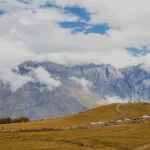
Beyond temperature, the mountains offer something the lowlands cannot fake in August: air that actually moves. Standing on a ridge above Stepantsminda at first light, with cold wind pulling at your jacket and the Gergeti Trinity Church catching the early sun across the valley, is one of those experiences that resets something in you after weeks of city heat. The light at altitude has a particular quality — sharper, cleaner, with none of the haze that blankets Tbilisi through July and August.
What has changed in 2026 is the volume. Popular destinations like Kazbegi now see significant tourist pressure in peak August weeks, which has pushed some travellers toward alternatives. That shift is actually good news for anyone willing to look slightly beyond the obvious choices.
Kazbegi and the Greater Caucasus: The Classic High-Altitude Escape
Stepantsminda — still commonly called Kazbegi — remains Georgia’s most accessible mountain destination from Tbilisi. The town sits at around 1,740 metres, and the surrounding trails push well above 2,500 metres on clear days. The Georgian Military Highway connecting Tbilisi to Stepantsminda is well-established and marshrutkas run daily from Didube station in Tbilisi, making it a realistic day trip, though staying at least two nights makes far more sense.
In August, the valley is genuinely green and the wildflower meadows above the town are at their peak. The hike up to Gergeti Trinity Church (around 1.5 hours at a steady pace) is crowded by mid-morning, so leaving before 7am gives you the path largely to yourself and the best light. For something quieter, the trail toward Arsha or the walk up toward the base of Mount Kazbek draws serious hikers rather than day-trippers.
Accommodation in Stepantsminda ranges from family guesthouses to mid-range hotels with mountain views. August is peak season — rooms that cost 80–120 GEL per night in May can reach 200–300 GEL or more in the second and third weeks of August. Book at least six to eight weeks ahead for anything decent.
Svaneti: Remote, Cooler, and Worth the Extra Effort
Upper Svaneti sits higher and feels more remote than Kazbegi, and in August that remoteness is its main asset. Mestia, the regional centre, is at roughly 1,500 metres — already noticeably cooler than the lowlands — but the villages beyond it, like Ushguli, climb toward 2,200 metres and can feel genuinely alpine even in the height of summer.
Getting there takes more planning. Flights from Tbilisi to Mestia operate seasonally and seats go fast in August — check availability months in advance. The alternative is an overnight train from Tbilisi to Zugdidi followed by a marshrutka or shared taxi up the mountain road to Mestia. The road is paved for most of its length now and takes roughly three to four hours from Zugdidi depending on stops and conditions.
What Svaneti offers that Kazbegi does not is a genuine sense of landscape scale. The Svan towers — the ancient stone defensive towers that rise from every village — give the valleys a visual drama that photographs do not fully convey. Standing in Ushguli on a clear August morning, looking up at the permanent glaciers of the Shkhara massif with the smell of woodsmoke drifting from nearby houses, you understand immediately why this region ended up on the UNESCO list.
Hiking options are exceptional. The Mestia to Ushguli multi-day trek is one of the Caucasus’s great walks — typically three to four days, through high meadows, river valleys, and traditional villages. August is the ideal month for conditions on this route, though afternoon thunderstorms are common at altitude, so mornings are for moving and afternoons are for shelter.
Lesser-Known Retreats: Tusheti, Racha, and Borjomi-Kharagauli
If the Kazbegi road feels too busy and Svaneti requires more logistics than you have time for, three other regions deserve serious consideration for August.
Tusheti
Tusheti is the most dramatic of Georgia’s mountain regions in terms of access — the Abano Pass road, which tops out above 2,800 metres, is one of the highest and most demanding mountain roads in the Caucasus. It is only accessible by 4WD and only in summer, which is precisely why Tusheti remains genuinely wild. The villages of the Alazani gorge feel untouched in a way that Kazbegi no longer does. Omalo is the main settlement and has basic but functional guesthouse accommodation. August is actually the best month, as the pass is reliably open and the high pastures are full of local shepherds with their flocks — a scene that has changed remarkably little in centuries.
Racha
Racha sits in the western highlands and is almost unknown to international visitors. The region is famous among Georgians for its wine — particularly Khvanchkara — and for its forested valleys and old churches. Temperatures in August are comfortable, the roads have improved significantly, and guesthouse hospitality here is exceptional. The town of Ambrolauri is the regional centre and makes a good base. Racha suits travellers who want mountain coolness, cultural depth, and no tourist crowds whatsoever.
Borjomi-Kharagauli National Park
For those who want mountain hiking without a long approach journey, Borjomi-Kharagauli National Park in southern Georgia is underrated. The park covers a large area of forested highland and has a network of marked trails with basic huts for overnight stays. The town of Borjomi is the entry point — it is connected by train from both Tbilisi and Batumi, making it genuinely easy to reach. August heat in the park is moderated by dense forest canopy and elevation, and the trails are quiet enough that you can walk for a full day without seeing another group.
2026 Budget Reality: What Mountain Travel Actually Costs
Mountain travel in Georgia remains good value by European standards, but August peak-season pricing is real. Here is an honest breakdown for 2026.
- Budget (guesthouse bed, shared bathroom, meals included): 80–130 GEL per person per night in most mountain regions. This typically includes breakfast and dinner, which is the norm in family guesthouses.
- Mid-range (private room, en-suite, decent views): 180–280 GEL per night for a double room in Stepantsminda or Mestia in August. Expect to pay the higher end of this range for the best-positioned properties.
- Comfortable (small boutique hotel or well-appointed guesthouse with amenities): 300–500 GEL per night in August. Options at this level exist mainly in Stepantsminda and Mestia.
Transport adds up. A marshrutka from Tbilisi to Stepantsminda costs around 15–20 GEL per person. A shared taxi covering the same route runs 40–60 GEL. In Tusheti, hiring a 4WD from Telavi for a return trip to Omalo typically costs 300–450 GEL for the vehicle — split this with other travellers whenever possible. Internal flights to Mestia, when available, run significantly higher and should be booked directly with the operating carrier well in advance.
Food in mountain guesthouses is almost always included or available as a set meal at low cost. Eating outside guesthouses in tourist-facing restaurants in Stepantsminda costs 30–60 GEL for a full meal with wine. In Tusheti or Racha, restaurant options barely exist — you eat where you sleep.
Packing and Timing: Practical August Mountain Sense
August in Georgia’s mountains is warm during the day and cold at night — sometimes dramatically so. The gap between a 24°C afternoon in Mestia and a 9°C night is not unusual, and above 2,500 metres, afternoon temperatures can drop sharply when clouds move in. Pack for both ends of that range.
Afternoon thunderstorms are a consistent feature of August at altitude across all of Georgia’s mountain regions. They typically build from around 1pm and can be heavy. Plan hikes for early starts and build in time to be off exposed ridges or passes by early afternoon. This is not a suggestion — lightning at altitude is a real danger and the weather moves fast.
The best August windows for mountain travel in Georgia are generally the first two weeks and the last few days of the month. The middle two weeks — roughly August 10 to 22 — see peak domestic tourist traffic, coinciding with Georgian summer holidays. If your schedule allows, arriving before August 10 or after August 22 gives you noticeably fewer crowds and often lower accommodation prices.
For Tusheti specifically, aim to confirm road conditions locally before attempting the Abano Pass. While August is generally reliable, heavy rain can affect the road surface and local guesthouse owners or tour operators in Telavi will have current information.
Frequently Asked Questions
How far in advance should I book mountain accommodation in Georgia for August?
For August 2026, book a minimum of six to eight weeks ahead for Stepantsminda and Mestia — popular guesthouses in both towns often fill earlier than that. Tusheti and Racha are less pressured, but good options still go. Waiting until two weeks before arrival in peak August is a serious risk.
Is it safe to hike alone in Georgia’s mountains in August?
Solo hiking is common and generally safe on well-established trails like the Gergeti approach or Mestia-area routes. For multi-day treks in Tusheti or high-altitude routes near Kazbek, going with a guide or at minimum sharing your itinerary with your guesthouse is strongly recommended. Weather changes quickly and some terrain is serious.
What is the easiest mountain destination to reach from Tbilisi for a short trip?
Stepantsminda (Kazbegi) is the clearest answer. The marshrutka journey from Tbilisi takes around three hours, making it viable even for a two-night escape without complex planning.
Do I need special equipment for mountain hiking in Georgia?
For standard day hikes — Gergeti Trinity Church, Mestia valley walks, Borjomi park trails — solid walking shoes or light hiking boots are sufficient. For anything above 3,000 metres or multi-day backcountry routes, proper boots, trekking poles, a warm layer, and rain gear are essential. The mountains are real mountains and should be treated accordingly.
Are there ATMs in Georgia’s mountain villages?
Stepantsminda has ATMs and card payments are increasingly accepted in hotels and some restaurants. Mestia has limited ATM availability and reliability can vary — carry enough cash from Tbilisi or Zugdidi. In Tusheti and Racha, assume cash only. Guesthouses almost universally prefer or require cash payment, especially for smaller family-run operations.
Explore more
Batumi’s Summer Charm: Your July 2026 Guide to the Black Sea Gem
Beating the Heat: Essential Tips for Visiting Georgia in July 2026
Summer Flavors of Georgia: Seasonal Dishes and Drinks for June 2026
📷 Featured image by Liuba Kotorobay on Unsplash.