July 2026 is shaping up to be one of the busiest months Georgia has ever seen for tourism. Tbilisi’s old town is packed by 11am, guesthouses in Kazbegi book out weeks in advance, and the Black Sea coast turns into a wall-to-wall sun holiday. None of that is a reason to avoid Georgia in July — but arriving without a heat strategy means you’ll spend your best hours hiding in an air-conditioned café wondering where your trip went. This guide tells you exactly how to handle the month.
Why July Hits Different in Georgia
Georgia sits at a crossroads of climates, and July is when that complexity becomes impossible to ignore. Tbilisi regularly hits 36–38°C in the afternoon, with humidity that climbs sharply after any rain. The heat bounces off the old city’s stone streets and the surrounding hills trap warm air overnight, meaning evenings only drop to around 24–26°C. It does not cool down the way European cities do after dark.
The western half of the country — Kutaisi, Zugdidi, the Adjara region — is subtropical and humid. Batumi sits on the Black Sea with average July highs around 29–31°C, but the humidity makes it feel closer to 36°C. Afternoon thunderstorms roll in fast and hard, usually between 3–6pm.
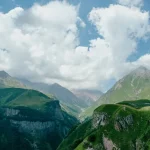
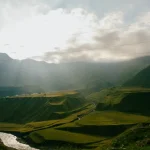
The eastern regions tell a different story. Kakheti’s Alazani Valley bakes in dry heat that is easier to handle but brutal during midday vineyard walks. Temperatures above 38°C are not unusual in David Gareja. Meanwhile, the Greater Caucasus mountain zone — Kazbegi, Svaneti, Tusheti — stays at a civilised 18–24°C during the day. That temperature gap is the most useful piece of information for planning your July itinerary.
Where to Go: Cooler Destinations That Still Deliver
Kazbegi (Stepantsminda)
At roughly 1,750 metres above sea level, Kazbegi rarely exceeds 24°C in July. Early morning on the trail to Gergeti Trinity Church — the air sharp and thin, smelling faintly of alpine grass — is everything summer hiking in Georgia should be. The trail rewards you before 8am with near-empty paths and the best light on Mount Kazbek. By noon the tourist groups arrive and the mood shifts entirely. Go early.
Svaneti
Mestia sits at around 1,500 metres and Ushguli at over 2,200 metres. Both stay cool throughout July. The Svan towers, the Ethnographic Museum, the glacier hikes above Ushguli — none of it requires you to endure the lowland heat. Getting here means a flight from Tbilisi to Mestia on Vanilla Sky Airlines (check current schedules, as frequency changes seasonally) or a long but scenic marshrutka ride through Zugdidi.
Borjomi and the Borjomi-Kharagauli National Park
Borjomi sits in a river gorge at around 800 metres. Temperatures are noticeably lower than Tbilisi — usually 27–29°C at peak heat, with cool evenings. The national park trails give you beech forest shade that makes midday hiking survivable. The famous mineral water spring in the park is free to drink from and genuinely refreshing after a walk.
Tbilisi in July — if you must
Tbilisi is worth visiting in July if you manage your hours correctly. The city does not sleep early. Narikala fortress and the Abanotubani sulphur bath district are atmospheric from 7–9am and again after 8pm. The Fabrika courtyard fills with people well after sunset. Accept that 12–5pm is not sightseeing time; use it for a long lunch, a nap, or a sulphur bath.
How to Structure Your Day Around the Heat
The single most effective adjustment you can make is splitting your active day into two blocks: early morning and evening. This is not a compromise — it is how Georgians themselves operate in summer.
- 6:00–10:00am: Hiking, outdoor sightseeing, walking old city districts. This is your prime window. Light is good for photography, sites are quiet, and temperatures are tolerable.
- 10:00am–5:00pm: Museums, churches, indoor markets, wine cellars, sulphur baths, long lunches. Georgia has excellent museums — the National Museum in Tbilisi and the Simon Janashia Museum of Georgia alone can absorb several hours in cool comfort.
- 5:00–9:00pm: Return outside. Walk the riverfront, explore neighbourhoods, visit outdoor markets. The light in the evening is beautiful in Tbilisi from the Narikala walls.
- 9:00pm onwards: Dinner, wine bars, the terrace culture that Georgians do better than almost anywhere in Europe.
What to Wear and Pack for July
This sounds obvious until you watch visitors arrive in Tbilisi in dark jeans and trainers and spend their first afternoon visibly suffering. Georgia in July requires deliberate clothing choices, especially because you will move between very different climates if you go to the mountains.
- Lowlands (Tbilisi, Kakheti, Batumi): Lightweight linen or technical travel clothes in light colours. Loose trousers or long skirts are better than shorts for visiting churches, and Georgia has a lot of churches worth visiting. A small packable umbrella handles both sun and the sudden afternoon storms in western Georgia.
- Mountains (Kazbegi, Svaneti, Tusheti): Pack a proper warm mid-layer. Temperature drops fast after sunset at altitude — it can go from 22°C at 6pm to 10°C by 10pm. A light down jacket takes up almost no space and earns its place every evening.
- Footwear: Decent trail shoes for mountain areas. Comfortable sandals for city evenings. Do not attempt the Gergeti trail in sandals or flat-soled shoes — the path is steep and rocky.
- Sun protection: High-SPF sunscreen is available in Georgian pharmacies (Aversi and GPC chains are widespread) but the specific brands you trust may not be. Bring your own SPF 50. A wide-brimmed hat is not optional at David Gareja or in the Alazani Valley.
- Hydration: A refillable water bottle. Georgia has many natural spring water sources, particularly in Borjomi and mountain areas. In Tbilisi, bottled water from any small shop costs 0.50–1 GEL for 500ml.
2026 Budget Reality: What July Actually Costs
July is Georgia’s peak season. Prices are higher than spring or autumn, availability is tighter, and the tourist-facing economy is fully awake. Here is what to expect in 2026.
Accommodation (per night)
- Budget: Hostel dorm beds in Tbilisi 35–55 GEL. Guesthouses in Kazbegi from 80–120 GEL for a private room.
- Mid-range: Boutique guesthouses in Tbilisi old town 180–280 GEL. Mid-range hotel in Batumi or Mestia 200–320 GEL.
- Comfortable: Design hotels in Tbilisi 400–700 GEL. Upmarket options in Batumi can reach 900 GEL in peak July weeks.
Food and drink
- Budget: A full meal at a local canteen (stolovaya) or bakery — khinkali, salad, bread, water — 15–25 GEL.
- Mid-range: Sit-down restaurant dinner with wine, 60–100 GEL per person.
- Comfortable: Tasting menus or upscale Tbilisi restaurants, 150–250 GEL per person including wine pairings.
Transport
- Tbilisi metro: 1 GEL per ride (flat fare, unchanged for years).
- Marshrutka Tbilisi–Kazbegi: approximately 15–20 GEL one way.
- Bolt/taxi within Tbilisi: 8–20 GEL for most journeys.
- Domestic flight Tbilisi–Mestia: prices vary by operator and season; book well in advance for July departures.
Eating and Drinking Smart in the Heat
Georgian food is rich — walnuts, meat, fried cheese, heavy stews. In July, that richness works against you if you eat the same way you would in October. Georgians adapt their eating habits in summer too, and it is worth following their lead.
Pkhali — the cold, herb-packed vegetable preparations made with spinach, beetroot, or green beans and walnut paste — is one of the most refreshing starters on any Georgian menu. It is light, flavourful, and served at room temperature. Tkemali, the sour plum sauce, works as a sharp, cooling condiment with grilled meats. Cold cucumber-walnut soup, if you find it on a menu in western Georgia, is genuinely restorative on a hot afternoon.
Churchkhela — the candle-shaped walnut-and-grape-juice snack sold everywhere — is excellent hiking fuel and carries well without melting. It is not delicate food, but it is honest and energy-dense for mountain days.
For drinks: Georgian natural wine served slightly cool is far better suited to summer heat than the full-bodied amber wines that work so well in a Sighnaghi wine cellar in October. Ask for white or rosé options from Rkatsiteli or Chinuri grapes — lighter, crisper, lower tannin. Tarkhuna (tarragon soda) is a local soft drink with a specific electric-green colour and a taste that divides opinion, but it is cold and genuinely Georgian. Lemonade at Georgian cafés usually means a house-made fruit syrup drink — peach, pear, or elderflower — that is worth trying over the international brands.
Eat your main meal between 1–3pm when restaurants are less busy and you are already off the streets. Avoid heavy khinkali feasts as your final meal before an afternoon walk. Save those for the evening, when the temperature has dropped and you have nowhere to be.
Frequently Asked Questions
Is July a good time to visit Georgia?
Yes, with the right strategy. The mountains are at their most accessible, the wine regions are green and active before harvest, and the days are long. The heat in Tbilisi and the lowlands is real but manageable if you shift your schedule to mornings and evenings. July is genuinely rewarding for visitors who plan around the temperature.
How hot does Tbilisi get in July?
Average July highs in Tbilisi sit around 34–37°C, with occasional spikes above 38°C. Nights are warm, usually 23–26°C. Humidity varies but rises after rain. The heat is dry and intense during midday hours.
What is the coolest region of Georgia to visit in July?
The Greater Caucasus mountain regions — Kazbegi, Svaneti, and Tusheti — are the coolest areas. Tusheti in particular is remote and wild, while Kazbegi is the most accessible from Tbilisi for a short trip.
Do I need to book accommodation in advance for July?
Yes, especially for mountain destinations. Kazbegi guesthouses book out two to three weeks ahead in July 2026. Svaneti has limited accommodation relative to demand. Tbilisi has more capacity but good mid-range options in the old town fill quickly. Book at least two to three weeks ahead for any mountain stay and one to two weeks for Tbilisi.
Is it safe to drink tap water in Georgia in July?
In Tbilisi, tap water is generally considered safe to drink, and many locals do. In rural areas and smaller towns, bottled or spring water is the safer choice. Natural mineral springs in Borjomi and mountain regions are safe and free. Staying well hydrated is especially important in July — aim for more than two litres per day in lowland heat.
Explore more
Summer Flavors of Georgia: Seasonal Dishes and Drinks for June 2026
Georgia’s Black Sea Coast: Your June 2026 Summer Guide
Georgia’s Mountain Escapes: Hiking and Nature Trails for June 2026
📷 Featured image by Ivan Stepanov on Unsplash.