On this page
- Walk the Central Park and Mineral Water Springs
- Ride the Cable Car Above Town
- Soak in the Open-Air Mineral Water Pools
- Hike the Borjomi-Kharagauli National Park Trails
- Explore the Romanov Summer Palace and Gardens
- Day Trip to Rabati Castle in Akhaltsikhe
- Visit the Borjomi History and Nature Museum
- Taste the Local Food Scene on Rustaveli Street
- 2026 Budget Reality: What Things Cost in Borjomi
- How to Get to Borjomi in 2026
- Frequently Asked Questions
💰 Click here to see Georgia Budget Breakdown
💰 Prices updated: October, 2026. Budget figures are estimates — always verify before travel.
Exchange Rate: $1 USD = ₾2.60
Daily Budget (per person)
Shoestring: ₾70.00 – ₾130.00 ($26.92 – $50.00)
Mid-range: ₾180.00 – ₾350.00 ($69.23 – $134.62)
Comfortable: ₾500.00 – ₾1,000.00 ($192.31 – $384.62)
Accommodation (per night)
Hostel/guesthouse: ₾30.00 – ₾60.00 ($11.54 – $23.08)
Mid-range hotel: ₾110.00 – ₾200.00 ($42.31 – $76.92)
Food (per meal)
Budget meal: ₾15.00 ($5.77)
Mid-range meal: ₾35.00 ($13.46)
Upscale meal: ₾100.00 ($38.46)
Transport
Single metro/bus trip: ₾1.00 ($0.38)
Monthly transport pass: ₾40.00 ($15.38)
Borjomi has always punched above its weight for a town of roughly 13,000 people. But in 2026, a wave of visitors arriving via the upgraded Tbilisi–Batumi marshrutka network and the increasingly popular Tbilisi–Borjomi train connection has made the town busier than ever between May and September. If you’re planning a trip, going in with a clear list of what to actually do — beyond just drinking mineral water from a plastic cup and leaving — makes the difference between a forgettable afternoon and a genuinely memorable few days.
Walk the Central Park and Mineral Water Springs
The town’s central park sits along the Mtkvari River gorge and is the natural starting point for any visit. The air here carries a faint sulphurous tang — not unpleasant, just distinctive — and the sound of the river below cuts through the noise of the small tourist stalls lining the main path. Two natural mineral water springs flow freely inside the park: one cold, one warm. You can drink straight from the tap for free. The warm spring tastes sharply mineral, almost medicinal, with a metallic edge that surprises first-timers. Locals fill bottles here daily. The park itself is well-maintained in 2026 following a landscaping renovation completed in late 2024, with new benches and better lighting along the evening walking paths.
Ride the Cable Car Above Town
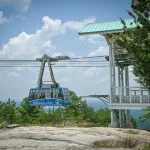
A short cable car lifts you from the edge of the central park up the forested hillside in about five minutes. The cabins are small — two to four people — and the view opens up quickly as you rise above the tree line. From the top, you get a clear look at the gorge, the town’s Soviet-era sanatorium buildings scattered through the trees, and the Caucasus foothills rolling out to the south. The cable car runs daily from around 11:00 to 18:00. The fare in 2026 is approximately 3 GEL each way. There’s a small café at the top that serves decent coffee and churchkhela. The walk back down through the forest takes about 20 minutes and is worth doing at least once.
Soak in the Open-Air Mineral Water Pools
Within the central park complex, there are public mineral water bathing pools that are genuinely one of the best things Borjomi offers. The water is warm and slightly fizzy against your skin — a sensation that’s hard to describe until you’re actually sitting in it. The outdoor pools are open year-round, though the experience of soaking in warm mineral water while cold mountain air hits your face is something that belongs firmly in autumn and winter. Entry in 2026 costs around 10–15 GEL per person depending on which facility you use. There are also private bathing cabins available for groups at higher rates. Arrive early on weekends — these fill up fast.
Hike the Borjomi-Kharagauli National Park Trails
One of the largest national parks in the Caucasus starts almost at Borjomi’s doorstep. The park covers roughly 85,000 hectares of dense forest, alpine meadows, and river valleys. The visitor centre in town — updated and expanded in 2025 — is the place to get trail maps, register for multi-day routes, and hire a licensed guide if you want one. Day hikes start from as short as 5 kilometres and climb to longer routes reaching 1,800 metres above sea level. The beech and pine forests are thick enough that even in summer the trails feel cool and private. You’ll hear woodpeckers, spot deer tracks in the mud, and occasionally cross small wooden bridges over fast-moving streams. No special permits are needed for day hikes. Multi-day camping requires registration at the visitor centre, which can now be done online through the Georgian Protected Areas e-portal introduced in early 2026.
Explore the Romanov Summer Palace and Gardens
Tucked inside a walled garden about a ten-minute walk from the central park entrance, the former summer residence of the Romanov family is one of Borjomi’s most underrated stops. The wooden palace was built in the 1890s for Grand Duke Mikhail Nikolaevich and is preserved in reasonable condition. The interior has period furniture, old photographs, and explanatory panels in Georgian and English. The surrounding garden has tall old trees and a quiet, slightly overgrown atmosphere that feels completely different from the busier parts of town. Entry is around 5 GEL. The garden alone is worth the fee even if you skip the interior on a busy day — it’s genuinely peaceful and photogenic in a way that the main tourist strip is not.
Day Trip to Rabati Castle in Akhaltsikhe
Akhaltsikhe is 45 kilometres southwest of Borjomi and reachable in about an hour by marshrutka or taxi. The main draw is Rabati Castle, a large fortified complex that has been heavily restored into a mixed-use cultural site containing a mosque, a Georgian Orthodox church, a synagogue, and a museum — all within one set of walls. The restoration is controversial among historians but visually striking and genuinely interesting for visitors. The castle sits on a ridge above the town and gives strong views over the Potskhovi River valley. The museum inside covers regional history from medieval Georgia through the Ottoman period. Entry to the castle grounds is free; the museum inside charges around 7 GEL. Marshrutkas to Akhaltsikhe leave from Borjomi’s central bus area throughout the morning.

Visit the Borjomi History and Nature Museum
This small but well-curated museum covers the geological story of the mineral springs, the town’s development under Russian Imperial rule, and the natural history of the surrounding forests and mountains. It’s not large — you can cover it properly in about an hour — but the exhibits on how the Borjomi mineral water industry developed in the 19th century and collapsed and revived in the post-Soviet era are genuinely informative. There’s also a collection of local fauna specimens and geological samples that give context to the national park hikes. Entry is around 5 GEL. Labels are in Georgian, Russian, and partial English. In 2026, an audio guide app linked to QR codes throughout the museum has improved accessibility for English-speaking visitors significantly.
Taste the Local Food Scene on Rustaveli Street
Borjomi’s main commercial street and the small lanes branching off it have a growing number of decent restaurants and bakeries catering to the post-pandemic tourism rebound. The staples are consistent: mtsvadi (grilled pork skewers) cooked over charcoal, khinkali filled with spiced meat broth, and fresh-baked shotis puri from the clay oven at the bakery near the central market. The yeasty warmth of bread just pulled from a tone oven on a cool Borjomi morning is one of those small pleasures that sticks with you long after the trip. Look for restaurants displaying handwritten daily menus in Georgian — these tend to serve more authentic food at better prices than the laminated tourist-facing menus. A full meal with drinks at a local restaurant costs 25–50 GEL per person in 2026.
2026 Budget Reality: What Things Cost in Borjomi
Borjomi sits at an accessible price point compared to Tbilisi or Batumi, but costs have risen noticeably since 2023 in line with wider inflation across Georgia.

- Budget (under 100 GEL/day): Guesthouse bed 30–50 GEL, meals from bakeries and local canteens 15–25 GEL, free spring water, national park day hike at no cost.
- Mid-range (100–200 GEL/day): Small hotel or guesthouse with private bathroom 60–90 GEL, sit-down restaurant meals 25–50 GEL per person, cable car and museum entry, mineral pool soak.
- Comfortable (200–350 GEL/day): Boutique hotel or sanatorium-style accommodation 120–200 GEL, private mineral bath sessions, guided national park hike 80–120 GEL, day-trip taxi to Akhaltsikhe.
How to Get to Borjomi in 2026
The most practical route from Tbilisi is the direct train, which runs twice daily from Tbilisi Central Station. Journey time is approximately 2.5 to 3 hours. As of 2026, Georgian Railway has upgraded rolling stock on this route — the ride is more comfortable than it was two years ago. Tickets cost around 9–15 GEL depending on class. Marshrutkas from Tbilisi’s Isani or Didube stations are faster (around 2 hours) and cost roughly 10–12 GEL, but are less comfortable for longer journeys. From Kutaisi, there is no direct service — you’ll need to change in Khashuri. There is no airport near Borjomi; flying into Tbilisi and connecting by train or marshrutka is the standard approach for international visitors.
Frequently Asked Questions
How many days do you need in Borjomi?
Two full days is the practical minimum to cover the central park, mineral pools, cable car, and at least one national park day hike. Three days gives you time for a day trip to Akhaltsikhe and a slower pace overall. More than four days is only necessary if you’re doing multi-day trekking in Borjomi-Kharagauli National Park.
Is Borjomi suitable for children?
Yes, very much so. The central park, cable car, and mineral pools all work well with children. The national park has shorter, clearly marked trails suitable for older kids. The town is compact and walkable. Accommodation owners are generally used to families and often have private rooms at reasonable rates in 2026.
When is the best time to visit Borjomi?
May, June, and September offer the best combination of good weather, manageable crowds, and lower prices. July and August are peak season — the pools and park fill up and accommodation prices jump. Winter visits are possible and the mineral pools are actually most enjoyable in the cold months, though some park trails close due to snow and ice.
Can you drink the Borjomi mineral water directly from the springs?
Yes. The natural springs inside the central park flow freely and are safe to drink. The flavour is distinct from the bottled Borjomi sold internationally. Many locals drink it daily, though most health advice suggests not consuming large quantities in one sitting.
Is Borjomi safe for solo travellers?
Borjomi is a safe, small town with a well-established tourist infrastructure. Solo travellers — including solo women — report no significant issues in 2026. The national park trails are best done with a partner or group if you’re going beyond the shorter day-hike routes, simply because mobile coverage drops quickly once you’re deep in the forest.
Explore more
Vardzia & Rabati Castle Day Trip from Borjomi: Your Essential Itinerary
Beyond Borjomi Park: Essential Excursions in Central Georgia
Top 10 Unforgettable Day Trips from Borjomi, Georgia