On this page
- Rabati Castle and the Town of Akhaltsikhe
- Vardzia Cave Monastery — the Cliff-Carved City
- Bakuriani — Mountain Resort Above the Treeline
- Borjomi-Kharagauli National Park Trails
- Khertvisi Fortress and the Mtkvari Canyon Drive
- Atskuri Fortress and the Borjomi Gorge Villages
- Paravani Lake — Georgia’s Highest and Largest Lake
- Timotesubani and the Samtskhe Monastery Circuit
- Getting to Borjomi and Moving Between Day Trip Destinations in 2026
- 2026 Budget Reality — What a Day Trip Actually Costs from Borjomi
- Frequently Asked Questions
💰 Click here to see Georgia Budget Breakdown
💰 Prices updated: October, 2026. Budget figures are estimates — always verify before travel.
Exchange Rate: $1 USD = ₾2.60
Daily Budget (per person)
Shoestring: ₾70.00 – ₾130.00 ($26.92 – $50.00)
Mid-range: ₾180.00 – ₾350.00 ($69.23 – $134.62)
Comfortable: ₾500.00 – ₾1,000.00 ($192.31 – $384.62)
Accommodation (per night)
Hostel/guesthouse: ₾30.00 – ₾60.00 ($11.54 – $23.08)
Mid-range hotel: ₾110.00 – ₾200.00 ($42.31 – $76.92)
Food (per meal)
Budget meal: ₾15.00 ($5.77)
Mid-range meal: ₾35.00 ($13.46)
Upscale meal: ₾100.00 ($38.46)
Transport
Single metro/bus trip: ₾1.00 ($0.38)
Monthly transport pass: ₾40.00 ($15.38)
Borjomi has spent decades being known for one thing — its mineral water. But in 2026, more travellers are figuring out what locals have always known: this small spa town in the Samtskhe-Javakheti region sits at the centre of one of the most destination-rich corridors in the country. The problem most visitors run into is information. Search results still push the same two or three spots, while genuinely extraordinary places — a glacier-carved lake at 2,000 metres, cliff monasteries, fortress-studded canyon roads — go unmentioned. This guide fixes that.
Rabati Castle and the Town of Akhaltsikhe
Akhaltsikhe sits about 45 kilometres southwest of Borjomi, and the drive through the Mtkvari River valley takes roughly 45 minutes by car or marshrutka. The town itself is unremarkable, but Rabati Castle — the fortified complex dominating the hill above it — is anything but.
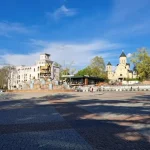
The complex covers around 7 hectares and contains a mosque, a Georgian Orthodox church, a synagogue, a caravanserai, and a citadel tower within the same walls. The layering of Ottoman and Georgian architecture is not accidental — Akhaltsikhe changed hands repeatedly over centuries, and Rabati is the physical record of that. Walk the upper ramparts in the late afternoon and you get a view across the valley that stretches, on clear days, toward the Lesser Caucasus ridge.
The site underwent major reconstruction between 2011 and 2012, which drew criticism from some heritage groups for being too polished. That debate is still alive in 2026. Whether you find it immersive or sanitised depends on your expectations — go knowing it has been heavily restored, and you will appreciate what is there rather than expecting rough-edged ruins.
- Entrance fee: 7 GEL for adults, 1 GEL for children
- Opening hours: 10:00–18:00 daily
- Best time to visit: Weekday mornings — weekends bring tour groups from Tbilisi
- Marshrutka from Borjomi: Departs from the central bus stop, fare around 5–6 GEL each way
After the castle, the old town bazaar area below has a handful of solid lunch options. Look for places serving chikhirtma and fresh bread — the food culture in Akhaltsikhe leans more toward the Meskhetian tradition than Tbilisi-style Georgian cooking.

Vardzia Cave Monastery — the Cliff-Carved City
Vardzia is approximately 90 kilometres from Borjomi, which puts it at the outer edge of a comfortable day trip — plan on two hours each way if you are relying on public transport with a connection in Akhaltsikhe. The extra effort is worth it. This is not a monastery in the conventional sense. It is a twelve-storey city carved directly into the face of a volcanic cliff, built in the 12th century under Queen Tamar and containing over 400 rooms, tunnels, churches, and wine cellars.
Standing at the base and looking up at the rock face — honeycombed with dark openings, ancient staircases visible on the cliff surface — gives a feeling that photographs do not capture. The scale only registers in person. A working monastic community still occupies part of the complex, and you may hear liturgical chanting from somewhere deep inside the cliff while you climb.
The main Church of the Dormition contains 12th-century frescoes including a portrait of Queen Tamar herself, one of the few contemporary portraits of any medieval Georgian ruler. These frescoes survived the 1283 earthquake that collapsed the outer sections of the cliff and exposed the formerly hidden city to the outside world.
- Entrance fee: 7 GEL
- Getting there: Marshrutka to Akhaltsikhe (5–6 GEL), then shared taxi or marshrutka toward Aspindza and Vardzia (approx. 10–15 GEL)
- By private car: 1.5–2 hours from Borjomi via the scenic S10 road
- Wear proper shoes: The site involves significant climbing on uneven stone steps

Bakuriani — Mountain Resort Above the Treeline
Bakuriani sits roughly 35 kilometres northeast of Borjomi, but the road climbs sharply through pine and silver birch forest, gaining about 800 metres in altitude. In winter — roughly December through March — it functions as Georgia’s second most active ski resort after Gudauri. In summer and autumn, the meadows above the resort open for hiking, mountain biking, and paragliding.
The narrow-gauge railway connecting Borjomi to Bakuriani — known locally as the “Kukushka” — is a separate experience in itself. It runs a historic diesel train (and in 2025, a refurbished tourist rail car was added on weekend runs) through a steep forested gorge over 37 kilometres of track. The journey takes about 2.5 hours each way and costs 1–2 GEL. It is slow, scenic, and genuinely charming.
In winter 2025–2026, Bakuriani expanded its lift infrastructure with one new gondola on the Didveli slope, reducing the bottleneck that had frustrated skiers for years. Day ski passes in 2026 run between 60 and 80 GEL depending on which sector you use. Equipment rental is available at the base and has improved significantly — mid-range ski packages now rent for around 50–70 GEL per day.
Outside ski season, Bakuriani is quieter and cheaper. The summer wildflower meadows above 2,000 metres are genuinely beautiful, and the trails are well-maintained by the resort management. A clear July day at the top of the Kokhta chairlift rewards you with views south toward the Turkish border mountains.
Borjomi-Kharagauli National Park Trails
Most day trip lists skip this because the park is, technically, on Borjomi’s doorstep — not a “trip” in the conventional sense. But that framing undersells it. Borjomi-Kharagauli is one of the largest protected areas in the Caucasus, covering over 85,000 hectares, and the trails departing directly from Borjomi town reach genuinely remote terrain within a few hours of walking.

The park visitor centre, located near the mineral water park entrance in Borjomi, provides trail maps, ranger information, and in 2026 has added an online booking system for overnight hut stays (a useful update — hut spots along the long-distance route used to require in-person reservation only). For day hikers, the Likani–Borjomi trail loop through the gorge forest takes 4–5 hours and involves no technical difficulty. The path follows the Mtkvari River tributary through old-growth forest where wild bear and deer are occasionally spotted.
The longer Botanical Garden trail rises to a ridge with views over the Borjomi bowl — on a clear morning, the steam rising from the hot mineral springs far below mixes with low cloud in a way that makes the valley look like something from a much older world. That image stays with you.
- Park entrance fee: 5 GEL per person for day use
- Visitor centre hours: 09:00–18:00 (closes earlier in winter)
- Guided hikes: Available through the park office, approximately 50–80 GEL per group
- What to bring: Water, sun protection, layered clothing — the ridge trails can be 6–8°C cooler than the town
Khertvisi Fortress and the Mtkvari Canyon Drive
Khertvisi Fortress is one of the oldest continuously occupied fortifications in Georgia, with documented history going back to the 2nd century BCE. It stands on a dramatic rocky promontory at the confluence of the Mtkvari and Paravani rivers, about 80 kilometres from Borjomi on the road toward Vardzia.
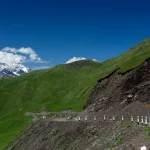
Most visitors pass Khertvisi on the way to Vardzia and stop for 15 minutes. That is a mistake. The fortress itself takes 30–40 minutes to walk properly, and the road approaching it from the north follows the Mtkvari canyon through a sequence of narrow gorges and high cliff walls that are among the most striking driving landscapes in southern Georgia. The canyon walls change colour through the day — pale yellow in morning light, deep ochre by late afternoon.

There is no entrance fee for Khertvisi as of 2026, and no facilities. Bring water. The site is not heavily signposted from the main road — look for the rocky outcrop above the river confluence and the rough track leading up from the roadside parking area.
Combining Khertvisi with a Vardzia visit on the same day is practical if you have a private car or have arranged a full-day taxi. The two sites are about 25 kilometres apart on the same road.
Atskuri Fortress and the Borjomi Gorge Villages
Atskuri is only 12 kilometres from Borjomi along the gorge road — close enough to reach by bicycle if you are comfortable on a packed-dirt riverside path. The fortress here is partially ruined and far less visited than Rabati or Khertvisi, which is precisely why it rewards a detour. You will likely have it to yourself.
The ruins sit above the village of the same name, looking down on the Mtkvari as it bends through the gorge. The climb from the road takes about 20 minutes on a rough path. From the top, you can see several of the small farming villages strung along the gorge floor — unchanged in their basic structure for generations, each with a small stone church, orchards, and vegetable gardens running right to the river bank.
This is slow travel at its best. Spend a morning walking between two or three of the gorge villages — Daba, Atskuri, Timoti — and you will encounter a pace of life that feels genuinely different from Borjomi’s tourist infrastructure. Local families sometimes sell fresh honey, churchkhela, and preserved fruits from wooden stands by the roadside. Prices are negotiated in person and are typically very low by any standard.

Paravani Lake — Georgia’s Highest and Largest Lake
Paravani Lake sits at approximately 2,073 metres above sea level on the Javakheti plateau, about 85 kilometres south of Borjomi. It is Georgia’s largest lake by surface area, and in 2026 it remains almost unknown to foreign visitors — a genuine gap in most travel coverage of the region.
The plateau itself is a high, wind-swept grassland environment more reminiscent of the Central Asian steppe than anything you see in the Borjomi gorge. The lake is enormous and shallow, its surface reflecting a sky that, at altitude, is a deeper blue than at lower elevations. On a windless day the reflections are perfect. On a windy day — which is most days — the surface breaks into short, sharp waves that turn the water steel-grey.
The road from Borjomi requires a vehicle with reasonable ground clearance after the junction near Ninotsminda — some sections are unpaved and can be rutted after rain. A standard sedan can manage in dry conditions, but check conditions before you go. Organised day tours from Borjomi do run to the Javakheti plateau and often include Paravani alongside the Armenian monastery of Sapara or the basalt columns at Tmogvi.
- Best months: June through September — the plateau is snowbound and road access difficult outside this window
- Facilities: Minimal — one small café operates near the lakeside in summer
- Getting there: Private car or organised tour; no direct public transport from Borjomi
Timotesubani and the Samtskhe Monastery Circuit
Medieval Georgia produced extraordinary fresco painting, and the region around Borjomi contains several 12th–13th century churches that most visitors to Tbilisi never reach. The monastery church at Timotesubani, about 20 kilometres from Borjomi near the village of the same name, contains some of the finest surviving Georgian fresco cycles in the country — including a dramatic Last Judgment scene that covers the entire west wall interior.

The building is modest from outside, a single-nave church in a quiet agricultural valley. Inside, the colours of the frescoes — deep reds, lapis blues, earthy ochres — have survived seven centuries with remarkable intensity. There is no crowd management, no ticket booth, no audio guide. A local caretaker usually has a key. The contrast between the humble exterior and the interior is one of those travel moments that arrives without announcement.
Timotesubani pairs well with Sapara Monastery (about 15 kilometres from Akhaltsikhe), which sits in a forested ravine and is still actively used. A circuit covering Timotesubani, the Borjomi gorge villages, and Sapara in a single day is achievable by car, and hits three completely different architectural and landscape registers without doubling back on yourself.
Getting to Borjomi and Moving Between Day Trip Destinations in 2026
Borjomi is 157 kilometres from Tbilisi. The drive takes approximately 2.5 hours via the E60 and the Borjomi gorge road. Marshrutkas run from Tbilisi’s Didube station throughout the day and cost around 12–15 GEL. Journey time by marshrutka is 3–3.5 hours. The Georgian Railway also serves the Borjomi route — the Tbilisi–Borjomi train runs twice daily in 2026, taking roughly 3.5 hours, and the ride through the Likani gorge on the final approach is scenic enough to justify the extra time over the marshrutka.
From Kutaisi, Borjomi is accessible via a connection at Khashuri. Direct marshrutkas run irregularly; the most reliable option is a shared taxi from Kutaisi to Khashuri and then onward. Kutaisi International Airport now receives flights from over 20 European cities in 2026, making it a viable entry point for visitors basing themselves in Borjomi.

Within the region, your options depend heavily on the destination:
- Marshrutka: Works well for Akhaltsikhe (and onward to Vardzia with a connection), and for Bakuriani. These are the two corridors with reliable daily frequency.
- Shared taxis: Fill the gaps for Khertvisi, Atskuri, and gorge villages. Find them at the Borjomi central bus area.
- Private taxi for the day: For Vardzia, Paravani Lake, or any combination trip, hiring a driver for the day typically costs 150–250 GEL depending on distance. Agree the price upfront, include fuel, and specify waiting time.
- Rental car: Available in Tbilisi and increasingly in Borjomi itself — two local agencies now operate year-round. Rates in 2026 start around 120–160 GEL per day for a compact car.
One practical note for 2026: the road through the Mtkvari canyon toward Vardzia and Khertvisi has ongoing maintenance work between kilometres 45 and 60 from Borjomi. Expect 15–20 minute delays at road control points, typically in the morning. Check current conditions with your accommodation before setting out early.
2026 Budget Reality — What a Day Trip Actually Costs from Borjomi
Prices in Samtskhe-Javakheti have risen modestly since 2024, tracking broader Georgian inflation, but the region remains good value compared to the Kazbegi or Gudauri corridors where tourism demand has pushed prices sharply upward.
Budget tier (under 60 GEL per person for the day)
- Marshrutka to Akhaltsikhe and back: 10–12 GEL
- Rabati Castle entrance: 7 GEL
- Lunch at a local canteen in Akhaltsikhe: 12–18 GEL
- Borjomi-Kharagauli park day hike (no guide): 5 GEL entrance
- Kukushka train to Bakuriani return: 2–4 GEL
Mid-range tier (60–150 GEL per person for the day)
- Shared taxi day trip to Vardzia: 30–50 GEL per person (group of 4)
- Guided park hike: 50–80 GEL per group
- Bakuriani day ski pass: 60–80 GEL
- Lunch at a mid-range restaurant in Akhaltsikhe or Bakuriani: 25–40 GEL
- Equipment rental in Bakuriani: 50–70 GEL

Comfortable tier (150 GEL+ per person for the day)
- Private driver for full-day canyon and Vardzia circuit: 200–250 GEL total (split between passengers)
- Organised Javakheti plateau tour including Paravani: 120–180 GEL per person
- Full ski day in Bakuriani with lessons and rental: 180–220 GEL
Accommodation in Borjomi itself ranges from 40–70 GEL per night for a clean guesthouse room to 180–300 GEL for the spa hotels near the mineral park. Most day trippers base here for 2–4 nights, which gives enough time to cover four or five destinations without rushing.
Frequently Asked Questions
How many day trips can realistically be done from Borjomi?
In a three-night stay, four day trips is comfortable without exhausting yourself. A good combination for first-time visitors: Akhaltsikhe and Rabati Castle on day one, Vardzia on day two, Bakuriani by Kukushka train on day three. Add Borjomi-Kharagauli trails on a half-day if energy allows.
Do I need a car to do day trips from Borjomi?
Not for every destination. Akhaltsikhe, Bakuriani, and the gorge villages are reachable by marshrutka or shared taxi. Vardzia requires a connection or private transport. Paravani Lake and Khertvisi Fortress are genuinely difficult without a private vehicle or organised tour. For maximum flexibility, renting a car in Borjomi for one or two days makes sense.
What is the best time of year to visit Borjomi for day trips?
May through October covers most destinations comfortably. June and September are the sweet spots — weather is stable, wildflowers or autumn colour add visual interest, and the summer peak crowds have not fully arrived or have already thinned. Winter works well specifically for Bakuriani skiing but limits access to Paravani Lake and some canyon roads.
Is Vardzia worth the long travel time from Borjomi?
Yes, without reservation. The 1.5–2 hour drive each way is the main obstacle, but the site itself — over 400 rooms, tunnels, and churches carved into a volcanic cliff face, still partially occupied by monks — is unlike anything else in the Caucasus. Go early to avoid tour group overlap. Allow at least two hours on site, not one.
Are there English-speaking guides available for day trips from Borjomi?
In 2026, the Borjomi-Kharagauli National Park visitor centre has English-speaking rangers on staff. For Vardzia, Rabati, and the monastery circuit, local guides advertise at guesthouses and the park centre. Quality varies — ask your accommodation for a personal recommendation rather than booking through an anonymous board listing. Budget around 80–150 GEL for a guided full-day excursion.
Explore more
Vardzia & Rabati Castle Day Trip from Borjomi: Your Essential Itinerary
Borjomi Shopping Guide: Top Souvenirs, Local Crafts & Where to Find Them
Borjomi Nightlife Guide: Best Bars, Clubs & Late-Night Spots
📷 Featured image by Tonia Kraakman on Unsplash.