On this page
- The Old Town Core — Restaurants on the Main Square Worth Your Time
- Side Streets and Hidden Courtyards — Where Locals Actually Eat
- Wine-Paired Dining — Restaurants That Take Kakheti Wine Seriously
- Budget Eats and Casual Spots — Where to Eat Well Without Spending Much
- 2026 Budget Reality — Current Price Ranges in GEL
- Breakfast and Morning Stops — Where to Start the Day in Sighnaghi
- Outside the Walls — Restaurants Just Beyond the Fortress Perimeter
- What to Order in Each Spot — Dish-Specific Guidance
- Practical Eating Tips for Sighnaghi in 2026
- Frequently Asked Questions
💰 Click here to see Georgia Budget Breakdown
💰 Prices updated: October, 2026. Budget figures are estimates — always verify before travel.
Exchange Rate: $1 USD = ₾2.60
Daily Budget (per person)
Shoestring: ₾70.00 – ₾130.00 ($26.92 – $50.00)
Mid-range: ₾180.00 – ₾350.00 ($69.23 – $134.62)
Comfortable: ₾500.00 – ₾1,000.00 ($192.31 – $384.62)
Accommodation (per night)
Hostel/guesthouse: ₾30.00 – ₾60.00 ($11.54 – $23.08)
Mid-range hotel: ₾110.00 – ₾200.00 ($42.31 – $76.92)
Food (per meal)
Budget meal: ₾15.00 ($5.77)
Mid-range meal: ₾35.00 ($13.46)
Upscale meal: ₾100.00 ($38.46)
Transport
Single metro/bus trip: ₾1.00 ($0.38)
Monthly transport pass: ₾40.00 ($15.38)
Sighnaghi has a restaurant problem — not a shortage of them, but a surplus of mediocre ones dressed up with nice views. By 2026, the main square around the central fountain has become ringed with tourist-facing places that charge Tbilisi prices for food that wouldn’t impress anyone. The wine is often the best thing on the table. If you’ve arrived after a two-hour drive from Tbilisi or a scenic train-and-marshrutka combo through Telavi, you deserve better than a watery lobiani and a glass of semi-sweet Kindzmarauli served in a plastic-stemmed glass. This guide cuts through the noise and tells you exactly where to eat in Sighnaghi in 2026 — by location, budget, and what you’re actually in the mood for.
The Old Town Core — Restaurants on the Main Square Worth Your Time
Not every place on the main square is a trap. The problem is that they look identical from the outside — the same hand-painted signs, the same laminated menus with stock photos of khinkali, the same terrace tables with tablecloths flapping in the Alazani Valley wind. You have to know which ones are actually cooking.
Pheasant’s Tears Restaurant
This is the anchor of serious eating in Sighnaghi and has been since John Wurdeman first opened it alongside his winery. In 2026 it remains the best single restaurant in town, full stop. The kitchen draws on Kakhetian tradition without being slavish to it — you’ll find dishes like roasted aubergine with walnut paste and pomegranate that taste like they were built over years, not assembled for tourists. The wine list is natural, Georgian, and genuinely interesting. Sit inside the low-ceilinged room with exposed stone walls and you can feel the chill of the stone even on a warm October evening. Book ahead on weekends, especially during Rtveli season in late September and October when the town fills with wine tourists.
Restaurant Nikala
Directly on the square, Nikala is the most reliable of the mid-range options you’ll find on the main drag. The mtsvadi (grilled pork skewers) come off the open charcoal grill with proper char and smoke — not oven-baked, which is what you get at half the places nearby. The pkhali selection is made fresh daily. Service is straightforward and unhurried. It won’t surprise you, but it won’t disappoint you either, which on the main square in 2026 is genuinely something.
Side Streets and Hidden Courtyards — Where Locals Actually Eat
Walk two blocks off the square in any direction and the tourist infrastructure thins out fast. Sighnaghi is a small town — roughly 2,000 permanent residents — and the places that cater to them tend to be cheaper, more personal, and more honest about what they’re cooking.
Deda’s Kitchen (Bebia’s)
This is the kind of place that has no real sign, a handwritten menu inside a wooden door on a side street running parallel to the fortress wall, and a woman in her sixties who is both the chef and the host. Ask locals for “Bebia’s” — the grandmother’s place — and they’ll point you in the right direction. The menu changes daily depending on what’s been cooked. Expect churchkhela-braised chicken, fresh-baked shotis puri, and a bean stew so thick it coats the back of a spoon. Cash only, no English menu, but pointing works fine. Lunch only, and portions are generous enough that you won’t need dinner.
Wine House Sighnaghi Courtyard
Several guesthouses along the old residential streets have opened their courtyard spaces to non-guests for meals. One of the best is run out of a 19th-century house on the sloping street below the Church of St. George. The table is set under a vine pergola and the food — cold lobiani, grilled vegetables, fresh tkemali sauce, and whatever meat came from the village that week — arrives without ceremony. You order by conversation, not menu. These courtyard dinners work best for groups of two to four people willing to eat what’s available rather than what they planned.
Wine-Paired Dining — Restaurants That Take Kakheti Wine Seriously
Sighnaghi sits in the heart of Kakheti, Georgia’s primary wine-producing region. Any restaurant that treats wine as an afterthought — poured from an unlabelled bottle into a chipped glass — is not using its geography well. These spots do it right.
Pheasant’s Tears Winery Tasting Room
Distinct from the main restaurant, the winery’s tasting room on the same property functions more like a wine bar with food. In 2026 they’ve expanded their by-the-glass menu to include eight to ten of their own amber and red wines at any given time, all made in traditional qvevri (clay amphora buried in the earth). The food here is designed to accompany wine rather than compete with it — small plates of churchkhela, hard cheese from a nearby village, cold roasted peppers in oil, fresh walnut bread. The amber Rkatsiteli poured straight from the qvevri has a tannin grip and dried-fruit depth that makes most orange wine trends look shallow by comparison.
Nino’s Wine Table
A newer arrival that opened in late 2024 and has settled into its identity by 2026. Nino runs a tasting table experience out of her family’s wine cellar on the eastern edge of the old town — six to eight guests maximum, two sittings per evening. The format is a fixed menu of five dishes paired with five wines from small Kakhetian producers, many from villages within 20 kilometres. A sitting runs around two and a half hours. It’s the closest thing Sighnaghi has to a proper wine-dinner experience and it books out weeks ahead in peak season. Contact via the local guesthouse network or through the Sighnaghi tourism office on the square.
Budget Eats and Casual Spots — Where to Eat Well Without Spending Much
Sighnaghi is not a budget destination by Georgian standards — the tourist premium is real. But there are ways to eat satisfying, honest food without a restaurant bill that makes you regret the trip.
The Bakery on the Market Lane
There is a small bakery operating out of a converted house on the lane leading down toward the lower market area, identifiable by the smell of fresh bread and the thin smoke from the tone oven out back. In 2026 they bake shotis puri continuously from early morning until early afternoon. A fresh loaf costs 2–3 GEL. Buy a piece of local suluguni cheese from the stall opposite (around 8–10 GEL per 100g) and eat standing up in the lane. It is the best 15 GEL meal in Sighnaghi.
Khinkali Corner Near the Bus Stop
Near the marshrutka stop at the edge of the lower town there is a no-name eatery that serves khinkali and nothing else except beer and soft drinks. The dumplings are hand-crimped, thick-skinned, and arrive in a steel pot with a paper napkin. A portion of ten khinkali costs around 12–14 GEL in 2026. The broth inside each one is hot enough to burn if you’re impatient — the right move is to bite a small hole and let the steam escape before drinking the soup directly from the dumpling. This is not a place to linger, but it’s the most honest 20 GEL meal in town.
2026 Budget Reality — Current Price Ranges in GEL
Sighnaghi restaurant prices rose noticeably between 2023 and 2025, largely driven by the increase in domestic and international tourism and the short supply season (most of the best places are closed or reduced hours from November to February). Here is what you should expect to spend per person for a full meal including one glass of wine or a beer in 2026:
- Budget (casual spots, bakeries, khinkali places): 15–30 GEL per person
- Mid-range (Nikala, courtyard guesthouses, local family restaurants): 45–80 GEL per person
- Comfortable (Pheasant’s Tears restaurant, Nino’s Wine Table tasting menu): 100–180 GEL per person
Wine adds significantly to any bill. A bottle of Pheasant’s Tears wine at their own restaurant runs 45–90 GEL depending on the label. A carafe of house wine at a mid-range place is typically 20–30 GEL. At budget spots, a half-litre of local wine poured from a plastic bottle costs 8–12 GEL and is often better than it looks.
Tipping is not mandatory but is genuinely appreciated. At sit-down restaurants, 10% is the local norm. At casual places and bakeries, rounding up the bill is enough.
Breakfast and Morning Stops — Where to Start the Day in Sighnaghi
Sighnaghi wakes up slowly. Most restaurants don’t open before 10am, and many closer to 11am. But if you’re an early riser — or you’ve come to watch the sunrise over the Alazani Valley from the fortress walls, which is worth the 6am alarm — there are a few places that work for mornings.
Café by the Clock Tower
A small café near the old clock tower on the main square that opens at 8am on most days and reliably has fresh coffee (Turkish style and basic espresso), matsoni (Georgian yogurt) with honey, and pastries from the bakery down the lane. The interior is warm and close — four tables, a counter, mismatched chairs. The coffee is strong enough that the smell carries into the square on a cool morning. It’s a good place to sit with a map and plan the day before the tour groups arrive.
Guesthouse Breakfast Rooms
Most guesthouses in Sighnaghi include breakfast in their room rate and many allow non-guests to eat for a fixed price — typically 15–25 GEL per person in 2026. A typical spread includes fresh lavash, eggs, matsoni, local honey, churchkhela, fruit preserves, and cold meats. This is arguably the best value breakfast format in town. Ask the evening before if you can join the next morning’s sitting.
Outside the Walls — Restaurants Just Beyond the Fortress Perimeter
The fortress walls that circle Sighnaghi’s old town are the town’s defining visual feature. Just outside those walls, where the road descends toward the valley and the newer residential areas begin, there are a handful of eating options that most visitors never find because they’re not walking in that direction.
Roadside Mtsvadi Stops
On the road leading out of Sighnaghi toward Tsinandali and the main Kakheti highway, there are three or four roadside grill spots that operate from around noon until early evening. These are not restaurants — they’re metal grills, plastic tables, and men in aprons who have been doing this for years. The mtsvadi is skewered and cooked over vine cuttings, which gives the meat a specific smoky sweetness you don’t get from standard charcoal. A full skewer with bread and raw onion costs 18–25 GEL. These spots are busy with locals on weekends and almost empty on weekday afternoons.
Alazani Valley View Restaurant
About 1.5 kilometres below the old town on the road toward the valley floor, this restaurant opened in 2025 and has earned a reputation for the most dramatic view of any dining room in the region — wide terrace, vine-covered railing, the full sweep of the Alazani plain to the Greater Caucasus. The food is competent Kakhetian cooking: chakapuli (lamb in tarragon and tkemali broth) in spring, grilled trout from the nearby Alazani River in summer, hearty bean and walnut dishes through autumn. The view does most of the work, but the kitchen holds its own. Prices sit in the mid-range tier.
What to Order in Each Spot — Dish-Specific Guidance
Sighnaghi is not Tbilisi. The menu here is shorter, more seasonal, and more regional. Knowing what to order where saves you from wasted choices.
- At Pheasant’s Tears: The walnut-stuffed vegetables (badrijani nigvzit), the slow-cooked lamb, and anything the server describes as “today’s preparation” — these rotate and are always the kitchen’s best work.
- At the khinkali spot near the bus stop: Order the meat khinkali (not mushroom or potato — this is a meat kitchen). Ten is a standard portion; twelve is ambitious.
- At courtyard guesthouses: Don’t order off a menu if there isn’t one. Tell the host how many people, whether you eat meat, and let them decide. You’ll eat better.
- At the roadside grill spots: Ask for the mtsvadi with bone-in pork — it takes longer but has more flavour. The boneless chicken version is faster and fine, but pork off the bone is why these places exist.
- At Nino’s Wine Table: The menu is fixed, so the only decision is dietary restrictions to communicate in advance. Vegetarian can be accommodated with notice.
- At mid-range square restaurants: Stick to grilled dishes, pkhali, and fresh bread. Avoid cream-based sauces — these kitchens aren’t built for them and the results show.
Practical Eating Tips for Sighnaghi in 2026
A few logistics that save time and frustration:
- Reservations: Pheasant’s Tears and Nino’s Wine Table require advance booking on weekends and during the Rtveli harvest season (late September through October). All other places in this guide are walk-in. Arriving before 7:30pm at popular mid-range spots on a Saturday avoids a wait.
- Card payments: By 2026, most sit-down restaurants on the main square accept Visa and Mastercard. Budget spots, bakeries, courtyard guesthouses, and roadside grills are cash only. Withdraw GEL from the ATM on the main square before wandering — it’s the only one in town and it occasionally runs out of cash on busy weekends.
- Hours: Most restaurants in Sighnaghi operate from around 11am to 10pm in peak season (April–October) and shorter hours or days-only service from November through March. The khinkali spot near the bus stop closes early — by 8pm in most seasons.
- Language: English menus exist at all main-square restaurants. At side-street and courtyard spots, Georgian only — a translation app works, or simply ask the host to describe what they have.
- Season matters: Chakapuli (lamb stew) is a spring dish. Grilled river trout is best in summer. Autumn brings fresh walnuts, churchkhela made before your eyes, and the richer meat stews that suit cooler weather. Ordering seasonally will always get you better food than ordering off the full printed menu in the wrong month.
Frequently Asked Questions
What is the best restaurant in Sighnaghi overall?
Pheasant’s Tears is the most consistent high-quality option in town in 2026. It combines serious natural wine with genuinely considered Kakhetian cooking in a stone-walled room that suits the setting. It’s also the most expensive sit-down option, but the quality justifies it for a special meal. Book ahead on weekends and during harvest season in autumn.
Is Sighnaghi expensive for food compared to Tbilisi?
Mid-range and higher, yes — by roughly 10–20% more than comparable Tbilisi restaurants in 2026. Budget eating at local bakeries and khinkali spots remains affordable. The tourist premium is real on the main square. Walk two streets away from the centre and prices drop noticeably. Guesthouse meals often offer the best value for the quality.
Are there vegetarian or vegan options in Sighnaghi restaurants?
Georgia has a strong tradition of vegetable and legume dishes — pkhali, badrijani, lobiani (bean bread), and various walnut-based preparations are all naturally plant-based. Most restaurants have these. For a fully vegan meal, Pheasant’s Tears is the safest choice as the kitchen is used to accommodating this. Smaller local spots may have fewer options outside of bread, cheese, and grilled vegetables.
Do I need to book restaurants in Sighnaghi in advance?
For most places, no — Sighnaghi is a small town and walk-in works fine outside of peak season. The exceptions are Pheasant’s Tears (book 1–2 days ahead on weekends) and Nino’s Wine Table tasting dinner (book at least a week ahead in summer and Rtveli season). All other restaurants in this guide are first-come, first-served.
What is the local Kakhetian dish I should not leave Sighnaghi without trying?
Chakapuli in spring — lamb slow-cooked with fresh tarragon and tkemali plum sauce — is the most distinctly Kakhetian dish and one of the finest things Georgian cuisine produces. Outside of spring, look for kuchmachi (spiced offal with walnuts and pomegranate) and mtsvadi cooked over vine cuttings, which is specific to this wine-growing region and genuinely different from standard charcoal-grilled meat.
Explore more
Sighnaghi Day Trip from Tbilisi: Maximizing Your ‘City of Love’ Visit
Sighnaghi Shopping Guide: Best Souvenirs, Wine & Local Crafts
Sighnaghi Day Trips: Your Ultimate Guide to Kakheti Excursions
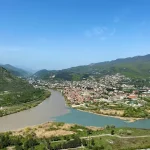
📷 Featured image by Konstantin Artyushkevich on Unsplash.