💰 Click here to see Georgia Budget Breakdown
💰 Prices updated: October, 2026. Budget figures are estimates — always verify before travel.
Exchange Rate: $1 USD = ₾2.60
Daily Budget (per person)
Shoestring: ₾70.00 – ₾130.00 ($26.92 – $50.00)
Mid-range: ₾180.00 – ₾350.00 ($69.23 – $134.62)
Comfortable: ₾500.00 – ₾1,000.00 ($192.31 – $384.62)
Accommodation (per night)
Hostel/guesthouse: ₾30.00 – ₾60.00 ($11.54 – $23.08)
Mid-range hotel: ₾110.00 – ₾200.00 ($42.31 – $76.92)
Food (per meal)
Budget meal: ₾15.00 ($5.77)
Mid-range meal: ₾35.00 ($13.46)
Upscale meal: ₾100.00 ($38.46)
Transport
Single metro/bus trip: ₾1.00 ($0.38)
Monthly transport pass: ₾40.00 ($15.38)
Ushguli’s reputation has grown faster than the road leading to it. By 2026, more travellers than ever are making the pilgrimage to this cluster of medieval stone towers sitting at 2,200 metres above sea level in the Svaneti region — and more than ever are arriving underprepared. The track from Mestia is still unpaved for long stretches, river crossings still flood in early summer, and “accessible by any car” is still a myth spread by optimistic guesthouse owners. This guide cuts through the noise and tells you exactly how to get there, what it costs, and what to expect when you arrive.
What Makes Ushguli Worth the Journey
Ushguli is not one village — it is four hamlets clustered together at the head of the Enguri gorge, all of them recognised as a UNESCO World Heritage Site. The defining feature is the Svan towers: defensive stone structures built between the 9th and 13th centuries, many of them still standing to their original height. Families still live in houses at the base of these towers, cows still wander the muddy lanes between them, and on a clear morning the view up the valley to Mount Shkhara — Georgia’s highest peak at 5,193 metres — is the kind of thing that makes you stand still with your mouth open.
The light in Ushguli does something particular. In the late afternoon, when the sun drops behind the western ridge, the towers turn a deep amber and the snow on Shkhara catches a pink edge. The smell of woodsmoke drifts through the hamlets from early evening. It feels genuinely remote in a way that very few places in the Caucasus still manage.
Beyond the scenery, the Lamaria Church in the uppermost hamlet of Chazhashi is worth close attention. It holds frescoes dating to the 12th century and a collection of pagan-era bronze artifacts that blur the line between Christianity and the older Svan beliefs that still shape local life.
Getting There from Mestia: The Final 45 Kilometres
Mestia is the jumping-off point. From there, Ushguli is roughly 45 kilometres along a road that combines short paved sections, long stretches of gravel and rock, at least two river ford crossings, and several switchbacks that drop straight into the valley if you misjudge them. The journey takes between 2.5 and 4 hours depending on conditions.
Shared jeep (the standard option): From Mestia’s central square, shared 4×4 jeeps depart daily when there are enough passengers — usually 6 to 8 people. Departure times cluster around 09:00–10:00. The fare in 2026 is typically 50–70 GEL per person each way. Drivers collect passengers from guesthouses if you arrange it the evening before. This is by far the most common way to travel and the most practical.

Private jeep hire: If you want flexibility — your own departure time, stops at viewpoints, a return when you choose — hire a private 4×4. Expect to pay 400–600 GEL for the return trip. Drivers with good English and route knowledge include locals who advertise through guesthouses in Mestia; ask your accommodation to recommend someone they trust.
Trekking: The multi-day trek from Mestia to Ushguli is one of the great mountain walks in the Caucasus, taking 3–4 days through high pastures, shepherds’ huts, and glacier viewpoints. The route is well-established and does not require a guide for experienced trekkers, though a guide adds real value for understanding the landscape and culture. Trail markers exist but are inconsistent.
On your own vehicle: Do not attempt this in a standard sedan, a minivan, or a compact SUV without serious ground clearance. Rental companies in Tbilisi that allow their vehicles on this road are very few. If you are renting, confirm in writing that the Mestia–Ushguli road is covered by your insurance before you leave the city.
Getting to Mestia First
Before you tackle the Ushguli road, you need to reach Mestia. There are three realistic options from Tbilisi or Kutaisi.
By Air
Vanilla Sky Airlines operates scheduled flights between Natakhtari Airport (outside Tbilisi) and Mestia’s small mountain airstrip. In 2026 there are also seasonal connections from Kutaisi International Airport. Flights take around 40 minutes and cost 180–350 GEL one way depending on the season and booking window. The catch: mountain weather cancels flights with very little notice. Always have a backup plan. The airstrip can only handle small prop aircraft, so weight limits on luggage apply.
By Marshrutka
The cheapest and most popular option is the shared marshrutka from Tbilisi’s Didube bus station. Departures run daily, usually at 07:00, and the journey takes 9–11 hours depending on road conditions and stops. The fare is around 50–60 GEL. The marshrutka to Mestia also departs from Kutaisi’s central bus station, taking around 5–6 hours for approximately 40 GEL. These are long, winding journeys — the last two hours through the Enguri gorge involve significant switchbacks. Bring snacks, motion sickness tablets if you need them, and download your entertainment before you lose mobile signal.

By Private Car or Taxi
Hiring a car or taxi from Tbilisi to Mestia costs 400–700 GEL and takes 8–9 hours. This is worth considering if you are a group of three or four people splitting costs, or if you have luggage that makes marshrutka travel uncomfortable. The road from Zugdidi to Mestia opened a newly resurfaced section in 2025, cutting the final approach time by roughly 30 minutes compared to 2024.
Day Trip or Overnight in Ushguli?
The honest answer is: overnight if you can. A day trip from Mestia gives you perhaps 2–3 hours in Ushguli before you need to turn around to make it back before dark. That is enough time to walk the main hamlets, visit the Lamaria Church, and eat lunch — but no more.
Staying at least one night changes the experience entirely. The village empties of day-trippers by 17:00. What remains is the sound of the river, the creak of the towers in the wind, and a sky so dark after sunset that the Milky Way is visible without any optical aid. Waking up before the tour groups arrive and walking up to the viewpoint above Chazhashi in the early morning — when the mist is still in the valley and no one else is moving — is the version of Ushguli that most visitors never see.
Where to Eat and Sleep in Ushguli
Accommodation in Ushguli is almost entirely family guesthouses. There are no hotels in the conventional sense. Rooms are simple — often shared bathrooms, basic bedding, no WiFi or unreliable satellite connection — but the hospitality is genuine and the food is home-cooked.
Most guesthouses operate on a half-board basis, meaning dinner and breakfast are included in the room price. Dinner in a Svan home typically means a spread of kubdari (the Svan meat pie, denser and spicier than khinkali, with the dough giving a satisfying chew), boiled potatoes, pickled vegetables, and Svan salt — a pungent blend of garlic, dried herbs and fenugreek that locals use on almost everything.
Well-regarded guesthouses in 2026 include those in the Chazhashi and Murkmeli hamlets — ask in Mestia for current recommendations, as quality can shift year to year depending on ownership. Booking ahead in July and August is essential. Shoulder season (June, September) is quieter and the road conditions are generally better.

There is one small café near the main tower cluster that serves khachapuri, soup, and coffee during the peak summer months. Do not count on it being open outside July and August.
2026 Budget Reality
- Budget: Guesthouse room with half-board: 80–120 GEL per person per night. Shared jeep Mestia–Ushguli return: 100–140 GEL. Total per day in Ushguli including transport: 180–260 GEL.
- Mid-range: Comfortable guesthouse with private bathroom (rare but available): 150–200 GEL per person with meals. Private jeep hire shared between two people: add 300 GEL total. Total per day: 300–400 GEL.
- Comfortable: Private jeep, private room, guide for a half-day walk above the village: 500–700 GEL per person per day total. At this level you are not paying for luxury — you are paying for time, flexibility, and local knowledge.
Getting to Mestia by marshrutka from Tbilisi adds 50–60 GEL each way. Flying adds 180–350 GEL each way but saves a full day of travel. Factor this into your overall Svaneti budget.
Practical Tips Before You Go
- Season matters more here than anywhere else in Georgia. July and August are crowded and the road is at its best. June and September offer a strong balance of good weather and fewer people. October is possible but cold and the road can close after early snowfall. November through April, the road is typically closed or passable only by experienced local drivers in exceptional conditions.
- There is no ATM in Ushguli. Bring all the cash you need from Mestia. Even in Mestia, the single ATM occasionally runs dry in peak season — carry cash from Tbilisi to be safe.
- Mobile signal: Magti has the best coverage in the Svaneti valleys in 2026. Beeline and Geocell have limited or no signal along the Mestia–Ushguli road. Download offline maps on Maps.me or Google Maps before you leave Mestia.
- Altitude: Ushguli sits at 2,200 metres and some walks above the village reach 2,700 metres. If you are coming directly from Tbilisi (which sits at around 490 metres), give yourself a day in Mestia (1,500 metres) to acclimatise before heading higher.
- Respect the towers. Several of the Svan towers are on private family land. Ask before approaching closely, and do not climb or touch the stonework. The UNESCO designation does not mean they are public attractions — they are living pieces of family heritage.

Frequently Asked Questions
Is Ushguli accessible without a 4×4?
Not reliably. The road from Mestia includes river crossings and rough gravel sections that defeat standard cars, especially after rain. A high-clearance 4×4 is the minimum requirement. The safest approach is to travel in a shared or private jeep operated by a driver who knows the road, rather than attempting it in a rental car.
How many days do I need to visit Ushguli properly?
Allow at least four nights in the Svaneti region: one night in Mestia on arrival, two nights in Ushguli, and one more night in Mestia before leaving. This gives you time to recover from travel, explore the towers, walk above the village, and return without rushing.
Can I visit Ushguli in winter?
In practice, no. The road is typically impassable from November through April due to snow. Local residents use snowmobiles during winter months. Some extreme adventure operators offer winter expeditions, but these are specialist undertakings requiring proper equipment, experience, and guide support — not a casual visit.
Do I need a guide to visit Ushguli?
No guide is required to visit the village itself. A guide adds value if you want to do the multi-day trek from Mestia, understand the history of the towers in depth, or hike into the high terrain above Ushguli toward the Shkhara glacier. For a straightforward jeep trip and village walk, a guide is optional.
Are there any entry fees at Ushguli?
As of 2026, there is no formal entry fee to reach Ushguli village. Some individual tower compounds charge a small viewing fee of 5–10 GEL. The Lamaria Church accepts donations rather than charging admission. Always carry small denomination GEL notes since there is no card payment infrastructure in the village.
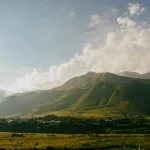
📷 Featured image by Ivan Stepanov on Unsplash.