On this page
- Where the Actual Shopping Happens in Mtskheta
- The Open-Air Souvenir Bazaar Along Davit Aghmashenebeli Street
- What to Actually Buy in Mtskheta
- Religious and Iconographic Crafts
- Churchkhela: The Food Souvenir Situation
- 2026 Budget Reality: What Things Cost
- Practical Tips for Shopping in Mtskheta in 2026
- Frequently Asked Questions
💰 Click here to see Georgia Budget Breakdown
💰 Prices updated: October, 2026. Budget figures are estimates — always verify before travel.
Exchange Rate: $1 USD = ₾2.60
Daily Budget (per person)
Shoestring: ₾70.00 – ₾130.00 ($26.92 – $50.00)
Mid-range: ₾180.00 – ₾350.00 ($69.23 – $134.62)
Comfortable: ₾500.00 – ₾1,000.00 ($192.31 – $384.62)
Accommodation (per night)
Hostel/guesthouse: ₾30.00 – ₾60.00 ($11.54 – $23.08)
Mid-range hotel: ₾110.00 – ₾200.00 ($42.31 – $76.92)
Food (per meal)
Budget meal: ₾15.00 ($5.77)
Mid-range meal: ₾35.00 ($13.46)
Upscale meal: ₾100.00 ($38.46)
Transport
Single metro/bus trip: ₾1.00 ($0.38)
Monthly transport pass: ₾40.00 ($15.38)
Mtskheta pulls in more visitors than almost any site outside Tbilisi, yet most people leave clutching the same plastic cross or mass-produced shawl they could have bought at any Georgian highway stop. The town is only 20 kilometres from Tbilisi, so it gets flooded with day-trippers — and a lot of the stalls near the main church gates are set up specifically to catch people who have 45 minutes and no plan. If you want something worth keeping, or at least worth giving as a gift, you need to know where to look and what to skip.
Where the Actual Shopping Happens in Mtskheta
Mtskheta is small. The entire historic centre takes about 15 minutes to walk end to end. That works in your favour once you understand the layout.
The main shopping activity clusters along two connecting zones. The first is the stretch of Davit Aghmashenebeli Street, which runs roughly parallel to the Mtkvari River and connects the town’s central square to the Svetitskhoveli Cathedral complex. This is where most souvenir sellers operate. The second zone is the area directly outside the Svetitskhoveli Cathedral gates, where a tighter group of stalls sets up every morning and targets pilgrims and tour groups.
A third, quieter area worth knowing: the small covered market near the bus stop on the main road (Gori Highway side). This is where locals actually shop. You won’t find tourist souvenirs here — instead, you’ll find seasonal fruit, churchkhela being made fresh, and older women selling homemade walnut pastes and dried herbs. It’s easy to miss, but it’s the most authentic commercial space in the town.
The Open-Air Souvenir Bazaar Along Davit Aghmashenebeli Street
This is the main event for visitors. Dozens of stalls line both sides of the street, most of them family-run operations that have been here for years. In 2026, the number of stalls has grown compared to pre-pandemic levels — the town has seen steady increases in visitors since direct bus links from Tbilisi’s Didube terminal were made more frequent in 2025.
The stalls are open daily from roughly 9:00 to 18:00, though sellers start packing up earlier in winter. You don’t need to walk every stall — after the first ten, you’ll notice significant overlap. What varies is quality, not product selection. Here’s how to read what you’re looking at:
- Mass-produced items (resin crosses, printed scarves, fridge magnets with Jvari Monastery printed on them) are stacked high at the front of the stall. These are the loss leaders — cheap, forgettable, and everywhere.
- Handmade items are usually displayed lower, to the side, or kept behind the main table. Ask vendors to show you what they made themselves — many will, and the quality difference is immediately obvious.
- Wine and chacha sold in unlabelled bottles are common. Some of it is genuinely good home-production from nearby Kartli villages. Some is not. More on this below.

What to Actually Buy in Mtskheta
Skip the generic and go for things that are either locally made or regionally specific to Kartli (the region Mtskheta sits in). Here’s what’s genuinely worth your money:
- Wool felted slippers and shoes — Several vendors sell hand-felted footwear in earthy reds, greys, and natural wool tones. These are made in the villages around Mtskheta and hold up well. Comfort is real; they’re not just decorative.
- Narikala-stone jewellery — Semi-precious stones sourced from Kartli and set in silver by local craftspeople. Look for pieces stamped on the clasp — a hallmark means a real silversmith made it, not a factory.
- Hand-embroidered tablecloths and runners — Older women sell these from folded stacks. The embroidery is slow work and the pricing reflects that. These are genuinely handmade in a way that most textiles on the strip are not.
- Unlabelled amber wine — If the seller can tell you which village the grapes came from and what the grape variety is, it’s worth trying. If they can’t answer either question, pass.
- Dried herb bundles — Bought from the local market near the bus stop rather than the tourist strip, these are excellent: dried tarragon (tarkun), blue fenugreek (utskho suneli), and marigold petals (zafrana) used in Georgian cooking.
Religious and Iconographic Crafts
Mtskheta is Georgia’s spiritual capital. Svetitskhoveli Cathedral has been a pilgrimage destination since the 4th century, and that history shows up in the craft market in a specific way you won’t find as strongly in Tbilisi or Batumi.
Several vendors sell hand-painted icons on wood. The quality range is enormous — from tourist-grade prints glued to pressed board, to genuine tempera-on-linden-wood icons made by trained icon painters. To tell the difference: genuine painted icons have visible brushwork under raking light, slight texture variation, and often a gesso ground visible at the edges. Printed reproductions look perfect and flat.
Beeswax candles in liturgical sizes are another Mtskheta-specific purchase. Some are made by monastic communities in the surrounding area and sold through the church shop inside Svetitskhoveli Cathedral itself — this is a better source than the street stalls for candles, as the monastery-made versions use pure beeswax rather than paraffin blends. The faint honey scent of a real beeswax candle is unmistakable, like warm amber against cold stone.
Small hand-carved wooden crosses, vine-wood prayer beads, and silver chotki (worry beads) are also common. The vine-wood items have a particular meaning in Georgian Christianity — the vine is a central symbol tied to St. Nino, who brought Christianity to Georgia. A vendor who can explain that connection is usually selling the genuine article.
Churchkhela: The Food Souvenir Situation
Churchkhela — the walnut-and-grape-must string confection that looks like a candle — is everywhere in Mtskheta. It hangs in colourful rows from every second stall. The question isn’t whether to buy it; it’s how to pick a good one.
Fresh churchkhela from the local market near the bus stop is made with proper grape must (tatara) thickened with flour, then dried over several days. It should feel firm but yield slightly when pressed — not rock hard, not sticky. The colour should be deep burgundy or dark amber, depending on the grape variety used. The pale yellow or bright orange versions are often made with artificial colouring or low-quality substitute must.
Walnuts inside should be whole or in large pieces, not crumbled. Bite into one before buying if the seller offers a taste — most will. The flavour should be intensely fruity, almost jammy, with a slight tannin grip, and the walnuts should taste fresh, not bitter or rancid.
In 2026, you’ll also find churchkhela made with almonds, hazelnuts, and dried fruit variations. These are newer commercial versions and fine to buy, but the traditional walnut-in-Rkatsiteli-must variety is the one to prioritise if you’re buying as a gift for someone who hasn’t tried Georgian food before.
2026 Budget Reality: What Things Cost
Mtskheta’s souvenir prices have increased modestly since 2024, tracking general Georgian inflation. Here’s what to expect in 2026:
- Budget tier — Fridge magnets, small printed scarves, mass-produced crosses: 3–8 GEL. Churchkhela per piece: 4–7 GEL depending on length and nut type.
- Mid-range tier — Hand-felted slippers: 35–65 GEL. Embroidered tablecloth runners: 40–80 GEL. Small semi-precious stone pendant in silver: 25–55 GEL. Unlabelled amber wine (750ml): 15–30 GEL.
- Comfortable tier — Genuine hand-painted icon (small, 15x20cm): 120–250 GEL. Full embroidered tablecloth: 120–200 GEL. Silver jewellery with hallmark stamp: 80–200 GEL. Vine-wood carved cross (detailed): 60–100 GEL.
Bargaining is common on the tourist strip and expected for mid-range and above. Opening with a polite question about whether the price is fixed (“es fasi mudmivia?”) is the natural way to start. Vendors near the cathedral gates are slightly less flexible because foot traffic is higher and they don’t need to negotiate. Sellers further from the main gate on Davit Aghmashenebeli Street tend to be more open to a reasonable offer.
Practical Tips for Shopping in Mtskheta in 2026
Mtskheta is a 20-minute marshrutka ride from Tbilisi’s Didube bus terminal. In 2026, the service runs from approximately 07:30 to 19:00, with departures every 20–30 minutes. The fare is 1 GEL. This makes it entirely viable to go specifically for shopping — there’s no need to book a full guided tour.
Bring cash in small denominations. Most stall vendors don’t have card terminals, and those who do often have connectivity issues. The nearest functioning ATM is at the Bank of Georgia branch near the town’s main square — withdraw before you start shopping.
If you’re travelling with luggage or buying fragile items like wine bottles or icons, keep in mind the marshrutka back to Tbilisi has limited space. A taxi from Mtskheta to Tbilisi costs around 25–40 GEL and is worth it if you’ve bought anything bulky.
The church shop inside Svetitskhoveli Cathedral sells quality religious items — icons, candles, prayer books — at fixed, fair prices with no bargaining required. It’s often overlooked by visitors who assume the outside market has everything, but for religious gifts specifically, it’s the most reliable source in town.
One final thing: some sellers near the cathedral gates approach visitors directly as they enter the complex. These are usually legitimate traders, not scammers, but their prices tend to be higher than the street market. You’re always better off browsing the full length of Davit Aghmashenebeli Street before committing to any purchase near the gate.
Frequently Asked Questions
Is there a proper market in Mtskheta or only tourist souvenir stalls?
There is a small local market near the Gori Highway bus stop where residents buy produce, homemade preserves, and food. It’s separate from the tourist strip on Davit Aghmashenebeli Street. For genuine local goods like dried herbs, fresh churchkhela, and seasonal fruit, the local market is the better option.
Can you bargain with souvenir sellers in Mtskheta?
Yes, bargaining is normal and expected on the open-air stalls. Fixed-price retail doesn’t really exist here. A polite ask about whether the price is flexible usually opens the conversation. Expect to negotiate down by 10–20% on mid-range items. Very cheap items (under 10 GEL) are generally priced to move already.
What is the best souvenir to buy in Mtskheta that you can’t easily get in Tbilisi?
Hand-painted icons from trained Kartli icon painters and monastery-made beeswax candles from the Svetitskhoveli Cathedral shop are the most Mtskheta-specific purchases. The local churchkhela made with Kartli grape must also has a distinct regional character that differs from the Kakheti varieties more common in Tbilisi markets.
Are the unlabelled wines sold at Mtskheta stalls safe to buy?
Most of it is genuine home production and perfectly safe. The risk is inconsistent quality, not safety. Ask which village it comes from and which grape variety was used. If the seller can answer both clearly, that’s a good sign. If they shrug, the wine is likely blended from multiple sources and quality is unpredictable.
How long do you need in Mtskheta to shop properly and still see the main sites?
Three to four hours is enough to walk the full souvenir strip on Davit Aghmashenebeli Street, visit the local market, and see Svetitskhoveli Cathedral. Add another hour if you plan to take a taxi up to Jvari Monastery. Most visitors from Tbilisi do Mtskheta as a half-day trip rather than a full day.
Explore more
The Ultimate Mtskheta Travel Guide: Plan Your Perfect Trip
The Best Day Trips from Mtskheta: Explore Georgia’s Ancient Heart
Mtskheta Old Town vs. Riverside: Where to Stay for Your Perfect Trip
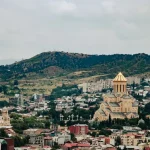
📷 Featured image by Evgeniy Prokofiev on Unsplash.