On this page
- Why Sighnaghi Works as a Day Trip
- Getting There from Tbilisi
- What to Do First: The Fortress Walls and Views
- The Alazani Valley and Vineyard Panoramas
- Where to Eat and Drink in Sighnaghi
- Bodbe Monastery: The Essential Detour
- Shopping in Sighnaghi
- How to Structure Your Day
- 2026 Budget Breakdown
- Practical Tips for the Day Trip
- Frequently Asked Questions
💰 Click here to see Georgia Budget Breakdown
💰 Prices updated: October, 2026. Budget figures are estimates — always verify before travel.
Exchange Rate: $1 USD = ₾2.60
Daily Budget (per person)
Shoestring: ₾70.00 – ₾130.00 ($26.92 – $50.00)
Mid-range: ₾180.00 – ₾350.00 ($69.23 – $134.62)
Comfortable: ₾500.00 – ₾1,000.00 ($192.31 – $384.62)
Accommodation (per night)
Hostel/guesthouse: ₾30.00 – ₾60.00 ($11.54 – $23.08)
Mid-range hotel: ₾110.00 – ₾200.00 ($42.31 – $76.92)
Food (per meal)
Budget meal: ₾15.00 ($5.77)
Mid-range meal: ₾35.00 ($13.46)
Upscale meal: ₾100.00 ($38.46)
Transport
Single metro/bus trip: ₾1.00 ($0.38)
Monthly transport pass: ₾40.00 ($15.38)
In 2026, Sighnaghi is more popular than ever — and that creates a real tension for visitors flying into Tbilisi on a tight schedule. Do you spend a night there, or can you genuinely do it justice in a single day? The honest answer: one full day is enough if you leave Tbilisi early and plan the sequence correctly. This guide is built around that exact goal — a satisfying, unhurried day in Kakheti’s most photogenic town without the panic of trying to do too much.
Why Sighnaghi Works as a Day Trip
Sighnaghi sits about 110 kilometres east of Tbilisi in the Kakheti region, perched on a ridge above the Alazani Valley. The town is small — genuinely walkable in an hour — but it punches far above its size. The 18th-century fortress walls loop around the entire hilltop, the valley views stretch into Azerbaijan on clear days, and the wine bars open early by Georgian standards. Most travelers who spend a full night there admit they ran out of things to do by mid-afternoon of their first day.
That said, the overnight crowd does get something the day-tripper misses: the soft golden light after 6pm when tour buses have left and the streets belong to locals and long-stay guests. If your schedule has any flexibility, arriving late afternoon the day before and leaving mid-morning the next day splits the difference well. But for a single-day visit departing Tbilisi by 8am, you will see everything that matters.
Getting There from Tbilisi
The most common route is the marshrutka from Tbilisi’s Samgori metro station (end of Line 2). Minibuses depart daily, typically from around 9am, and the ride takes roughly two to two and a half hours depending on traffic leaving Tbilisi. The fare is around 10–12 GEL one way in 2026. The marshrutka drops you in Sighnaghi’s central square, which is exactly where you want to start. Return marshrutkas leave from the same square — the last one usually departs around 6pm, so check the current schedule posted at the stop when you arrive.
A private taxi from Tbilisi costs 120–180 GEL each way depending on the driver and whether you negotiate a return trip. The advantage is door-to-door timing — leave at 7:30am, stop where you want on the road, and have the driver wait at Bodbe Monastery while you walk the spring path. Split between four people, a private taxi often makes more financial sense than the marshrutka and saves significant time.

Renting a car is increasingly popular in 2026. The drive on the E60 toward Gombori Pass is scenic and takes about 1 hour 45 minutes from central Tbilisi in light traffic. Be aware that the Gombori road has hairpin sections — it is fine in a standard car but uncomfortable for anyone prone to motion sickness. An alternative flatter route via Rustavi adds 20–25 minutes but is much gentler. Several Tbilisi rental companies now offer one-way drop-off to Telavi if you want to continue deeper into Kakheti.
In 2026, a new shared taxi service operating through the GetTransfer platform has made coordination easier for solo travelers — you can book a seat in a car departing at a fixed time rather than waiting for a marshrutka to fill. Prices sit around 25–35 GEL per seat, making it a useful middle ground.
What to Do First: The Fortress Walls and Views
Arrive in Sighnaghi before 10am if you can, because the fortress circuit is at its best in morning light and before the day heats up. The town walls — built under King Erekle II in the 1780s — stretch for nearly 4.5 kilometres around the hilltop, with 23 towers still standing. You can walk a significant portion of the outer wall circuit from the inside, following the path that loops from the main gate near the central square up toward the highest towers on the northern ridge.
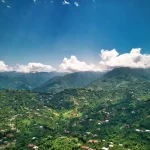
The views from the northern towers are genuinely disorienting in scale. The Alazani Valley spreads out below in a flat green carpet, edged by the Greater Caucasus mountains to the north and the low hills of Azerbaijan in the haze to the southeast. On a clear October morning, you can see the snow line on the peaks above Lagodekhi, over 60 kilometres away. The sheer drop from the wall base to the valley floor gives the whole experience a slightly vertiginous thrill — these are real defensive walls, not a reconstruction, and the stone underfoot is uneven and honest.
Entry to the wall circuit is free. The Sighnaghi Museum on the main square (entry around 5 GEL in 2026) houses an excellent Pirosmani collection and regional archaeological finds — worth 45 minutes if you have an interest in Georgian folk painting, easy to skip if you don’t.
The Alazani Valley and Vineyard Panoramas
One of the overlooked pleasures of Sighnaghi is simply standing at the town’s edge and looking down at the vineyards. The valley below is one of the most intensively cultivated wine landscapes in the Caucasus — row after row of Rkatsiteli and Saperavi vines running in long lines toward the Alazani River, which marks the Georgian-Azerbaijani border. In September and October during Rtveli (harvest season), the air carries a faintly fermented sweetness even from the ridge above.
The best ground-level vineyard access without a car is to walk down the hill from the main square toward Bodbe — a steep but short descent of about 15 minutes — and continue on foot past the monastery toward the valley floor. There are no fences blocking the vine rows during the off-season, and some small family operations welcome visitors who appear genuinely curious rather than just looking for free wine. In harvest season, you may find workers willing to explain what they’re doing, especially if you have a few words of Georgian or a Georgian-speaking companion.
Several small wine producers have opened tasting rooms on the road between Sighnaghi and Bodbe since 2024. These are not commercial tourist operations — they’re farmhouses with a table in the yard and a few bottles. Prices are negotiated on the spot, typically 15–30 GEL for a pour-and-chat session.
Where to Eat and Drink in Sighnaghi
The central square and the streets immediately off it hold the town’s best eating options, and the quality has improved noticeably since 2024 as a second wave of Tbilisi-trained restaurateurs has opened in the town. Avoid the large tourist-facing restaurants directly on the square — they serve adequate food at inflated prices. Instead, walk one block off the square in any direction and you’ll find the better options.
Pheasant’s Tears on Baratashvili Street is the benchmark Sighnaghi wine experience — a natural wine cellar and restaurant that has been operating since before natural wine was fashionable. The food is simple: fresh cheese, pickled vegetables, bread, grilled meat. The wines are remarkable. Budget 40–70 GEL per person for a proper sit-down lunch with wine.
For a cheaper and faster midday option, the small market stalls on the street running downhill from the square toward the old walls sell fresh churchkhela, local cheese, and tkemali. This is where local traders set up rather than the tourist stalls near the museum. A lunch assembled from market stalls — bread, cheese, fruit, churchkhela — costs under 15 GEL and is often better than anything served in a restaurant.

Coffee options have improved significantly. A small roastery-cafe called Kakheti Blend opened in 2025 on the street parallel to the main square and serves proper espresso drinks rather than the instant Nescafé that was the norm a few years ago. Prices are Tbilisi-equivalent: 6–8 GEL for a flat white.
Bodbe Monastery: The Essential Detour
About 2 kilometres south of Sighnaghi’s central square, Bodbe Monastery is non-negotiable. This is the burial site of St. Nino, who brought Christianity to Georgia in the 4th century, and it remains an active convent with a working religious community. The main church is compact, dark with incense smoke, and genuinely moving — the tomb of St. Nino is in a side chapel where candles are always burning and pilgrims kneel in silence. Even secular visitors tend to lower their voices instinctively.
The monastery gardens are formal and well-maintained, with a long cypress-lined path leading to the cliff edge where the valley view opens up again from a different angle. Below the garden, a 20-minute downhill walk leads to St. Nino’s Spring — a small holy spring in a stone-vaulted chamber where pilgrims (and some curious tourists) traditionally immerse themselves in cold water. The walk down is through dense forest, dropping about 80 metres in elevation. The walk back up is steep enough to warm you thoroughly.
The spring water is genuinely cold — perhaps 10–12°C even in August — and the chamber is small, candlelit, and slightly surreal in the best way. Women and men use separate immersion pools. You do not need to be religious to experience this; respectful curiosity is sufficient. Bring a change of clothes or a towel if you plan to immerse. Entry to the monastery is free; a small donation at the church is customary.
Budget around 1.5 to 2 hours for Bodbe including the spring walk. A taxi from the square costs 10–15 GEL for the short ride; walking downhill from town takes about 25 minutes on the main road.
Shopping in Sighnaghi
Sighnaghi has a higher concentration of quality craft shops than almost anywhere else in Georgia outside Tbilisi. The best shopping street is the one running parallel to the main square toward the museum — look for small workshops selling ceramic wine vessels, hand-painted enamel jewelry, and locally produced amber pieces (sourced from the Baltic but worked here). The distinction between tourist trinkets and genuine craft is visible: the good shops have a working space visible from the storefront, and the prices are higher but not unreasonable.
Wine is the obvious souvenir. Several small producers sell directly from their cellars in town — look for hand-labeled bottles with the producer’s name and vintage rather than commercially printed labels. A bottle of decent local Saperavi runs 18–35 GEL depending on the producer. Qvevri-aged amber wine (skin-contact white, a Kakheti specialty) starts around 25 GEL and makes a far more interesting gift than anything from a Tbilisi supermarket.
Churchkhela — the walnut-and-grape-juice candles sold everywhere — varies enormously in quality. The best versions use real Kakhetian grape must and fresh walnuts, are still slightly tacky to the touch, and smell faintly of dried fruit and cinnamon. Avoid the hard, old, dusty ones that have been hanging in tourist shops for weeks. Fresh churchkhela costs 3–6 GEL per strand from market stalls.
How to Structure Your Day
A day trip that leaves Tbilisi by 8am and returns by 7pm gives you approximately 7–8 hours on the ground in Sighnaghi. Here is a realistic sequence that avoids the midday tourist rush at key sites:
- 8:00am: Depart Tbilisi (Samgori marshrutka or pre-arranged taxi)
- 10:00–10:30am: Arrive Sighnaghi. Drop bags if needed, walk straight to the fortress wall circuit while it’s cool and quiet.
- 11:30am: Museum if interested; skip if not. Browse the upper market stalls.
- 12:30pm: Lunch at Pheasant’s Tears or a market-assembled picnic on the wall steps.
- 2:00pm: Taxi or walk to Bodbe Monastery. Allow 1.5–2 hours including the spring walk.
- 4:00–4:30pm: Return to town. Wine tasting at a producer cellar, or final shopping.
- 5:30pm: Last circuit of the town walls in afternoon light — the best photo window of the day.
- 6:00–6:30pm: Marshrutka or taxi back to Tbilisi.
This schedule is unhurried. You will not feel rushed. The key is doing the walls first, before tour groups arrive, and saving Bodbe for early afternoon when its morning pilgrimage crowd has thinned.
2026 Budget Breakdown
Sighnaghi is one of the more affordable day trips from Tbilisi in 2026, especially if you travel by marshrutka and eat at market stalls rather than restaurants.
- Budget tier (under 80 GEL total): Marshrutka both ways (20–24 GEL), market lunch (12–15 GEL), museum entry (5 GEL), one glass of wine at a cellar (10 GEL), churchkhela (5 GEL). Total: approximately 55–65 GEL.
- Mid-range (80–200 GEL): Shared taxi or marshrutka (25–35 GEL), sit-down lunch at Pheasant’s Tears (50–70 GEL), one wine tasting session (20–30 GEL), a bottle of wine to take home (25–35 GEL), taxi to Bodbe (20–30 GEL). Total: approximately 140–170 GEL.
- Comfortable (200–350 GEL): Private return taxi from Tbilisi (250–350 GEL for the vehicle, split across your group), restaurant lunch with wine (80–100 GEL per person), quality wine purchases (50–80 GEL), craft shopping (50–100 GEL). Total per person at this tier varies widely by group size.
Entry fees in Sighnaghi are minimal — the walls are free, Bodbe is free, and only the museum charges. This is still a genuinely low-cost day out by any European comparison.
Practical Tips for the Day Trip
Clothing: The fortress wall path is uneven stone — wear proper walking shoes, not sandals or city sneakers. If you plan to do the Bodbe spring immersion, bring a small towel and a change of clothes or at minimum a dry shirt. In summer, bring sun protection; the ridge has no shade between viewpoints.
Water: Tap water in Sighnaghi is safe to drink. The spring water at Bodbe is drinkable but cold. Buy a bottle at the market if you want something to carry.
Cash: Most wine cellars and market stalls are cash only. ATMs exist on the main square. Bring GEL from Tbilisi to avoid fees, but the ATMs work reliably.
Timing the marshrutka back: Confirm the last marshrutka time when you arrive — in 2026 it typically leaves at 6pm, but times shift seasonally. Missing it means a private taxi home, which is fine but costs significantly more.
Language: English is understood at most restaurants and wine bars in Sighnaghi, better than in rural Kakheti generally. The tourist infrastructure is well-developed enough that you won’t struggle.
Wine and driving: If you drove yourself, plan your wine tasting accordingly. The road back through Gombori Pass requires full attention, and Georgian traffic police do conduct roadside checks on tourist routes in 2026.
Frequently Asked Questions
How long does it take to get from Tbilisi to Sighnaghi?
By marshrutka from Samgori station, the journey takes approximately two to two and a half hours. By private taxi or rental car via the Gombori Pass, you can do it in under two hours from central Tbilisi in light morning traffic.
Is one day enough to see Sighnaghi?
Yes, one full day is genuinely sufficient for Sighnaghi’s main attractions: the fortress walls, Bodbe Monastery with the spring walk, a wine tasting, and some shopping. Leave Tbilisi by 8am to maximize your time on the ground. A second night adds atmosphere but not significantly more sightseeing.
What is the best time of year to visit Sighnaghi on a day trip?
Late September through October is the best window — harvest season fills the valley with activity, the light is exceptional, and temperatures are comfortable (18–24°C). Spring (April–May) is the quieter alternative with flowering orchards. Avoid July and August weekends when crowd levels peak and heat on the walls becomes uncomfortable by midday.
Do I need to book anything in advance for a Sighnaghi day trip?
For a standard day trip in 2026, advance booking is not required for the walls, museum, or Bodbe. If you want a table at Pheasant’s Tears for lunch on a weekend, a reservation is strongly advisable — they fill up by noon on Saturdays. A private taxi from Tbilisi benefits from pre-arrangement, especially for early morning departures.
Can I combine Sighnaghi with other Kakheti stops on a day trip from Tbilisi?
Realistically, only if you have a private car. Telavi is about 45 minutes from Sighnaghi and could be a brief add-on, but attempting both towns plus Bodbe in a single day feels rushed. A better combination is Sighnaghi plus a stop at one of the Kakheti wineries on the road between Tbilisi and town — Schuchmann or Twins Wine House are both convenient en route.
📷 Featured image by Bao Menglong on Unsplash.