On this page
- What Borjomi Actually Is (and Why People Still Come in 2026)
- Getting to Borjomi — Trains, Marshrutkas, and the 2026 Options
- The Borjomi Spa Scene — Balneology Centers, Mineral Baths, and Wellness Hotels
- Borjomi-Kharagauli National Park — Trails, Wildlife, and Day Hike Logistics
- Eating and Drinking in Borjomi — Local Spots Worth Knowing
- 2026 Budget Reality — What Everything Actually Costs
- Day Trips Within Striking Distance of Borjomi
- Practical Logistics — When to Go, Where to Stay, How Long You Need
- Frequently Asked Questions
💰 Click here to see Georgia Budget Breakdown
💰 Prices updated: October, 2026. Budget figures are estimates — always verify before travel.
Exchange Rate: $1 USD = ₾2.60
Daily Budget (per person)
Shoestring: ₾70.00 – ₾130.00 ($26.92 – $50.00)
Mid-range: ₾180.00 – ₾350.00 ($69.23 – $134.62)
Comfortable: ₾500.00 – ₾1,000.00 ($192.31 – $384.62)
Accommodation (per night)
Hostel/guesthouse: ₾30.00 – ₾60.00 ($11.54 – $23.08)
Mid-range hotel: ₾110.00 – ₾200.00 ($42.31 – $76.92)
Food (per meal)
Budget meal: ₾15.00 ($5.77)
Mid-range meal: ₾35.00 ($13.46)
Upscale meal: ₾100.00 ($38.46)
Transport
Single metro/bus trip: ₾1.00 ($0.38)
Monthly transport pass: ₾40.00 ($15.38)
What Borjomi Actually Is (and Why People Still Come in 2026)
Borjomi has a reputation problem — not because the town is bad, but because most visitors arrive with the wrong expectations. They picture a gleaming European spa destination and find instead a quiet, slightly faded Soviet-era resort town nestled deep in the Mtkvari River gorge. If you accept Borjomi on its own terms, it rewards you generously. If you arrive expecting Baden-Baden, you will leave underwhelmed.
The town sits about 150 kilometres west of Tbilisi at an altitude of roughly 800 metres, surrounded by dense pine forest and the dramatic ridgelines of the Lesser Caucasus. For over 150 years, people have been coming here for one specific reason: the mineral water. The naturally carbonated, sodium-bicarbonate spring water that bubbles up from the ground in Borjomi is famous across the entire post-Soviet world. The bottle with the stag logo is sold in supermarkets from Riga to Yerevan. Drinking it straight from the outdoor taps in the town park — warm, slightly sulphurous, tasting faintly of iron — is a genuinely different experience from drinking it cold from a bottle.
In 2026, Borjomi draws three distinct types of travellers: Georgians and regional visitors who come specifically for balneological (mineral bath) treatments, hikers heading into Borjomi-Kharagauli National Park, and Tbilisi-based expats and tourists looking for a proper weekend escape from the capital’s summer heat. All three groups are well catered for, though the town’s infrastructure remains modest by Western European standards.

Getting to Borjomi — Trains, Marshrutkas, and the 2026 Options
The most comfortable way to reach Borjomi from Tbilisi is by train. Georgian Railway operates a service from Tbilisi Central Station (Didube is not the right station — use the main Tbilisi Railway Station on Tamar Mepe Avenue) to Borjomi-Parki station, which takes roughly three hours. As of 2026, the schedule runs twice daily in each direction, typically departing Tbilisi in the morning and early afternoon. The train passes through Gori and winds through increasingly green river valleys — it is genuinely one of the more scenic rail journeys in Georgia. Book tickets through the Georgian Railway website or app in advance on weekends, especially May through September, when the carriages fill quickly.
Marshrutkas (shared minibuses) leave from Tbilisi’s Didube terminal throughout the morning and cost considerably less than the train. Journey time is about 2.5 to 3 hours depending on traffic through the Rikoti approach roads. The marshrutka drops you closer to the town centre than the Borjomi-Parki train station, which is actually 2 kilometres from the main strip — a useful practical distinction. A taxi from the train station into the centre should cost no more than 10–15 GEL.
From Kutaisi, the logical approach is via marshrutka through Khashuri, with a change if needed. Direct marshrutkas from Kutaisi to Borjomi operate in 2026 with improved frequency following road upgrades on the Kutaisi–Khashuri corridor completed in late 2025. Journey time is approximately 2 hours.
Driving from Tbilisi takes 2 to 2.5 hours via the E60 highway toward Gori, then south on the A306 into the gorge. The road into Borjomi is narrow in places but paved and manageable in a standard car year-round except during heavy winter snowfall.
The Borjomi Spa Scene — Balneology Centers, Mineral Baths, and Wellness Hotels
This is the core of what Borjomi offers medically and therapeutically, and it deserves a clearer explanation than most travel guides give it. Balneology is not just soaking in a mineral bath for relaxation — it is a structured course of treatments using mineral water internally (drinking) and externally (bathing, irrigation) to address specific conditions. Georgian doctors still prescribe Borjomi water for gastrointestinal issues, liver conditions, and metabolic disorders. If you want the full therapeutic experience, you need to book a consultation at one of the balneological sanatoriums, not just check into a hotel with a “spa.”

The main facilities worth knowing in 2026 include:
- Borjomi Palace Balneological Resort — the most internationally oriented facility, offering both short-stay visitors and multi-day treatment programs. Mineral baths here use water piped directly from the local springs. A single mineral bath session costs 50–80 GEL depending on duration and treatment type.
- Likani Palace area — the historic tsarist-era palace complex about 3 kilometres west of the centre. The grounds include a smaller balneological centre that is less crowded than the town-centre options and set in beautifully maintained park grounds. The palace itself is government property and not open for public tours, but the surrounding park and spa access is available to visitors.
- Crowne Plaza Borjomi — the largest internationally branded hotel in town, with a full spa and mineral pool. Prices are significantly higher than local sanatoriums, but the facility is reliable and the mineral pool is genuinely warm and well-maintained. Non-guests can typically access the pool for a day fee of around 60–100 GEL.
The sensation of lying in a mineral bath here is distinct from a standard hot tub — the water has a silky, slightly heavy quality against your skin, and the gentle warmth works into muscle groups differently from plain hot water. An hour-long soak leaves you genuinely drowsy in a way that a regular bath simply does not.

Borjomi-Kharagauli National Park — Trails, Wildlife, and Day Hike Logistics
Borjomi-Kharagauli National Park is one of the largest protected areas in the Caucasus, covering over 85,000 hectares of ancient forest, alpine meadow, and mountain ridgeline. It is dramatically undervisited compared to Kazbegi or Svaneti, which makes it one of Georgia’s genuinely rewarding hiking secrets in 2026.
The main visitor centre is located in Borjomi itself, near the Borjomi-Parki train station. Staff here speak reasonable English, and in 2026 the centre operates a digital trail booking system for the overnight hut routes — a change introduced in 2025 to manage increasing hiker numbers on the longer trails. For day hikes, no advance booking is needed, but registering at the visitor centre is strongly recommended so rangers know your route.
The most popular day hike climbs from the town through dense pine and beech forest to the Plateau of Satsurblisi, with sweeping views down into the gorge below. The round trip is approximately 14 kilometres with 600 metres of elevation gain. Start early — the trail gets warm by midday even in June, and morning light through the pine canopy gives the forest a quiet, cathedral quality that afternoon sun simply removes.
Multi-day routes connect Borjomi to the Kharagauli entrance on the western side of the park, passing through high alpine terrain above 2,000 metres. These require good fitness, proper gear, and ideally a guide if you are unfamiliar with Caucasus mountain conditions. Guides can be arranged through the visitor centre for approximately 150–250 GEL per day.
Wildlife in the park includes brown bear, wolf, lynx, chamois, and red deer. You are unlikely to encounter large predators on day hikes near town, but bear awareness is appropriate on longer backcountry routes. The park authority provides a printed wildlife briefing at the visitor centre — read it.
Eating and Drinking in Borjomi — Local Spots Worth Knowing
Borjomi is a small town, not a culinary destination. Manage your expectations accordingly, but know that the basics are done well and there are a handful of genuinely good places to eat.
The main restaurant strip runs along Kostava Street and the pedestrianized section near the park entrance. Most restaurants here serve standard Georgian comfort food — khinkali, khachapuri, grilled meats — and quality is broadly consistent. Prices are noticeably lower than Tbilisi equivalents for the same dishes.
A few specific recommendations based on 2026 conditions:
- Retro — a long-standing local favourite on the main street, popular with both Georgian families and hikers. The lobiani (bean-stuffed bread) here is particularly good, dense and properly spiced, and the portions are generous. Expect to wait on weekend evenings.
- Restaurant Mtkvari — positioned right alongside the river, with a terrace that catches afternoon shade. The trout dishes use locally sourced fish and are reliably fresh. The house wine is a basic but drinkable Rkatsiteli.
- The bakeries near the central market — follow the smell of baking bread along the small lanes off the main street on weekend mornings. Fresh shoti (Georgian flatbread) and churchkhela (walnut-and-grape-juice candies) are sold directly from family producers here, and the prices are a fraction of what tourist-facing shops charge.
Coffee culture in Borjomi is improving but still limited compared to Tbilisi. There are two or three decent espresso bars near the park entrance; for anything more sophisticated, bring your own beans or calibrate expectations.
2026 Budget Reality — What Everything Actually Costs
Borjomi is one of Georgia’s more affordable domestic destinations, but prices have shifted upward since 2024 as the Georgian tourism market has continued to mature and domestic travel demand has grown.
Accommodation (per night)
- Budget — Guesthouses and basic hotels: 60–120 GEL for a double room. Many family-run guesthouses include breakfast and are genuinely comfortable, if simple.
- Mid-range — Smaller hotels and apartments: 150–280 GEL. This tier has expanded noticeably since 2024, with several renovated properties opening along the river.
- Comfortable — Crowne Plaza and comparable resort hotels: 400–700 GEL. International-standard rooms, mineral pools, and full spa access included or available at additional cost.
Food
- Budget — Bakery items, market food, self-catering: 15–30 GEL per day per person.
- Mid-range — Sit-down meals at local restaurants: 35–60 GEL per person including drinks.
- Comfortable — Hotel restaurants or the better riverside spots: 70–120 GEL per person.
Activities
- National Park day hike (no guide): free entry, registration at visitor centre required.
- Guided hike in the national park: 150–250 GEL per day (guide fee, not per person).
- Single mineral bath session: 50–80 GEL.
- Day spa access (pool only) at Crowne Plaza: 60–100 GEL.
- Cable car in Kurortny Park: approximately 5 GEL each way.
Transport
- Train Tbilisi–Borjomi: 12–18 GEL one way depending on class.
- Marshrutka Tbilisi–Borjomi: 10–12 GEL one way.
- Local taxi within Borjomi: 5–15 GEL per ride.
Day Trips Within Striking Distance of Borjomi
Borjomi’s location in the Samtskhe-Javakheti region places it within practical range of several significant destinations that most visitors miss entirely.
Rabati Castle, Akhaltsikhe — 45 kilometres south of Borjomi, this medieval fortress complex was heavily restored (controversially so) but remains visually impressive and historically significant. The drive south from Borjomi through the Mtkvari gorge is itself scenic. A taxi from Borjomi to Akhaltsikhe costs roughly 60–80 GEL one way; marshrutkas run regularly and cost around 6–8 GEL. Allow half a day for the castle itself.
Vardzia Cave Monastery — 70 kilometres further south of Akhaltsikhe, this 12th-century cave city carved into a volcanic cliff face is one of Georgia’s most extraordinary archaeological sites. It is a long day from Borjomi but manageable with an early start and private transport. Guided day tours from Borjomi combining Rabati and Vardzia run in 2026 through several local agencies for approximately 200–300 GEL per person including transport.
Bakuriani — 30 kilometres east of Borjomi, this ski and mountain resort sits at 1,700 metres and is a completely different environment from the spa town. In summer it functions as a hiking and cycling base. A narrow-gauge railway (the famous Kukushka line) connects Borjomi to Bakuriani, running through forest and crossing river bridges on a journey that takes about 2.5 hours — slow but charming, particularly in autumn when the deciduous forest turns gold and rust along the track.
Green Monastery (Zarzma) — a lesser-visited 13th-century monastery in a side valley between Akhaltsikhe and Aspindza, with remarkable frescoes and an almost complete absence of tourist crowds even in peak season. Worth combining with a Rabati day trip for those interested in medieval Georgian religious architecture.
Practical Logistics — When to Go, Where to Stay, How Long You Need
Best time to visit: May through October covers the usable season for most visitors. June and September are arguably the sweet spots — warm enough for hiking and outdoor activity, without July and August’s peak crowds. The town gets genuinely busy with Georgian domestic tourists in July and August, particularly on weekends, when accommodation prices rise and restaurants fill by 7pm. Winter visits are quiet and atmospheric but limit national park access to lower trails.
How long you need: A weekend (two nights, two days) is the minimum to absorb Borjomi properly — one day for the town, spa, and park, one day for a day trip. Three nights gives you time for a longer national park hike without feeling rushed. More than four nights requires you to be genuinely invested in the balneological treatment schedule or multi-day hiking.
Where to stay: Accommodation along the river corridor between the train station and the central park is the most convenient. The park-facing guesthouses on the quieter lanes north of Kostava Street offer better value than the main-strip hotels and typically include parking. For the full resort experience, the Crowne Plaza or Borjomi Palace are the reliable choices, though both book out weeks in advance during July and August.
Connectivity: Mobile data coverage in Borjomi town is strong on all major Georgian networks (Magti, Silknet, Beeline). Coverage drops quickly once you enter the national park trails. Download offline maps before hiking — Maps.me and the Georgian national park trail data are available for offline use.
Safety: Borjomi is an exceptionally safe town. The main risk for visitors is overestimating their fitness on national park trails — the terrain gains altitude quickly, and afternoon thunderstorms in summer can arrive without much warning above the treeline. Check the weather forecast each morning and carry a light waterproof layer regardless of how clear the sky looks at 8am.
Frequently Asked Questions
Is Borjomi worth visiting if I only have one day from Tbilisi?
Yes, but barely. A day trip gives you time for the mineral park, a soak at a balneological centre, and lunch — not much more. The train journey alone takes three hours each way, so you arrive around noon and leave by 5pm. Two nights is a far more satisfying arrangement and lets the town’s quiet character actually land.
Can you drink the Borjomi mineral water directly from the springs?
Yes, and you should. The outdoor taps in Kurortny Park dispense free mineral water from the actual local springs. It tastes markedly different from bottled Borjomi — warmer, more mineral-forward, and lightly effervescent. Some visitors find it an acquired taste. The water is safe and has been tested and monitored continuously since the Soviet era.
Do I need a guide to hike in Borjomi-Kharagauli National Park?
For day hikes near the town, no. The lower trails are marked and the visitor centre provides maps and route cards in English. For multi-day routes above 2,000 metres or anything off the marked trail network, a guide is strongly advisable — the terrain is serious and emergency response times in the backcountry are long. Register at the visitor centre before any hike, guided or not.
What is the difference between Borjomi and Bakuriani?
They are distinct destinations connected by a historic narrow-gauge railway. Borjomi is a low-altitude spa and nature town built around mineral water and forest hiking. Bakuriani is a higher-altitude mountain resort known primarily for skiing in winter and mountain activities in summer. Many visitors combine both on a longer trip through the region rather than choosing one over the other.
Is Borjomi suitable for children?
Very much so. The national park lower trails are manageable for children over eight with reasonable fitness. The cable car in Kurortny Park is a hit with younger visitors. The mineral water taps are a novelty that children generally enjoy. Accommodation with family rooms is widely available at mid-range prices, and the town is compact and walkable without significant traffic hazards on the main pedestrian areas.
Explore more
Borjomi Food Guide: Best Restaurants & Must-Try Traditional Georgian Dishes
How to Get to Borjomi from Tbilisi: Marshrutka, Train & Beyond
Borjomi Nightlife: From Quiet Evenings to Spa Hotel Bars & Family Fun
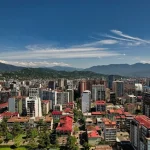
📷 Featured image by Irakli Kvaratskhelia on Unsplash.