On this page
- Georgia’s Black Sea Showpiece in 2026
- What Batumi Boulevard Actually Is
- The Northern End: Alphabet Tower, Love Statue, and New Boulevard
- The Central Stretch: Fountains, the Piazza, and Sculpture Park
- The Southern End: Gardens, the Batumi Botanical Garden Gateway, and Old Port Approach
- Where to Eat and Drink Along the Boulevard
- Getting to the Boulevard and Moving Along It
- After Dark on the Boulevard
- Shopping Near the Waterfront
- Day Trips You Can Start From the Boulevard
- When to Walk the Boulevard
- What a Day on the Boulevard Costs in 2026
- Practical Tips for the Boulevard in 2026
- Frequently Asked Questions
💰 Click here to see Georgia Budget Breakdown
💰 Prices updated: October, 2026. Budget figures are estimates — always verify before travel.
Exchange Rate: $1 USD = ₾2.60
Daily Budget (per person)
Shoestring: ₾70.00 – ₾130.00 ($26.92 – $50.00)
Mid-range: ₾180.00 – ₾350.00 ($69.23 – $134.62)
Comfortable: ₾500.00 – ₾1,000.00 ($192.31 – $384.62)
Accommodation (per night)
Hostel/guesthouse: ₾30.00 – ₾60.00 ($11.54 – $23.08)
Mid-range hotel: ₾110.00 – ₾200.00 ($42.31 – $76.92)
Food (per meal)
Budget meal: ₾15.00 ($5.77)
Mid-range meal: ₾35.00 ($13.46)
Upscale meal: ₾100.00 ($38.46)
Transport
Single metro/bus trip: ₾1.00 ($0.38)
Monthly transport pass: ₾40.00 ($15.38)
Georgia’s Black Sea Showpiece in 2026
Batumi Boulevard has always been the spine of the city, but in 2026 it draws more visitors than ever — and that creates a real problem if you arrive without a plan. The promenade stretches nearly nine kilometres along the Black Sea coast, and first-time visitors routinely underestimate it. They walk the first kilometre, assume they’ve seen it, and turn back. This guide covers the full length, section by section, so you know exactly what’s at each end, what’s in the middle, and where your time is best spent depending on what you actually want from a day at the seaside.
What Batumi Boulevard Actually Is
Batumi Boulevard — locally called Bulvari — is a continuous seafront promenade running along the eastern shore of the Black Sea, from the New Boulevard area in the north down toward the Old Port and the historic city centre in the south. It was first established in 1881, making it one of the oldest seaside promenades in the Caucasus, though you’d never guess its age from the modern sculptures, LED installations, and renovated plazas that now dominate the experience.
The full walk from north to south covers roughly 8.5 kilometres. Most of that distance runs as a flat, paved path directly beside the water, lined with palms, magnolias, and subtropical plantings that give Batumi its distinctly un-Caucasian atmosphere. The sea side is mostly pebble beach — accessible at most points — while the inland side shifts between gardens, fairground rides, sculpture parks, open-air cafés, and the backs of the city’s landmark towers.
By 2026, the northern section of the boulevard has been extended and improved with new cycling infrastructure. A dedicated two-lane cycle path now runs the entire length, separated from the pedestrian walkway by a low hedge. Rentable e-bikes and standard bicycles are available at six stations along the route, managed through the Batumi City Bike app — a significant upgrade from the single rental point that existed in 2024.
The Northern End: Alphabet Tower, Love Statue, and New Boulevard
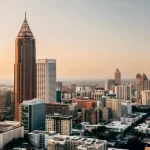
The northern end of the promenade is where the architectural drama concentrates. The Alphabet Tower — a 130-metre helical structure clad in Georgian script letters — rises directly beside the waterfront and remains the single most photographed object in Batumi. A transparent elevator takes visitors to a viewing platform and small bar at the top. In 2026, entry costs 15 GEL for adults, and queues form fast in summer afternoons. Go before 10am or after 7pm to avoid waiting.
A few hundred metres south, the paired Ali and Nino statue performs its slow kinetic rotation — two interlocking metal figures that separate and merge on a 10-minute cycle. The sculpture represents a Azerbaijani man and a Georgian woman from a famous regional novel, and watching the figures drift apart and then press back together is genuinely moving in a way that surprises most visitors who expected a tourist gimmick.
This northern section also has the densest concentration of seaside restaurants, a small funfair with a Ferris wheel that operates until midnight in summer, and the most reliable stretch of sandy beach — a relative rarity on an otherwise pebble coastline. Children’s play areas here are well-maintained and the whole zone feels designed for families. On a warm June evening, the salt air off the sea mixes with grilling meat smoke from a dozen terrace kitchens, and the sounds of the carousel drift south along the water.
The Central Stretch: Fountains, the Piazza, and Sculpture Park
The central section of Batumi Boulevard — roughly the middle three kilometres — is where the promenade widens and becomes more architectural. The Musical Fountain sits on a circular platform over a shallow reflecting pool and puts on choreographed water-and-light shows at 9pm, 10pm, and 11pm nightly during summer. The show lasts around 20 minutes and draws a significant crowd. Finding a bench with a clear view is a competitive sport — arrive 15 minutes early.
Directly adjacent is the entrance to Piazza Square, Batumi’s Venetian-style commercial plaza. It’s unabashedly kitsch — a faux-European arcade of restaurants and souvenir shops around a central clock tower — but the outdoor seating is genuinely pleasant in the evenings when the fountains are lit and the pedestrian traffic thins. Most visitors walk through it once with a gelato and move on.
The Batumi Sculpture Park occupies a long green corridor on the inland side of the promenade in this section, featuring over 30 large-scale works by Georgian and international artists installed between 2010 and 2025. The quality is uneven — some pieces are genuinely striking, others feel like corporate art — but the park gives the boulevard a cultural dimension beyond pure leisure. Placards are in Georgian and English. Entry is free.
This central section also has the highest density of souvenir vendors and street performers in summer. The pavement narrows slightly around the Piazza entrance, and weekend evenings in July and August can feel genuinely crowded — shoulder to shoulder in places. If you prefer space, this stretch is best experienced on weekday mornings when local joggers and dog walkers outnumber tourists.
The Southern End: Gardens, the Batumi Botanical Garden Gateway, and Old Port Approach
Most tourists turn back somewhere around the Musical Fountain. That means the southern section of the boulevard — quieter, greener, and in some ways more interesting — goes largely unvisited by day-trippers. This is where the promenade passes through mature subtropical gardens, including sections of century-old plane trees that create a genuine canopy and block out the Adjaran sun in a way the northern stretches don’t.
The southern end approaches the Old Port of Batumi, and the atmosphere shifts perceptibly. You see working vessels, the smell of diesel and brine replaces the grilled food of the north, and the backdrop becomes the lower-rise architecture of the older city rather than the glass towers of the new development zone. A small marina here has been upgraded in recent years and now hosts a mix of private yachts and tourist boat operators running evening cruises along the coast.
For visitors heading to the Batumi Botanical Garden — technically outside the city limits but accessible by marshrutka from the southern boulevard — the promenade’s southern end is the logical starting point. The garden itself is one of the finest in the former Soviet space, covering 113 hectares on a clifftop above the sea.
Where to Eat and Drink Along the Boulevard
The boulevard is lined with food and drink options across its full length, but quality varies dramatically by location. The very densest cluster — the dozen or so restaurants directly facing the water at the northern end — caters almost entirely to tourists and prices reflect that. Expect to pay 40–70 GEL per person for a sit-down meal with drinks at these waterfront tables. The views justify the premium once, but you wouldn’t return every day.
Better value — and more interesting cooking — appears when you walk one block inland from the promenade, particularly around Pushkin Street and the surrounding grid. Adjaran cuisine here is accessible at genuinely local prices: Adjaran khachapuri (the boat-shaped, egg-topped version that Batumi claims as its own) runs 12–18 GEL at family-run places on this street. The hot dough tears apart steam-first in your hands, rich with melted sulguni cheese and a gold yolk that thickens as you stir.
On the boulevard itself, look for the cluster of outdoor café kiosks between the Musical Fountain and the Piazza. These operate on a simpler menu — coffee, churchkhela, fresh squeezed pomegranate juice, khinkali — at street prices (3–8 GEL per item) and the seating directly faces the sea. Pomegranate juice, pressed fresh into a plastic cup while you watch, costs 5 GEL and is worth every tetri on a warm afternoon.
For drinks specifically, the rooftop bars of the hotels lining the northern boulevard — particularly those on the 15th floor and above of the new tower developments — offer sunset views across the Black Sea that are hard to beat. A cocktail runs 18–30 GEL. No reservation required for most; the better ones fill up by 8pm in summer.
Getting to the Boulevard and Moving Along It
Batumi’s main bus station and the railway station are both within 15–20 minutes’ walk of the southern end of the boulevard. From Tbilisi, the overnight train takes approximately five hours and arrives in the morning — a well-trodden route that in 2026 operates on an updated Georgian Railway timetable with three daily departures (the 8:00, the 15:30, and the overnight 23:20 from Tbilisi Central). Seat reservations are strongly recommended in summer. A standard second-class ticket costs 27–32 GEL.
From Tbilisi by car or shared taxi (marshrutka), the drive runs approximately four to four and a half hours on the E60 highway. Marshrutkas depart from Didube terminal in Tbilisi and arrive at Batumi bus station, charging around 20–25 GEL per seat.
Once you’re in Batumi, the boulevard is walkable in its entirety but the full length takes 90 minutes at a relaxed pace without stops — realistically two to three hours with the usual pauses. The city bike system is the most efficient way to cover ground. Taxis are plentiful on the streets immediately inland; Bolt operates in Batumi and a cross-city ride rarely exceeds 8–12 GEL. There is no metro in Batumi.
Minibus routes 1 and 10 run along the inland road parallel to the promenade and cover most of its length for 0.50 GEL per journey — useful if your feet give out at the halfway point.
After Dark on the Boulevard
The boulevard transforms significantly after sunset. The Alphabet Tower switches to its full LED display mode, cycling through colour patterns that are visible for kilometres along the coast. The Musical Fountain shows begin at 9pm. Street musicians — ranging from competent classical guitarists to enthusiastic ensembles of questionable pitch — occupy the benches between the Piazza and the northern fairground.
Batumi is one of the few cities in Georgia where casino culture is genuinely embedded in the street-level atmosphere. The large casino complexes along the northern boulevard — several of which are accessible directly from the promenade — are licensed, active, and busy every night of the year. They’re legal and popular among both Georgian and international visitors. You don’t have to be interested in gambling to notice their neon reflections on the water at 2am.
Beyond the casinos, the nightlife scene clusters around Ninoshvili Street and the adjacent lanes about two blocks from the central promenade. Wine bars, craft beer spots, and small clubs operate here until 3 or 4am in summer. The general vibe is younger and more local than the waterfront restaurant strip.
Shopping Near the Waterfront
The boulevard itself is not a serious shopping destination — souvenir stalls selling the predictable inventory of magnets, felt puppets, and churchkhela strings dominate the on-promenade retail. Prices are negotiable at most of these stalls, particularly in the morning before the main crowd arrives.
For anything more considered, Mazniashvili Street and the covered Batumi Central Market — both a short walk from the southern end of the boulevard — are better options. The market hall sells spices, chacha (Georgian grape spirit), local honey, walnuts, and dried fruit at prices substantially lower than tourist-facing shops. The honey sellers usually let you taste before buying; local Adjaran honey is distinctively floral and thick.
A small cluster of independent boutiques on Gorgiladze Street carries locally made jewellery, ceramic work, and textiles. Quality varies but a few shops here stock genuinely interesting pieces — hand-painted enamel work and silver filigree at 60–180 GEL for mid-range pieces.
Day Trips You Can Start From the Boulevard
The boulevard’s southern end is a practical launching point for several day trips, all reachable without a car.
- Batumi Botanical Garden: Marshrutka from the southern boulevard, 15 minutes, 1 GEL. Entry 15 GEL in 2026. Allow three to four hours minimum.
- Gonio Fortress: 12 kilometres south of Batumi. Shared taxi or marshrutka from the bus station (10–15 minutes, 2 GEL). One of the oldest Roman fortresses in the region, maintained and partially excavated. Combine with a beach stop at Kvariati.
- Makhuntseti Waterfall and Acharistskali Canyon: About 35 kilometres inland into the Adjara mountains. Requires a taxi or tour vehicle — arrange at the boulevard tourist information point. Full day, budget 80–120 GEL for a shared taxi round trip.
- Kobuleti: 30 kilometres north on the coast. Marshrutka from the bus station, 30 minutes, 2 GEL. Quieter beach town with a longer sandy shoreline. Good half-day option if Batumi’s beaches feel crowded.
- Trabzon (Turkey): A longer cross-border option for those with relevant visas, accessible by ferry from Batumi port. The ferry schedule in 2026 runs twice weekly; check current timings at the port office.
When to Walk the Boulevard
The boulevard is technically usable year-round — Batumi’s subtropical climate means temperatures rarely drop below 5°C even in January — but the experience changes dramatically by season.
June to August is peak season. The promenade is fully operational, all restaurants and attractions are open, the sea is warm enough to swim (water temperature 22–26°C), and the evening energy is at its highest. The trade-off is density: in peak July, the northern section on weekends is genuinely packed. Accommodation prices are at their annual maximum and rooms book out weeks in advance.
May and September are the clearest recommendation for most visitors. Temperatures sit at 22–28°C, the sea is swimmable (just), all facilities are open, and the crowds thin noticeably. Accommodation drops 30–40% in price from peak rates. September in particular coincides with the Rtveli wine harvest period across Georgia, and Batumi hosts its own food and wine festival on the boulevard in late September most years.
October to April brings Batumi’s famous rainfall — the city receives over 2,400mm annually, one of the highest totals in Europe. The boulevard is atmospheric in winter rain, and many visitors find the off-season solitude appealing, but plan for grey skies and wet afternoons. Some attractions reduce hours or close entirely from November to March.
What a Day on the Boulevard Costs in 2026
Batumi is not as cheap as it was in 2022 or 2023. Tourism growth and general inflation have pushed prices noticeably upward, though it remains more affordable than western European seaside destinations.
- Budget tier (30–60 GEL per day): Street food, kiosk coffee, self-packed snacks, free attractions (sculpture park, Ali and Nino, beach access). Skip the tower entry and the fountain-view restaurant seats. Cycling with a city bike card for transport.
- Mid-range tier (80–150 GEL per day): One sit-down restaurant meal, Alphabet Tower entry, afternoon gelato and drinks at a boulevard café, an evening cocktail at a hotel rooftop. Comfortable without being extravagant.
- Comfortable tier (180–300+ GEL per day): Waterfront restaurant dining, casino entertainment budget, premium rooftop bar evening, private taxi for a half-day trip to Gonio or the Botanical Garden, wine and cheese at one of the better-stocked boulevard hotels.
Accommodation adds significantly to these numbers. Budget guesthouses near the southern end run 60–100 GEL per night; mid-range seafront hotels charge 180–280 GEL; the larger casino-resort complexes on the northern boulevard start at 350 GEL and go well above 600 GEL in peak season.
Practical Tips for the Boulevard in 2026
Sun and heat: The combination of sea reflection and limited shade on the open promenade makes midday in July genuinely harsh. Sunscreen, a hat, and a water bottle are non-negotiable between 12pm and 3pm. The sculpture park’s tree cover offers the best natural shade on the route.
Petty theft: The boulevard is generally safe, but the northern section in peak summer draws pickpockets, particularly around the Musical Fountain crowds during evening shows. Keep phones in front pockets and bags zipped when stationary in crowds.
Language: English is more widely spoken on the Batumi Boulevard than almost anywhere else in Georgia, largely because of the international casino visitor base. Russian remains more commonly heard than English among older locals. Georgian is always appreciated — even a simple madloba (thank you) opens doors.
SIM cards: Magti and Silknet both have outlets near the boulevard. A tourist SIM with 5GB data costs 15–20 GEL and is the most practical solution for a short visit. The boulevard has good 4G coverage throughout its length.
Cash vs card: Most boulevard restaurants, the tower entry, and hotel bars accept card. Street kiosks, marshrutkas, and market vendors are cash-only. Keep small denominations of GEL on hand.
Cycling rules: The dedicated cycle lane is marked and enforced — pedestrians walking in the cycle lane create real friction with locals on bikes. Keep left unless you’re cycling, and watch for e-scooter riders who treat the lane boundaries as suggestions.
Frequently Asked Questions
How long does it take to walk the full length of Batumi Boulevard?
At a relaxed walking pace without stopping, allow 90 minutes one way. With the usual pauses for attractions, photos, and food, a full south-to-north walk comfortably fills three to four hours. Most visitors cover only the northern half.
Is Batumi Boulevard safe at night?
The boulevard is active and well-lit until midnight or later in summer, with a consistent police presence on the northern section. It’s considered safe for solo walkers and couples after dark. The usual common-sense precautions apply — crowds around the fountain shows attract opportunistic theft, so keep valuables secured.
Is there a beach along Batumi Boulevard, and can you swim?
Yes. The sea side of most of the boulevard is accessible pebble beach. A short sandy stretch exists at the northern end near the fairground. The Black Sea here is clean and swimmable from approximately late May through September, with water temperatures peaking at 24–26°C in August. No entry fee for beach access anywhere along the promenade.
What is the best way to get from Tbilisi to Batumi Boulevard?
The overnight train from Tbilisi Central (23:20 departure, arriving around 6:30am) is the most popular option at 27–32 GEL second class; day trains also run at 8:00 and 15:30. Marshrutkas from Didube terminal take four to four and a half hours for 20–25 GEL. From Batumi station, the boulevard’s southern end is a 15-minute walk.
Are the attractions on Batumi Boulevard free?
Most of the core experiences — the Ali and Nino statue, the Sculpture Park, the beach, the fountain shows, and simply walking the promenade — are entirely free. Paid attractions include the Alphabet Tower viewing platform (15 GEL in 2026), the Botanical Garden (15 GEL, technically outside the city), and fairground rides at the northern end (prices vary, typically 3–8 GEL per ride).
Explore more
How to Get Around Batumi: A Complete Local Transport Guide