On this page
- The Botanical Garden Ridge Walk
- Street Art and Soviet Mosaic Hunting in the City Grid
- Old Town Batumi: Courtyards and Collapsing Balconies
- Adjaran Wine, Mountain Chacha, and Where to Find the Real Thing
- Mtirala National Park: Georgia’s Only Rainforest
- The Boulevard at Dusk: Batumi’s Evening Ritual
- The Monuments That Make No Sense and Total Sense
- Where Locals Actually Eat in Batumi
- Day Trips into Upper Adjara
- 2026 Budget Breakdown: What Things Actually Cost
- Practical Tips for Batumi in 2026
- Frequently Asked Questions
💰 Click here to see Georgia Budget Breakdown
💰 Prices updated: October, 2026. Budget figures are estimates — always verify before travel.
Exchange Rate: $1 USD = ₾2.60
Daily Budget (per person)
Shoestring: ₾70.00 – ₾130.00 ($26.92 – $50.00)
Mid-range: ₾180.00 – ₾350.00 ($69.23 – $134.62)
Comfortable: ₾500.00 – ₾1,000.00 ($192.31 – $384.62)
Accommodation (per night)
Hostel/guesthouse: ₾30.00 – ₾60.00 ($11.54 – $23.08)
Mid-range hotel: ₾110.00 – ₾200.00 ($42.31 – $76.92)
Food (per meal)
Budget meal: ₾15.00 ($5.77)
Mid-range meal: ₾35.00 ($13.46)
Upscale meal: ₾100.00 ($38.46)
Transport
Single metro/bus trip: ₾1.00 ($0.38)
Monthly transport pass: ₾40.00 ($15.38)
Batumi has a reputation problem — at least among travelers who haven’t been. Most people picture a strip of grey pebble beach, casino towers, and groups of Turkish tourists. That picture isn’t entirely wrong, but it covers maybe 10% of what the city and its surrounding region actually offer. In 2026, Batumi is pulling in a more curious crowd: people who use the beach as a base and spend their days doing everything else. This guide is for them.
The Botanical Garden Ridge Walk
Most visitors to the Batumi Botanical Garden buy a ticket, walk the main path past the Japanese section, take a photo of the sea, and leave within an hour. That’s a shame, because the garden runs along a ridge with trails that most day-trippers never find.
The garden covers 113 hectares above Cape Green, and the upper paths move through dense subtropical canopy — fig trees, bamboo groves, eucalyptus stands — with sudden clearings that drop views all the way down to the Black Sea coastline. The smell up here is humid and green, like a greenhouse that forgot to put a roof on. Early morning is best: mist sits in the lower sections, and by 8am the light through the canopy is sharp and golden.
The ridge walk toward the northern boundary takes around 90 minutes at an easy pace. At the far end, a gate opens near the village of Chakvi, where you can flag down a marshrutka back toward Batumi rather than retracing your steps. Entrance to the garden costs 15 GEL for adults in 2026. Bring water — there are no vendors on the upper trails.

Street Art and Soviet Mosaic Hunting in the City Grid
Batumi’s Soviet-era apartment blocks are not pretty in the conventional sense, but the mosaics embedded in their facades are extraordinary. Between the 1960s and 1980s, Georgian artists covered public buildings with glass and ceramic murals — scenes of workers, fishermen, mythological figures, and abstract compositions in colours that still hold despite decades of salt air and neglect.
The densest concentration sits in the residential districts behind the port, roughly between Chavchavadze Street and the rail tracks. A walk through these blocks in 2026 turns into a slow, satisfying hunt. Some mosaics are three storeys tall. Others are tucked above doorways where you’d walk past without looking up. The Batumi State Drama Theatre on Rustaveli Square has one of the finest examples — a sweeping scene that frames the entire upper section of the building.
More recently, international and Georgian street artists have worked in the Bartskhana district and along the river embankment. The contrast between a fresh mural and a 1970s mosaic fifty metres away on the same block captures something honest about how the city actually looks right now.
There is no official tour for this in 2026, but a hand-drawn map circulates among guesthouses in the Old Town. Ask at any locally run guesthouse — most owners have a copy or can draw their own.
Old Town Batumi: Courtyards and Collapsing Balconies
The Old Town quarter sits between May 26 Square and the port, and it is genuinely unlike anywhere else in Georgia. The architecture here is a layered accident: Ottoman mashrabiya woodwork above a Tsarist-era iron balcony above a ground-floor pharmacy with a Soviet-era sign that nobody has bothered to repaint. Buildings lean. Paint peels in long satisfying strips. Cats own the courtyards completely.
The best approach is to ignore the map and walk the interior passages between buildings. These shared courtyards — called darbazi locally — connect several buildings around a common space, often with external staircases, washing lines, and a resident elder who will almost certainly invite you in for tea or chacha if you make eye contact and smile.
Piazza Square at the centre of the Old Town has been restored with European funding and looks almost too clean compared to the surrounding streets — it’s still pleasant, and the surrounding architecture is genuine enough. The real texture is in the blocks east of the square, where the restoration money hasn’t reached yet. Walk there before it does.
Adjaran Wine, Mountain Chacha, and Where to Find the Real Thing
Most of Georgia’s wine reputation belongs to Kakheti, and most visitors never learn that Adjara has its own winemaking traditions entirely. The highland villages of Upper Adjara — Khulo district especially — produce wine from Chkhaveri, a grape variety grown nowhere else in the world in any significant quantity. It makes a pale, slightly tart rosé-style wine that is absolutely nothing like Rkatsiteli or Saperavi.
In Batumi itself, the place to find authentic Adjaran wine and locally distilled chacha is not the seafront restaurants. Head to the covered market on Melashvili Street, where small producers bring bottles down from the hills. You’ll pay 15–25 GEL for a litre of homemade Chkhaveri. The chacha sold here is medicinal-strength and genuinely dangerous — treat it with respect.
Several small wine bars have opened near the Old Town in the last two years, run by people who care about Adjaran and West Georgian varieties. These are the places to taste properly: the staff can tell you which village the wine came from and who made it. No tasting menus, no sommeliers in waistcoats — just someone pouring from a bottle they drove back from their aunt’s house in Khulo.

Mtirala National Park: Georgia’s Only Rainforest
Mtirala is one of Georgia’s least-visited national parks and one of its most extraordinary. Sitting about 25 kilometres northeast of Batumi, it receives more rainfall than almost anywhere else in the Caucasus — the name literally means “crying mountain” — and the result is a temperate rainforest that feels genuinely ancient. Colchic forest: box tree, wingnut, Caucasian zelkova, ferns that reach your waist.
The main trail from the Chakvistavi entrance runs 7 kilometres to the Mtirala peak viewpoint, gaining around 700 metres. It’s muddy after rain, which is often. Wooden boardwalks cover the worst sections, but good boots are essential — the kind of boots that grip on wet root systems. The sound on this trail is constant: water moving through the canopy, across the path, under your feet. Even on a warm day the forest interior stays cool and slightly dim.
Getting there without a car requires either a taxi (around 40–50 GEL one way from Batumi) or the marshrutka to Chakvistavi village, which runs twice daily from Batumi bus station. The park entry fee is 5 GEL per person in 2026. Plan for a full day: the round trip trail plus time at the viewpoint takes five to six hours.
The Boulevard at Dusk: Batumi’s Evening Ritual
The Batumi Boulevard is 7 kilometres of seafront promenade, and what happens on it in the evening hours has nothing to do with nightlife or tourism infrastructure. It is one of the most genuinely social public spaces in Georgia: families with pushchairs moving at the pace of toddlers, old men playing backgammon on fold-out tables, teenagers on rental bikes weaving through everyone else, the smell of churchkhela and roasted corn from vendors whose carts are identical to the ones that were here thirty years ago.
The stretch between the Ferris wheel and the Old Town end becomes particularly alive from about 7pm. The light at this hour is extraordinary — low and pink across the water, with the Adjaran mountains in silhouette behind the city. Nobody rushes. The boulevard has a pace of its own, and after twenty minutes you’ll slow down to match it.
The seafront fountains operate on a set schedule in summer (check locally for 2026 timings — they shift slightly each year), and the music they play is a uniquely Batumi combination: Georgian folk, Azerbaijani pop, and European club music in three-minute rotations. It shouldn’t work, and yet it does.
The Monuments That Make No Sense and Total Sense
Batumi has spent the last fifteen years installing public monuments that have earned genuine international attention — partly for their ambition, partly for their strangeness. The Ali and Nino sculpture on the boulevard is the most famous: two eight-metre steel figures that slowly rotate and pass through each other every ten minutes, representing a love story between an Azerbaijani man and a Georgian woman. The engineering is impressive; the symbolism is quietly moving; the tourists standing in front of it at the exact moment it starts moving look genuinely startled every time.
The Alphabetic Tower — a twisted structure rising 130 metres near the port — houses a restaurant at the top and a permanent exhibition about the Georgian and Adjaran scripts midway up. The views from the observation level are worth the entry fee (20 GEL in 2026) even if you skip the restaurant.
Scattered along the boulevard are a series of other sculptures that range from striking to baffling: a Neptune figure, a kissing couple, a bronze fisherman. They are installed without much explanation and have become reference points that locals use for giving directions. “Past the kissing couple, turn left at the dolphins” is an instruction you will receive in Batumi at some point.
Where Locals Actually Eat in Batumi
The seafront restaurants between the hotels are largely aimed at tourists and priced accordingly. The food isn’t bad — it’s just not where you want to be eating if you want to understand the city.
The Melashvili Street market area is the centre of daily food life. The covered section sells vegetables, churchkhela, dried herbs, and local cheeses including Adjaran cheese — a brined variety distinct from Sulguni. The open-air section extends toward the port and fills with traders selling fresh fish from the Black Sea, still visibly fresh in the early morning, less so by afternoon.
For cooked food, the streets behind the Drama Theatre — particularly around Zubalashvili Street — have a concentration of small canteens (stolovayas) where a full lunch costs 12–18 GEL including soup, a main, and bread. These are cash-only, usually open only for lunch service, and will close when the food runs out, not at a set hour.
The Bartskhana district, now with several new openings since 2024, has become the address for a younger, local crowd eating more considered food — still Georgian and Adjaran focused, but with wine lists that include Chkhaveri and Tsolikouri. Prices here are mid-range: expect 35–60 GEL per person with drinks.
Day Trips into Upper Adjara
The mountains above Batumi — Upper Adjara, or Zemo Adjara — are one of the most undervisited landscapes in the entire South Caucasus. The road from Batumi climbs through forest into a world of wooden mosque minarets, terraced tea gardens, and villages where the architecture owes more to Ottoman mountain building than anything you’ll see in Tbilisi or Kakheti.
Khulo, the main town of Upper Adjara, sits 80 kilometres from Batumi and takes about two hours by shared marshrutka (runs from Batumi’s central bus station, roughly 8 GEL). The town itself is a stopping point, not a destination. The reason to come is the surrounding villages: Beshumi has a high-altitude meadow used by summer shepherds; Zeda Gorge has a waterfall trail; the village of Dandalo has a wooden mosque that dates to the 18th century and is still in active use.
Shuakhevi is a shorter trip — about 45 minutes from Batumi — with a small ski area that operates in winter and hiking trails in warmer months. The resort was expanded in 2024 and now has proper accommodation for stays of two or more days, but it also works as a half-day trip.
If you have a car or can negotiate a private taxi for the day (180–220 GEL is reasonable), a circular route taking in Khulo, a ridge road, and return via Shuakhevi covers an enormous amount of varied landscape in one day and gives a completely different picture of Adjara than the coast does.
2026 Budget Breakdown: What Things Actually Cost
Batumi has become noticeably more expensive than it was in 2022–2023, driven by increased tourism and the ongoing demand from long-stay visitors. But it remains significantly cheaper than most European coastal destinations.
- Budget tier (30–80 GEL/day): Hostel dorm or guesthouse room (25–40 GEL), stolovaya lunches (12–18 GEL), market snacks, marshrutkas and walking. Beer from a shop on the boulevard: 4–5 GEL.
- Mid-range tier (150–280 GEL/day): Private room in a mid-range hotel (80–140 GEL), sit-down meals at local restaurants (30–50 GEL per person), occasional Bolt rides, museum entries, day trip transport.
- Comfortable tier (350 GEL+/day): Seafront or Old Town boutique hotel (180–300 GEL/night), meals at the better Bartskhana restaurants, guided day trips into Upper Adjara, evening at the Alphabetic Tower.
Tbilisi–Batumi train on the Georgian Railway fast service runs around 30–35 GEL in standard class. Flight via Wizz Air or Georgian Airways Tbilisi–Kutaisi and then onward connection is generally not worth it compared to the train for this route. New direct charter flights from Warsaw and Riga to Batumi International Airport began operating in 2025 and continue seasonally in 2026.
Practical Tips for Batumi in 2026
Getting around: The city centre is genuinely walkable. Bolt works reliably and is cheap for longer distances — most rides within the city cost 5–12 GEL. Marshrutkas cover the coast road and run to the Botanical Garden, Makhinjauri, and Chakvi. There is no metro. The new coastal bus lane introduced in 2025 has reduced seafront congestion significantly in peak months.
SIM cards: Magti and Beeline have kiosks at the airport and throughout the city centre. A tourist SIM with 10GB data runs around 15–20 GEL. Coverage is excellent in the city and on the coast road; it drops in Upper Adjara above around 1,200 metres elevation.
Weather reality: Batumi is subtropical and genuinely humid. June to August is hot and sticky (30–36°C), with sudden heavy rain that clears within an hour. May and September are the most comfortable months for active exploration. October is quiet, often warm, and golden. Winter is mild by Georgian standards (8–12°C) but frequently overcast.
Safety: Batumi is safe for solo travelers including solo women. The casino district has the usual low-level hustle associated with gambling areas — touts, money exchange booths with bad rates, and people asking if you need “help”. A firm no and continued walking is always enough.
Language: Georgian is the official language; Adjaran dialects are audible in the market. Russian is widely understood across the older generation. English is spoken confidently in most hotels and younger-run restaurants; less so in stolovayas and marshrutkas. Having the Georgian script for key destinations on your phone saves significant effort.
Tipping: Not obligatory but appreciated. 10% at sit-down restaurants is standard. Round up for taxis if the driver was helpful. Nothing expected in stolovayas or market stalls.
Frequently Asked Questions
Is Batumi worth visiting if you don’t like beaches?
Yes — and this guide exists partly to answer that question. The Old Town architecture, Upper Adjara hiking, Mtirala National Park, Botanical Garden trails, and the city’s street art and food scene give non-beach visitors a full week of material without touching the seafront at all. The beach is optional, not the point.
How do I get from Tbilisi to Batumi in 2026?
The Georgian Railway fast train takes around 5.5 hours and costs 30–35 GEL in standard class. Trains depart from Tbilisi Central Station several times daily. The overnight sleeper (around 45–55 GEL) is comfortable and arrives in Batumi early morning. Marshrutka is cheaper but significantly slower — around 7–8 hours.
Is Batumi expensive compared to Tbilisi?
In 2026, Batumi’s Old Town and seafront areas are roughly comparable to central Tbilisi in price. The casino hotel zone and seafront restaurants are noticeably more expensive. Markets, stolovayas, and local guesthouses away from the seafront remain good value — budget travelers can still manage comfortably on 60–80 GEL per day.
What is the best time of year to visit Batumi?
May and September are the sweet spot: warm enough to swim, cool enough to hike comfortably, and free of the July–August peak crowds. October is excellent for the mountains and quieter city streets. Avoid early July to mid-August unless you actively want a busy beach resort atmosphere — accommodation prices are highest and the city is at maximum capacity.
Do I need a visa to visit Batumi and Georgia in 2026?
Georgia maintains one of the world’s most open visa policies. Citizens of the EU, USA, UK, most of Asia, and many other countries can enter visa-free for up to 365 days. The e-visa system, updated in 2025, covers nationalities not on the visa-free list and is processed online in advance. Check the official Georgian e-visa portal for your specific country before travel.
Explore more
Where is the Best Shopping in Batumi, Georgia for Tourists?
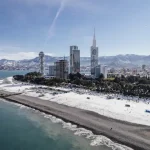
📷 Featured image by Ivars Utināns on Unsplash.