On this page
- Gonio Fortress — The Roman Ruin 14 km South of Your Hotel
- Kobuleti — A Low-Key Georgian Beach Town Worth Half a Day
- Mtirala National Park — Batumi’s Jungle Backyard
- Kutaisi — Georgia’s Ancient Capital by Train or Car
- Vardzia — The Cave Monastery That Rewards the Long Drive
- Borjomi — Mineral Springs, Forest Trails, and Soviet Spa Culture
- How to Get Around — Transport Logic from Batumi in 2026
- 2026 Budget Reality — What Day Trips Actually Cost
- Frequently Asked Questions
💰 Click here to see Georgia Budget Breakdown
💰 Prices updated: October, 2026. Budget figures are estimates — always verify before travel.
Exchange Rate: $1 USD = ₾2.60
Daily Budget (per person)
Shoestring: ₾70.00 – ₾130.00 ($26.92 – $50.00)
Mid-range: ₾180.00 – ₾350.00 ($69.23 – $134.62)
Comfortable: ₾500.00 – ₾1,000.00 ($192.31 – $384.62)
Accommodation (per night)
Hostel/guesthouse: ₾30.00 – ₾60.00 ($11.54 – $23.08)
Mid-range hotel: ₾110.00 – ₾200.00 ($42.31 – $76.92)
Food (per meal)
Budget meal: ₾15.00 ($5.77)
Mid-range meal: ₾35.00 ($13.46)
Upscale meal: ₾100.00 ($38.46)
Transport
Single metro/bus trip: ₾1.00 ($0.38)
Monthly transport pass: ₾40.00 ($15.38)
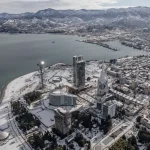
Batumi in summer 2026 is more crowded than ever. The seafront boulevard fills by 10 a.m., sunbeds on the main beach disappear before noon, and restaurant queues on Piazza Square stretch well past patience. The city itself is worth a few days — but the surrounding region is genuinely extraordinary, and most visitors never touch it. Whether you have one spare day or five, these are the day trips that make a Batumi base far more rewarding than the beach alone.
Gonio Fortress — The Roman Ruin 14 km South of Your Hotel
Gonio sits so close to Batumi that most people drive past it on the way to the Turkish border without realising what they are looking at. That is a significant mistake. The fortress here is one of the best-preserved Roman military structures in the Caucasus, built around the 1st century CE and later expanded by the Byzantines and Ottomans. The walls still stand two to three metres high in sections, and the interior courtyard is large enough to feel like you are actually inside something, not just peering at a ruin.
The site covers about 4.5 hectares and includes the foundations of Roman baths, a temple area, and dozens of burial mounds. One of those mounds is linked — somewhat loosely — to the legend that Judas Iscariot was buried here. Local guides will tell you this with great confidence. Whether or not you believe it, the story adds texture to what would already be a compelling stop.
Walk the perimeter wall where it is accessible. The view from the corner towers out toward the Black Sea and back toward the Ajarian hills is unexpectedly dramatic, especially in the late afternoon when the light goes gold and the sea turns deep green. The smell of cut grass and warm stone in summer is specific to this kind of ancient place — it anchors the visit in a way photographs never quite capture.

Entry costs 5 GEL for adults in 2026. A marshrutka from Batumi’s old bus station toward Sarpi or the Turkish border will drop you at the fortress gate for 1–2 GEL. Taxis charge around 20–25 GEL one-way. Combine it with lunch in the village of Gonio itself, where small restaurants serve freshly grilled trout pulled from local fish farms.
Kobuleti — A Low-Key Georgian Beach Town Worth Half a Day
Kobuleti sits 27 km north of Batumi and operates at a completely different frequency. Where Batumi performs — casinos, towers, light shows — Kobuleti simply exists. It has been a Georgian domestic resort since Soviet times, and it still draws mostly Georgian families rather than international tourists. The beach here is wider and less cluttered, the guesthouses are cheaper, and nobody is trying particularly hard to impress you.
The town’s main draw beyond the beach is the Kobuleti Protected Areas, a stretch of wetland and forest running parallel to the coast that supports an impressive variety of bird species. The wooden boardwalk through the protected zone takes about an hour to walk and passes through thick subtropical forest that feels nothing like a beach resort. In spring and early autumn, the birdwatching here is genuinely good — rollers, bee-eaters, herons.
Kobuleti also has a proper covered market near the central bus stop where local vendors sell fresh churchkhela, homemade adjika, dried herbs, and the intensely flavoured Ajarian honey that rarely makes it to Batumi’s tourist shops. This is a better place to buy food souvenirs than anywhere on Batumi’s boulevard.
Getting there is straightforward: marshrutkas run from Batumi’s old bus station every 20–30 minutes throughout the day and cost 2 GEL. The journey takes about 35–40 minutes. You do not need to book anything in advance.
Mtirala National Park — Batumi’s Jungle Backyard
Mtirala translates as “crying mountain” — named for its extraordinary rainfall levels, which reach up to 4,500 mm per year in some zones, making it one of the wettest places in the entire Caucasus. The result is a temperate rainforest that looks nothing like anything else in Georgia. Thick moss covers every surface. Waterfalls appear around corners without warning. The canopy is so dense in summer that the air underneath feels cooler and heavier, like being inside a green room with the humidity turned up.
The park entrance is in the village of Chakvistavi, about 30 km from Batumi. The main trail — the Mtirala Trail — runs roughly 9 km one-way to the mountain summit at around 1,339 metres. Most day visitors do the first 3–5 km to the main waterfalls and turn back. That section alone takes 3–4 hours round trip and covers the most dramatic terrain.
Wear proper footwear. The trail gets slippery year-round, and the wooden bridges over stream crossings can be muddy and wet regardless of weather. Rain gear is worth carrying even on a clear Batumi morning — the microclimate in the park operates independently of the coast.
Getting there without a car requires either hiring a taxi (roughly 60–80 GEL return from Batumi, with waiting time) or joining one of the guided day trips that operate from Batumi’s main tourist information centre near the Europa Square. Guided trips in 2026 run at around 80–120 GEL per person and typically include transport, a park guide, and basic lunch. Entry to the national park costs 5 GEL.

Kutaisi — Georgia’s Ancient Capital by Train or Car
Kutaisi is the second city of Georgia and deserves at least a full day from Batumi. The drive takes about 1 hour 40 minutes on the S1 highway. The train connection, which runs from Batumi’s central station, takes slightly longer — around 2 hours — but the 2025 Georgian Railway schedule update means there are now four direct services daily in each direction, making it far more practical than it was even two years ago.
The centrepiece is Bagrati Cathedral, the 11th-century UNESCO-listed church on the hill above the city. It has been in a state of partial reconstruction since 2001 and remains controversial — the UNESCO listing was suspended for years over the restoration work, though the site was reinstated to the list in 2024 following updated conservation standards. Whatever your view on the restoration choices, the hilltop location alone is worth the climb. The view over Kutaisi’s red-roofed old town and the Rioni River below is one of the most quietly satisfying panoramas in western Georgia.
Do not miss Gelati Monastery, 11 km from the city centre. It is a working monastery with some of the finest medieval frescoes in the Caucasus. The main church is dark inside and smells of beeswax candles — the frescoes emerge gradually as your eyes adjust, and the colours are extraordinary given their age. Modest dress is required. Women need to cover their heads; scarves are available at the entrance.
Kutaisi’s covered market, the Kutaisi Central Market, is chaotic, loud, and excellent for lunch. Look for stalls selling lobiani (bean-filled bread), fresh churchkhela, and locally produced Imereti cheese. Budget 15–25 GEL for a full market lunch including a drink.
Vardzia — The Cave Monastery That Rewards the Long Drive

Vardzia is the most ambitious day trip from Batumi and also the most memorable. The cave city carved into Mount Erusheti along the Mtkvari River valley dates to the 12th century and was commissioned by Queen Tamar, arguably the most celebrated ruler in Georgian history. At its peak it contained over 3,000 apartments, 13 churches, a throne room, and a sophisticated irrigation system. An earthquake in 1283 collapsed the outer cliff face, exposing the interior to the world and beginning the long process of abandonment.
What remains is still staggering. You walk through a labyrinth of carved chambers, tunnels, and stairways cut directly into the volcanic rock, emerging occasionally onto open terraces with views down into the deep river gorge. The main church — the Church of the Assumption — retains original 12th-century frescoes including a portrait of Queen Tamar herself. The scale of the complex rewards slow exploration rather than a rushed walk-through.
The honest logistics: Vardzia is approximately 230 km from Batumi, and the drive takes around 3.5 hours each way via Akhaltsikhe. This is a long day — plan to leave Batumi by 7 a.m. and accept that you will be back late. Public transport is not practical for a day trip. Hiring a car in Batumi is straightforward in 2026; car rental starts at around 120–150 GEL per day for a basic vehicle. Alternatively, shared tours from Batumi combine Vardzia with the nearby Khertvisi Fortress and Rabati Castle in Akhaltsikhe, running at 100–150 GEL per person.
Entry to Vardzia costs 15 GEL in 2026. Bring water, wear comfortable shoes, and go on a weekday if possible — summer weekends draw significant crowds.
Borjomi — Mineral Springs, Forest Trails, and Soviet Spa Culture
Borjomi sits about 170 km from Batumi in the Borjomi Gorge, and the journey there passes through scenery that shifts from subtropical coast to highland pine forest in a way that feels almost theatrical. The town is famous throughout the former Soviet Union for its naturally carbonated mineral water, which has been bottled commercially since the 1890s and is now exported globally. Drinking the water directly from the public springs in the central park — warm, faintly sulphurous, intensely mineral — is the defining Borjomi experience, and it costs nothing.

Beyond the springs, the Borjomi-Kharagauli National Park is one of the largest protected areas in the Caucasus and offers serious hiking for those who want it. The shorter trails accessible from town — particularly the route to the upper cable car station — are manageable for a day visitor without specialist equipment.
The town itself carries a faded grandeur that is genuinely interesting. The 19th-century Russian imperial bathhouses, the Soviet-era sanatoriums with their peeling facades and ornate ironwork, and the colonnaded central park all create an atmosphere unlike anything else in the region. Borjomi feels like a place that peaked twice — once under the tsars, once under the Soviets — and is currently somewhere between the two.
Drive time from Batumi is approximately 2.5 hours via the E70. Marshrutkas connect Batumi to Borjomi via Kutaisi and Khashuri, but the journey involves multiple changes and takes 4–5 hours. A direct private car or taxi hire is significantly more practical for a day trip.
How to Get Around — Transport Logic from Batumi in 2026
Batumi’s transport options for day trips have improved noticeably since 2024. Here is how each option works in practice:
- Marshrutkas: Cheap and frequent for nearby destinations like Kobuleti and Gonio. Leave from the old bus station on Memed Abashidze Street. No booking required — just show up. Prices range from 1–5 GEL for regional routes.
- Georgian Railway: The Batumi–Kutaisi–Tbilisi corridor now runs four direct trains daily following the 2025 timetable update. Book tickets online at railway.ge or at Batumi’s central train station. Batumi to Kutaisi costs 10–15 GEL in standard class. Booking 1–2 days ahead is sensible in summer.
- Shared taxis (shared cabs): For destinations like Kobuleti and Gonio where you want flexibility, shared taxis operate informally from the bus station area. Agree on the price before getting in.
- Car rental: The most practical choice for Vardzia, Borjomi, and Mtirala. Several international and local agencies operate near Batumi’s central boulevard. In 2026, expect to pay 120–200 GEL per day for a standard vehicle, not including fuel. An international driving licence is required for most agencies.
- Organised day tours: Batumi’s tourist information centre near Europa Square coordinates licensed operators offering shared tours to major sites. Prices are typically 80–150 GEL per person. Quality varies — ask to confirm the guide speaks your language before booking.

One practical note: Batumi’s new ring road, partially completed in late 2025, has reduced exit congestion from the city centre significantly on the northern routes toward Kobuleti and Kutaisi. The southern route toward Gonio and the Turkish border remains slow during peak summer hours — leave before 9 a.m. if you are driving south.
2026 Budget Reality — What Day Trips Actually Cost
Costs have risen compared to 2023–2024 figures that still circulate on older travel forums. These are accurate 2026 ranges:
Budget Traveller (marshrutkas, entry fees, market lunches)
- Gonio Fortress: 5–20 GEL total (transport + entry + snack)
- Kobuleti half-day: 10–20 GEL total
- Kutaisi by train: 50–70 GEL (train return + entry fees + lunch)
Mid-Range (mix of transport, guided entry, sit-down meals)
- Mtirala guided day trip: 100–140 GEL per person
- Kutaisi by hired car: 80–100 GEL for car + 30–50 GEL for food and entry
- Borjomi by private taxi: 120–160 GEL return taxi + 20–40 GEL for food
Comfortable (private car hire or driver, restaurant lunches, flexibility)

- Vardzia full day with private driver: 200–280 GEL including driver, fuel, entry fees
- Kutaisi + Gelati + lunch: 150–200 GEL per person with private guide
- Borjomi + spa treatment: 150–220 GEL depending on spa chosen
Fuel prices in Georgia in 2026 sit at approximately 3.20–3.50 GEL per litre for regular petrol. If you are splitting a rental car across two or three people, private transport becomes competitive with guided group tours.
Frequently Asked Questions
What is the best day trip from Batumi for first-time visitors?
Gonio Fortress is the easiest introduction — it is 14 km away, costs almost nothing to reach, and takes 2–3 hours. If you want something more substantial, the Kutaisi train trip gives you a full Georgian city experience in a single manageable day without needing a car or a guide.
Can you do Vardzia as a day trip from Batumi?
Yes, but it is a genuinely long day. Vardzia is about 230 km away and requires roughly 3.5 hours of driving each way. Leave by 7 a.m. and expect to return after 9 p.m. It is worth it, but be honest with yourself about your appetite for a full-day drive. Combining Vardzia with an overnight in Akhaltsikhe makes the experience significantly more relaxed.
Is Mtirala National Park suitable for children and older visitors?
The first 2 km of the main trail are manageable for most fitness levels and suitable for older children. Beyond that, the trail becomes steeper and muddier. Waterproof shoes are essential regardless of season. The trail is not suitable for pushchairs or mobility aids. The waterfalls at the 3 km mark are the main reward and are reachable by most reasonably fit visitors.
Do I need to book day trips from Batumi in advance in summer 2026?
For marshrutka-based trips to Kobuleti and Gonio, no booking is needed. For train tickets to Kutaisi, booking 1–2 days ahead is sensible in July and August. For guided group tours to Mtirala or Vardzia, book at least a day in advance through the Batumi tourist information centre, as departures operate on fixed schedules with limited seats.
What should I bring for a day trip from Batumi?
Water, sunscreen, and cash in GEL are the basics. Many villages and smaller sites still do not accept cards reliably in 2026. For Mtirala and Vardzia specifically, add sturdy shoes, a light rain layer, and a packed lunch or snacks. ATMs in Batumi are plentiful; withdraw cash before leaving the city for any rural destination.
Explore more
The Best Restaurants in Batumi: Your Ultimate Food Guide
The Ultimate Guide to Shopping in Batumi: Souvenirs, Markets & Malls
Where to Eat in Batumi: The Ultimate Food Guide for Travelers
📷 Featured image by Ivars Utināns on Unsplash.