On this page
- Old Town (Abanotubani & Kala): Tbilisi at Its Most Atmospheric
- Rustaveli Avenue & City Centre: Location That Comes With a Price Tag
- Marjanishvili & Chugureti: The West Bank With a Personality
- Vera & Vake: Green, Residential, and Genuinely Relaxing
- Saburtalo: Practical, Connected, and Underrated
- Mtatsminda: Staying on the Hill Above the City
- 2026 Budget Reality: What Accommodation Actually Costs by District
- Choosing Your District: Matching Your Trip to the Right Neighbourhood
- Frequently Asked Questions
💰 Click here to see Georgia Budget Breakdown
💰 Prices updated: October, 2026. Budget figures are estimates — always verify before travel.
Exchange Rate: $1 USD = ₾2.60
Daily Budget (per person)
Shoestring: ₾70.00 – ₾130.00 ($26.92 – $50.00)
Mid-range: ₾180.00 – ₾350.00 ($69.23 – $134.62)
Comfortable: ₾500.00 – ₾1,000.00 ($192.31 – $384.62)
Accommodation (per night)
Hostel/guesthouse: ₾30.00 – ₾60.00 ($11.54 – $23.08)
Mid-range hotel: ₾110.00 – ₾200.00 ($42.31 – $76.92)
Food (per meal)
Budget meal: ₾15.00 ($5.77)
Mid-range meal: ₾35.00 ($13.46)
Upscale meal: ₾100.00 ($38.46)
Transport
Single metro/bus trip: ₾1.00 ($0.38)
Monthly transport pass: ₾40.00 ($15.38)
Old Town (Abanotubani & Kala): Tbilisi at Its Most Atmospheric
Finding the right Tbilisi neighbourhood in 2026 is harder than it used to be. Short-term rental platforms have pushed prices up across the board, several popular hostels have converted to boutique hotels, and a handful of districts that were budget-friendly two years ago are now firmly mid-range. Knowing which area actually fits your trip — before you book — saves real money and real frustration.
Old Town splits into two overlapping zones. Abanotubani is the sulphur bath district in the south, where domed brick bathhouses line the banks of the Mtkvari River and the air carries a faint mineral warmth that hits you the moment you turn off Gorgasali Square. Kala is the broader historic core climbing north toward Narikala Fortress — narrow cobbled lanes, leaning wooden balconies draped with laundry, and churches that have been standing since the fifth century.
Staying here puts you within walking distance of almost everything tourists come to Tbilisi to see. The fortress, the Metekhi Church, the Peace Bridge, the carpet and antique market on Dry Bridge — all reachable on foot without needing to think about transport. The sensory experience is genuinely unlike anywhere else: at dusk, the smell of churchkhela and roasting walnuts drifts from street stalls, and candlelit wine-bar windows glow amber against the pale stone facades.
The trade-off is noise and crowds. Summer weekends in Old Town are extremely busy. Streets around Leselidze (now officially Kote Afkhazi Street, though locals still use the old name) can feel more like a theme park than a neighbourhood between June and August. Accommodation is also pricier here than in equivalent spots on the west bank.
- Best for: First-time visitors, couples, anyone who wants to be in the middle of the action
- Transport: Avlabari metro station (Line 2) is a 10-minute walk; taxis and Bolt are plentiful
- Avoid if: You need quiet, you’re on a tight budget, or you’re staying more than a week
Rustaveli Avenue & City Centre: Location That Comes With a Price Tag
Rustaveli Avenue is Tbilisi’s main boulevard — a wide, tree-lined sweep of neoclassical and Soviet-era architecture running from Freedom Square down to the Parliament building. Hotels here are mostly four- and five-star, the streets are well-maintained, and you’re genuinely central to the whole city. The new metro Line 3 extension, which opened in early 2026, added a second entrance to Rustaveli station, making connections to Didube and the airport significantly faster than before.
This area works best for business travellers and those who want a recognisable, comfortable base without needing to navigate anything unfamiliar. The Georgian National Museum is two blocks from Rustaveli station. The Rustaveli Theatre, the Opera House, and a string of good restaurants on Atoneli and Tamar Mepe streets are all within easy reach.
What it lacks is character at street level. Between the international hotel chains and the retail chains, parts of Rustaveli feel more anonymous than atmospheric. You’re in Tbilisi, but you could be in a lot of places. If you’re spending most of your time out exploring the city and just need a reliable, safe home base, it earns its position. If you want to feel Tbilisi the moment you step outside your door, look elsewhere.
- Best for: Business trips, short stays of two to three nights, travellers who prioritise familiarity
- Transport: Rustaveli metro station (Lines 1 and 3 as of 2026); multiple bus routes
- Avoid if: You want local neighbourhood feel or you’re watching your budget closely

Marjanishvili & Chugureti: The West Bank With a Personality
Cross the Mtkvari River to the western bank and the city changes register immediately. Marjanishvili Square anchors a neighbourhood that has been quietly building momentum since 2022 and by 2026 is arguably the most interesting place to base yourself in Tbilisi — provided you know what you’re getting.
Chugureti stretches north from Marjanishvili and is where a large part of the city’s Jewish community has historically lived, reflected in the synagogue on Kojaori Street and the mix of older residents and newer arrivals that gives the streets an unhurried, real-city texture. The main strip around Davit Agmashenebeli Avenue is lined with independent bakeries, Soviet-era storefronts that have been converted into wine bars, and a cluster of Georgian-language bookshops that haven’t yet been turned into souvenir stalls.
Accommodation here ranges from well-run guesthouses in renovated 19th-century townhouses to newer boutique options near the square. Prices are noticeably lower than Old Town for comparable quality. The walk across the ornate iron bridge to Old Town takes about twenty minutes, and Marjanishvili metro station (Line 1) connects you to the whole city.
The neighbourhood is genuinely mixed — tourists, long-stay expats, local families — and that mix is exactly what makes it interesting. If you’re staying five nights or more and want to feel like you’re actually living in Tbilisi rather than visiting it, this is your area.
- Best for: Repeat visitors, longer stays, independent travellers, those who want value without sacrificing atmosphere
- Transport: Marjanishvili metro station (Line 1); flat walking distance to central Tbilisi
- Avoid if: You want the postcard Tbilisi experience right outside your window
Vera & Vake: Green, Residential, and Genuinely Relaxing
Vera sits on the hillside above Rustaveli, a district of wide pavements, chestnut trees, and apartment buildings that have been housing Tbilisi’s intelligentsia since the Soviet era. Vake begins just beyond it, stretching toward the forested Vake Park and the open-air market on Delisi Street. Together they form a residential belt that is quieter, greener, and considerably less touristy than anywhere in the centre.
You won’t find many traditional guesthouses here — it’s more apartments and mid-range hotels, many of them occupied by expats on multi-month stays, NGO workers, and Georgian families who moved out of the centre when prices rose. That gives it a particular atmosphere: quiet streets on weekday mornings, good supermarkets, reliable coffee shops with actual working WiFi, and parks where people walk dogs and children play football without a tourist camera in sight.
Vera in particular has some outstanding restaurants that don’t appear on most tourist itineraries — family-run spots on Iosebidze Street serving proper Georgian food at neighbourhood prices. Vake Park itself is a genuine pleasure in spring and autumn, a wide forested slope with walking paths and a small lake, ten minutes from the nearest Bolt pickup.
Getting to Old Town from Vera takes about 20–25 minutes on foot downhill, or five minutes by Bolt. It’s not far, but it requires intention — this is a neighbourhood you choose because you want to live slightly outside the tourist bubble, not because it’s the most convenient option for sightseeing.
- Best for: Families, longer-stay visitors, anyone who needs quiet to actually sleep and recover, digital nomads
- Transport: No metro station directly in Vera; Vake has Delisi station (Line 1); Bolt is inexpensive and frequent
- Avoid if: You want to walk everywhere or you’re only in Tbilisi for two or three nights
Saburtalo: Practical, Connected, and Underrated
Saburtalo doesn’t make it onto most “best neighbourhood” lists because it isn’t picturesque. It’s a large, mostly Soviet-built residential district west of the centre, full of apartment blocks, supermarkets, pharmacies, and the kind of infrastructure that makes extended stays genuinely comfortable. That’s exactly why it deserves a mention.
For remote workers and long-stay travellers, Saburtalo in 2026 is one of the best-value options in the city. Apartment rentals are significantly cheaper than in Old Town or Vera, the internet infrastructure is reliable (fibre is widespread in newer buildings), and the neighbourhood has a dense cluster of co-working spaces along Pekini Avenue and around Saburtalo metro station. Several new co-working and coliving operations opened here in 2025, many offering monthly packages that include fast internet, a desk, and a shared kitchen.
Tbilisi State Medical University and several other institutions are based here, so the area has a young, educated population and a range of affordable canteens and cafés that cater to students and staff — meaning you can eat well and cheaply if you know where to look. The Carrefour on Pekini is one of the best-stocked supermarkets in the city.
Saburtalo metro station (Line 2) connects directly to the centre in under fifteen minutes, and the night bus network that was expanded in 2025 now covers this district well for late evenings.
- Best for: Remote workers, month-long stays, budget-conscious travellers who don’t need to be central
- Transport: Saburtalo metro station (Line 2); excellent bus coverage; Bolt is fast and cheap here
- Avoid if: Aesthetics matter to you or you’re on a short trip focused on sightseeing
Mtatsminda: Staying on the Hill Above the City
Mtatsminda is the forested mountain that rises directly above Old Town, accessible by the famous funicular railway that runs from Chonkadze Street up to a park and viewing platform at around 770 metres. A small number of accommodation options — mostly boutique guesthouses and one larger hotel — sit partway up or near the top, and the experience of waking up with Tbilisi spread below you in every direction is hard to replicate anywhere else in the city.
The funicular runs regularly until late in the evening and has been reliable since its most recent maintenance overhaul in 2024. There’s also a road access route, so Bolt drivers do come up — though surge pricing applies during busy periods because of the extra time and fuel involved.
Living up here is wonderful for two or three nights and impractical for longer. Every trip into town involves either the funicular or a winding road descent. The Mtatsminda Park at the top has a Ferris wheel, an amusement zone, and the famous television tower, which is striking to see lit up at night from your window. The Pantheon of Georgian writers and public figures is on the slope below — a genuinely moving place to visit in the early morning before the crowds arrive, when you can hear the city beginning to wake below you through the pine trees.
- Best for: Couples on a short trip, anyone who wants a unique Tbilisi experience, photographers
- Transport: Funicular from lower Chonkadze Street; road access for Bolt
- Avoid if: You need easy daily access to the city or you’re staying more than three nights
2026 Budget Reality: What Accommodation Actually Costs by District
Prices below reflect 2026 averages across booking platforms and direct rentals. The Georgian lari has remained relatively stable against the euro since late 2024, which means international visitors are not seeing dramatic swings — but local cost increases have pushed accommodation prices up roughly 15–20% compared to 2023 across most districts.
Budget Tier (dormitories, basic guesthouses, simple apartments)
- Old Town: Hostel dorm beds from 40–60 GEL/night; private rooms from 100–130 GEL
- Marjanishvili/Chugureti: Private guesthouse rooms from 80–110 GEL; apartments from 90 GEL
- Saburtalo: Apartments from 65–90 GEL/night; monthly rates from 1,400–1,900 GEL
Mid-Range Tier (boutique guesthouses, three-star hotels, well-furnished apartments)
- Old Town: 180–280 GEL/night for boutique hotels and quality apartments
- Rustaveli/City Centre: 200–320 GEL/night; breakfast often included in hotels
- Vera/Vake: 150–240 GEL/night for apartments; slightly less for guesthouses
- Mtatsminda: 200–300 GEL/night for the boutique options available
Comfortable Tier (four-star hotels, high-spec serviced apartments)
- Rustaveli/City Centre: 380–700 GEL/night for international brand hotels
- Old Town: 350–600 GEL/night for top boutique properties and design hotels
- Vake: 300–500 GEL/night for upmarket serviced apartments
Monthly apartment rentals in Saburtalo and Chugureti remain the best value in the city for stays of four weeks or more. Furnished two-bedroom flats in these areas run 2,200–3,200 GEL/month in 2026, which is significantly below equivalent options in Vera or Old Town (3,500–5,500 GEL/month).
Choosing Your District: Matching Your Trip to the Right Neighbourhood
The mistake most visitors make is defaulting to Old Town simply because it appears most in photos and travel content. It’s a beautiful neighbourhood — but it’s the right choice for a specific kind of trip, not every trip.
Think about three things before you book:
- How long are you staying? Under four nights, Old Town or Rustaveli makes sense — you want to be central without spending time navigating. Five nights or more, and Marjanishvili, Vera, or Saburtalo offer better value and a more genuine experience.
- What’s your daily rhythm? If you’re sightseeing intensively every day, proximity to Old Town matters. If you’re working remotely, attending meetings, or using Tbilisi as a base for day trips to Mtskheta, Kazbegi, or Kakheti, being near a metro station matters more than being near Narikala.
- What’s your noise tolerance? Old Town summer evenings are genuinely loud until well past midnight, particularly around Shardeni Street and Bar Street. Vera, Vake, and Saburtalo are quiet from about 23:00 onward.
One underused strategy: split your stay. A couple of nights in Old Town at the start to get oriented, then move to Marjanishvili or Vera for the rest of the trip. The metro and Bolt make the city navigable from anywhere — you’re never truly inconveniently located in Tbilisi as long as you’re within a kilometre of a metro station.
Frequently Asked Questions
Which area of Tbilisi is best for first-time visitors?
Old Town — specifically the Kala and Abanotubani areas — gives first-timers immediate access to Tbilisi’s most iconic sights, restaurants, and atmosphere. It’s walkable, photogenic, and requires no navigation. The downside is higher prices and significant noise, especially in summer. For a first trip of three to five nights, the trade-off is worth it.
Is Tbilisi safe to stay in any neighbourhood?
Tbilisi is generally a safe city across all the districts covered here. Petty theft exists near busy tourist areas in Old Town, particularly around Dry Bridge Market on weekends. Standard awareness — bags worn in front, not leaving phones on café tables — is sufficient. Vera, Vake, and Saburtalo have very low tourist-targeted crime rates.
Which Tbilisi district is best for digital nomads in 2026?
Saburtalo leads for remote workers in 2026, with the densest concentration of co-working spaces, reliable fibre internet in newer apartment buildings, and the lowest long-stay rental prices in a well-connected district. Marjanishvili is a strong second choice if you want neighbourhood character alongside reasonable rents and fast café WiFi.
How easy is it to get around Tbilisi between neighbourhoods?
Very easy. The metro covers the main districts and runs until 00:00 daily, with the 2025 night bus expansion filling the gap until 03:00. A Bolt ride across the city rarely exceeds 12–18 GEL. Load a transit card (Metromoney card) at any metro station entrance — single rides cost 1 GEL and the same card works on buses.
Are there good accommodation options near Tbilisi airport?
Tbilisi International Airport is in the Lochini district, roughly 18 kilometres east of the city centre. There are a handful of airport hotels for genuine transit stays, but most visitors travel directly into the city — the airport express bus reaches Isani metro station in about 30 minutes for 0.50 GEL, connecting to the full metro network. Staying near the airport makes sense only for very early morning departures.
Explore more
The Best Shopping in Tbilisi: Where to Find Souvenirs, Wine & Unique Local Treasures
Where to Eat in Tbilisi: 15 Must-Try Restaurants for Authentic Georgian Food & Beyond
Where to Stay in Tbilisi: Best Neighborhoods & Coolest Areas Guide
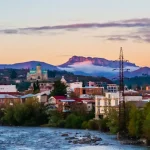
📷 Featured image by Viktor SOLOMONIK on Unsplash.