On this page
- Planning Weekend Trips in Georgia Just Got Easier — and More Complicated
- The Mountain Escape: Kazbegi in 48 Hours
- The Wine Country Weekend: Kakheti Without the Rush
- The Black Sea Reset: Batumi for a Long Weekend
- The Hidden Gorge: Borjomi and Akhaltsikhe Combined
- The Cave City Circuit: Uplistsikhe and Gori
- The Svaneti Commitment: Mestia When You Have Three Days
- Getting There: Transport Reality Across All Routes in 2026
- Budget Breakdown by Trip Type
- Packing and Timing: What Actually Matters
- Frequently Asked Questions
💰 Click here to see Georgia Budget Breakdown
💰 Prices updated: October, 2026. Budget figures are estimates — always verify before travel.
Exchange Rate: $1 USD = ₾2.60
Daily Budget (per person)
Shoestring: ₾70.00 – ₾130.00 ($26.92 – $50.00)
Mid-range: ₾180.00 – ₾350.00 ($69.23 – $134.62)
Comfortable: ₾500.00 – ₾1,000.00 ($192.31 – $384.62)
Accommodation (per night)
Hostel/guesthouse: ₾30.00 – ₾60.00 ($11.54 – $23.08)
Mid-range hotel: ₾110.00 – ₾200.00 ($42.31 – $76.92)
Food (per meal)
Budget meal: ₾15.00 ($5.77)
Mid-range meal: ₾35.00 ($13.46)
Upscale meal: ₾100.00 ($38.46)
Transport
Single metro/bus trip: ₾1.00 ($0.38)
Monthly transport pass: ₾40.00 ($15.38)
Planning Weekend Trips in Georgia Just Got Easier — and More Complicated
Georgia’s travel infrastructure has shifted noticeably since 2024. The upgraded Tbilisi–Batumi railway schedule now runs faster, marshrutka networks have expanded into previously awkward routes, and the 2025 opening of new rest stops along the Georgian Military Highway means the Kazbegi road trip is less grueling than it used to be. At the same time, popular spots are busier than ever. Kazbegi on a summer Saturday in 2026 looks nothing like it did five years ago — parking is a genuine problem, guesthouses fill weeks in advance, and the trail to Gergeti Trinity Church has a designated one-way path during peak hours. The good news: with a bit of planning, Georgia still delivers some of the most rewarding weekend escapes in the entire Caucasus region. This guide covers the real options — mountains, wine country, coast, caves, and gorges — with honest transport details, current prices, and advice on which trip suits which kind of traveler.
The Mountain Escape: Kazbegi in 48 Hours
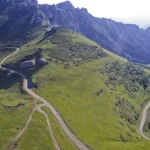
Kazbegi — officially called Stepantsminda — remains the single most popular weekend trip from Tbilisi, and for good reason. The drive alone along the Georgian Military Highway takes you through Ananuri Fortress, across the Jvari Pass at 2,379 metres, and past the Gudauri ski resort before dropping into the Terek River valley. On a clear morning, the air at the top of the pass carries a cold mineral sharpness that no photograph captures properly.
The town itself sits at around 1,700 metres. The iconic Gergeti Trinity Church perches at 2,170 metres above it, visible from almost every point in the valley. The hike up takes 1.5 to 2.5 hours depending on pace. In 2026, the trail is one-way clockwise during July and August from 9:00 to 17:00 — this is a genuine rule enforced by local rangers, not a suggestion. Go early or go after 17:00 to avoid the crowds and the one-way restriction simultaneously.
Beyond the church hike, Kazbegi offers the Gergeti Glacier trail (a full-day commitment at around 3,500 metres), horse riding through the Truso Valley, and the remarkably good mountain cuisine at guesthouses where tkemali, fresh churchkhela, and bean-stuffed kubdari bread appear on every table.
- Best for: Hikers, photographers, first-time visitors to Georgia
- How long: Minimum 2 nights for a real experience
- From Tbilisi: 2.5 hours by shared taxi (35–50 GEL per seat), 3–4 hours by marshrutka (15 GEL)
- Book accommodation: At least 3 weeks ahead in June–August

The Wine Country Weekend: Kakheti Without the Rush
Kakheti is Georgia’s primary wine region, and the good news is that most visitors cluster around Sighnaghi — a pretty hilltop town with cobblestone lanes and a complete medieval fortress wall — leaving the rest of the region relatively uncrowded even in 2026. A smart weekend here means splitting time between Sighnaghi for the atmosphere and Telavi for the serious wine access.
Sighnaghi at dusk, when the candlelit cellars along the main street flicker into life and the temperature drops to something cool and woodsy, is one of those Georgia experiences that justifies the trip on its own. Several family wineries in the nearby villages of Tsinandali, Ikalto, and Napareuli offer amber wine tastings — the qvevri-fermented style that Georgia is globally known for — directly from the barrel for 20–40 GEL per person, often including bread, cheese, and churchkhela.
Telavi, the regional capital, has a more lived-in feel and better access to working vineyards. The Alazani Valley views from the Batonis Tsikhe fortress grounds in Telavi are genuinely spectacular in autumn when the vines turn gold.
- Best for: Wine lovers, couples, anyone wanting a slow, scenic weekend
- How long: 2 nights minimum; 3 is better
- From Tbilisi: 1.5 hours to Sighnaghi by shared taxi (25–35 GEL); 2 hours to Telavi (20–30 GEL marshrutka)
- Best timing: September–October during Rtveli (harvest season)
The Black Sea Reset: Batumi for a Long Weekend
Batumi is Georgia’s most polarising city — half Las Vegas-by-the-sea, half crumbling Soviet resort town — and that tension is exactly what makes it interesting. For a weekend trip, the logic is simple: you arrive, you walk the boulevard, you eat well, you swim if it’s warm, and you decompress. It’s not a cultural deep-dive. It’s a reset.
The 2025 Tbilisi–Batumi express train schedule has been updated again, with two daily departures that complete the journey in 4 hours 20 minutes for around 35–55 GEL depending on class. This makes it genuinely viable to leave Tbilisi Friday evening and return Sunday night. The train station in Batumi sits close to the centre, making the arrival straightforward.
The Batumi Boulevard stretches 8 kilometres along the coast. The central section between the port and the Old Town is the most walkable and least overwhelmingly touristy. The Old Town itself has a cluster of good restaurants serving adjarian cuisine — most notably Adjarian khachapuri, the boat-shaped bread with egg and butter that you stir at the table until the filling becomes something between a sauce and a soup.
- Best for: Beach seekers, urban explorers, those wanting a complete change of scenery from Tbilisi
- How long: 2 nights is the sweet spot
- From Tbilisi: Train (4h 20min, 35–55 GEL) or overnight bus (6–7 hours, 20–25 GEL)
- Best season: June to September for beach weather; May and October for lower prices and smaller crowds
The Hidden Gorge: Borjomi and Akhaltsikhe Combined
This combination trip is criminally underrated. Borjomi is famous for its mineral water — the bottles are sold across Georgia and the former Soviet states — but the town itself is more interesting than its reputation suggests. The Borjomi-Kharagauli National Park, which begins essentially at the edge of town, has well-marked trails through beech and pine forest that take you entirely out of the tourist circuit. The sulphuric spring in the central park, where you can fill a cup directly from the source, has a sharp, slightly eggy mineral quality that’s nothing like the bottled version.
Akhaltsikhe is 50 kilometres southwest, about an hour by marshrutka, and anchored by Rabati Castle — a sprawling medieval complex that was heavily restored (and controversially modernised) between 2011 and 2013. Whether you like the restoration or find it too polished, the castle is undeniably dramatic and gives real context to the region’s Ottoman and Georgian history. The town below it is quiet and authentic.
- Best for: History buffs, hikers, travellers who want something beyond the standard route
- How long: 2 nights — one in Borjomi, one in Akhaltsikhe
- From Tbilisi: 2.5–3 hours to Borjomi (marshrutka from Didube station, 15–20 GEL)
The Cave City Circuit: Uplistsikhe and Gori
This is Georgia’s best half-day or full-day trip, and it works as a weekend escape only if you combine it with a night in Gori or treat it as a day trip with an overnight stay. Uplistsikhe is a 3,000-year-old cave city carved directly into a volcanic rock plateau above the Mtkvari River. Walking through the carved halls, theatre spaces, and ancient pharmacy rooms — the wind coming off the river below, the rock warm underfoot from the afternoon sun — gives you a physical sense of history that standing inside a museum never quite matches.
Gori, 10 kilometres away, is best known internationally as the birthplace of Joseph Stalin. The Stalin Museum there is one of the more surreal travel experiences in the South Caucasus — a genuinely unreconstructed Soviet-era memorial, not an ironic exhibition. Whatever your politics, it’s historically fascinating.
- Best for: History lovers, day-trippers from Tbilisi, anyone with a car
- How long: Can be done as a day trip (3.5–4 hours from Tbilisi); 1 night in Gori allows more comfort
- From Tbilisi: Train to Gori (1.5 hours, 5–8 GEL); taxi from Gori to Uplistsikhe (15–20 GEL return)
The Svaneti Commitment: Mestia When You Have Three Days
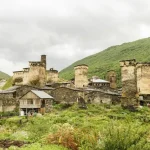
Svaneti requires more than a weekend. That’s the honest answer. But if you have Friday to Monday — three nights — Mestia in Upper Svaneti is worth every hour of the journey. The landscape is genuinely unlike anything else in Georgia: medieval defensive towers rising from stone villages, glaciers visible from the main road, and a remoteness that hasn’t been entirely smoothed away by tourism.
Getting there in 2026 means either a flight from Tbilisi (Vanilla Sky operates seasonal flights, approximately 45 minutes, 180–250 GEL one way) or a marshrutka from Zugdidi (3–4 hours on a road that is equal parts magnificent and terrifying). The drive through the Enguri canyon alone — sheer walls dropping to a turquoise reservoir — justifies the journey.
In Mestia, the Svan Museum of History and Ethnography is compact but excellent. The Chalaadi Glacier hike is achievable in a half-day. And the village guesthouses — creaking wooden floors, heavy wool blankets, dinners of kubdari and potato-stuffed khinkali served by families who have lived in these valleys for centuries — provide the kind of accommodation experience that chain hotels simply cannot replicate.
- Best for: Serious hikers, adventure travelers, those wanting Georgia’s most dramatic landscape
- How long: 3 nights minimum
- From Tbilisi: Flight (45 min, 180–250 GEL) or train to Zugdidi + marshrutka (total 6–7 hours, 25–40 GEL)
- Best season: June to September; roads can close in winter
Getting There: Transport Reality Across All Routes in 2026
Georgia’s transport network has improved but remains uneven. The key facts for 2026 weekend travelers:
Georgian Railway is the most comfortable option where it applies — Tbilisi to Batumi and Tbilisi to Gori are the most useful weekend routes. Tickets are sold via the Georgian Railway app and website, which now accepts international Visa and Mastercard without the workarounds required in previous years.
Marshrutkas (minibuses) cover almost everywhere but depart from fixed stations when full, not on a schedule. Didube bus station handles most western routes; Isani handles Kakheti routes. They are cheap and direct but require flexibility on timing.
Shared taxis operate on the same station system but are faster and more expensive. For Kazbegi, they are genuinely the better option — 35–50 GEL versus 2.5 hours versus 3.5 hours.
Rental cars in 2026 cost 80–180 GEL per day depending on class. For trips like Borjomi–Akhaltsikhe or the cave city circuit, a rental gives you flexibility that public transport simply cannot match. International driving licences are accepted; Georgian roads outside the main highways vary from good to genuinely rough.
Bolt and Yandex Go remain the standard ride-hailing apps in Tbilisi for getting to departure stations.
Budget Breakdown by Trip Type
Costs in 2026 have risen noticeably from 2023 levels, especially in Kazbegi and Sighnaghi where tourism demand has pushed accommodation prices up sharply. Here’s a realistic daily breakdown per person, excluding transport from Tbilisi:
Kazbegi
- Budget: 80–120 GEL/day (guesthouse bed, simple meals, self-guided hiking)
- Mid-range: 180–280 GEL/day (private room, restaurant dinners, horse rental)
- Comfortable: 350–500 GEL/day (boutique hotel, guided hikes, private transport)
Kakheti (Sighnaghi / Telavi)
- Budget: 70–100 GEL/day (family guesthouse, local wine, home-cooked meals)
- Mid-range: 150–250 GEL/day (boutique guesthouse, winery tours, restaurant meals)
- Comfortable: 300–450 GEL/day (wine hotel, private tastings, chauffeur transfers)
Batumi
- Budget: 90–130 GEL/day (hostel or basic hotel, street food, beach)
- Mid-range: 200–320 GEL/day (mid-range hotel near boulevard, restaurant meals)
- Comfortable: 400–600 GEL/day (seafront hotel, spa, cocktail bars)
Borjomi / Akhaltsikhe
- Budget: 60–90 GEL/day (guesthouse, local restaurants, park entry)
- Mid-range: 130–200 GEL/day (comfortable hotel, guided tours)
Mestia / Svaneti
- Budget: 80–120 GEL/day (village guesthouse with meals included)
- Mid-range: 180–280 GEL/day (private guesthouse, guided glacier hike)
Packing and Timing: What Actually Matters
Georgia’s weekend trip destinations span wildly different climates and altitudes, which catches many visitors unprepared. A few practical realities:
Layering is non-negotiable for mountains. Kazbegi and Mestia can drop below 5°C at night even in July. Light clothing that works in 28°C Tbilisi will leave you miserable at altitude by evening. A windproof shell jacket, thermal base layer, and warm mid-layer take up minimal space and matter enormously.
Footwear for hiking matters more than most people plan for. Gergeti Church trail is rocky and steep in sections. Sandals have caused enough problems that the national park information board now explicitly discourages them. Trail runners are fine; proper hiking boots are better.
Shoulder season (April–May and September–October) offers the best balance across almost every destination. Prices are lower, crowds are thinner, and the landscape is arguably more beautiful — spring wildflowers at altitude, autumn colour in Kakheti’s vineyards.
Summer (June–August) is peak season. Accommodation must be booked weeks ahead for Kazbegi, Sighnaghi, and Mestia. Batumi gets extremely crowded in July and August, particularly during Georgian national holidays.
Winter trips work well for Batumi (mild, uncrowded, cheap) and Gudauri skiing, but Kazbegi road conditions vary and Svaneti can become inaccessible. Always check road status via the Roads Department of Georgia’s website before travel between November and March.
Cash is still important outside Tbilisi. Many guesthouses in Kazbegi, Svaneti, and rural Kakheti do not accept cards. Bring sufficient GEL before leaving the capital — ATMs in smaller towns exist but are sometimes out of service or out of cash on busy weekends.
Frequently Asked Questions
What is the easiest weekend trip from Tbilisi for first-time visitors?
Kazbegi is the most popular for good reason — the scenery is dramatic, the logistics from Tbilisi are simple (shared taxi, 2.5 hours), and even a single day there feels worthwhile. Sighnaghi in Kakheti is a gentler alternative for those who want wine country over mountains, with an equally easy 1.5-hour journey from the capital.
How far in advance should I book accommodation for Kazbegi?
In June, July, and August, book at least 3–4 weeks ahead for anything decent. The most popular guesthouses and the handful of boutique hotels in Stepantsminda fill on weekends by mid-spring. Shoulder season (May, September) gives you more flexibility, but a week’s notice is still safer than arriving without a reservation.
Is it possible to visit Batumi and Kakheti in the same weekend?
Not comfortably. They are in opposite directions from Tbilisi — Kakheti to the east, Batumi to the southwest — and combining them would mean spending most of your weekend on transport. Pick one, do it properly, and save the other for a separate trip. Georgia rewards multiple visits.
What is the best way to get around Georgia without a car for weekend trips?
Marshrutkas and shared taxis cover most major routes cheaply and reliably. The Georgian Railway is excellent for Batumi and Gori. For Svaneti, the Vanilla Sky seasonal flights from Tbilisi are the most practical option if budget allows. The only real limitation without a car is flexibility — departures are fixed, and rural guesthouses outside town centres become harder to reach.
Are weekend trips in Georgia safe for solo travellers?
Georgia consistently ranks among the safest countries in Europe and the Caucasus for solo travel, including for women traveling alone. The main practical concerns are not safety-related — they are logistical: booking ahead, understanding that mountain weather changes fast, and carrying cash. Standard urban awareness applies in Batumi and Tbilisi, but rural Georgia is exceptionally low-risk by any regional standard.
📷 Featured image by Michael Chambers on Unsplash.