On this page
💰 Click here to see Georgia Budget Breakdown
💰 Prices updated: November, 2026. Budget figures are estimates — always verify before travel.
Exchange Rate: $1 USD = ₾2.60
Daily Budget (per person)
Shoestring: ₾70.00 – ₾130.00 ($26.92 – $50.00)
Mid-range: ₾150.00 – ₾260.00 ($57.69 – $100.00)
Comfortable: ₾500.00 – ₾1,000.00 ($192.31 – $384.62)
Accommodation (per night)
Hostel/guesthouse: ₾10.00 – ₾40.00 ($3.85 – $15.38)
Mid-range hotel: ₾110.00 – ₾250.00 ($42.31 – $96.15)
Food (per meal)
Budget meal: ₾15.00 ($5.77)
Mid-range meal: ₾40.00 ($15.38)
Upscale meal: ₾100.00 ($38.46)
Transport
Single metro/bus trip: ₾1.00 ($0.38)
Monthly transport pass: ₾40.00 ($15.38)
Georgia’s famous spots are more crowded every year, and by July 2026 Kazbegi’s main road and Tbilisi’s old town can feel like a queue. Mestia, Tusheti and Tskaltubo are the opposite: stone towers, a mountain road few people dare, and a ghost spa town that still has hot water. They sit in different corners of the country, so the real challenge is planning the logistics.
Three Places, Three Moods
Mestia is the polished one. It is the main town of Upper Svaneti in the northwest, with decent roads, guesthouses on every street and hiking trails you can start from the town centre. Tusheti is the wild one. It lies in the northeast, behind a 2,850 m pass, and it is open to vehicles for only a few months a year. Tskaltubo is the strange one. It is a 20th-century spa town near Kutaisi with crumbling sanatoriums and a few working bathhouses.
Together they show three sides of Georgia: Svan medieval mountain culture, Tush shepherd life, and Soviet-era leisure. Most travellers do Tskaltubo and Mestia on one western trip, then Tusheti separately from Kakheti.
Mestia: Svan Towers, Glaciers and High Villages
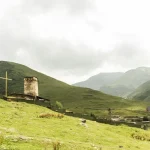
Mestia sits at about 1,500 m, and more than 200 square stone Svan towers stand across Upper Svaneti. At dawn, with frost on the roofs and woodsmoke drifting between the towers, the town looks like a film set. Climb one of the towers for a few lari and the narrow wooden ladders will make your legs shake.
- Chalaadi Glacier: an easy walk of about 3 to 4 hours return from town, mostly along the river.
- Koruldi Lakes: a steeper hike above Mestia, or a short 4×4 ride. Ushba’s twin peaks rise behind the water.
- Svaneti Museum of History and Ethnography: home to illuminated manuscripts and icons that the villages protected for centuries.
- Ushguli: one of Europe’s highest permanently inhabited villages, about 45 km east. Paving has improved much of the road since 2024, but expect gravel stretches and landslide repairs.
Serious walkers can do the Mestia to Ushguli trek in 3 to 4 days, sleeping in village guesthouses each night.
Tusheti: Georgia’s Most Remote Mountain Road
You reach Tusheti by crossing the Abano Pass, a gravel track with sheer drops and no guardrails. The road is usually open from about June to mid-October. Outside that window, snow cuts the region off completely.
Omalo is the main base, split into Upper and Lower Omalo. Keselo Fortress, the stone complex above Upper Omalo, gives you the best valley views. From there, villages like Dartlo, with its slate-roofed towers, and Diklo, a ruin near the Dagestan border, make strong day hikes or jeep trips. Smoke from the wood stoves drifts through the lanes at dusk, and you can hear sheep bells long before you see the flocks.
Trails near the border zone may need a free permit. Ask at the visitor centre in Omalo before you set out. Mobile signal is patchy, so download offline maps first.
Tskaltubo: Soviet Spa Ruins and Warm Mineral Water
Tskaltubo was once the Soviet Union’s favourite health resort. Its mineral water comes out of the ground at about 33–35°C. Today, grand sanatorium halls with peeling columns and broken chandeliers stand among the trees, some still home to displaced families from Abkhazia who have lived here since the 1990s. Be respectful: do not photograph residents without asking, and stay out of unsafe buildings.
The best moment is slipping into the warm, slightly silky water at one of the working public bathhouses, such as Bath No. 6, while the old tiled walls echo around you. Restoration of some sanatoriums has slowly started, but most of the town remains raw and atmospheric. Prometheus Cave and Sataplia Reserve are a short drive away, so combine them in one day.
What and Where to Eat
In Mestia, order kubdari, the Svan meat pie. A freshly cut one releases a cloud of steam that smells of cumin, coriander and the local svanuri marili salt. Try it at the small cafés around Seti Square or, better, as part of a guesthouse dinner. Also look for tashmijabi, a stretchy mashed potato and cheese dish.
In Tusheti, eat at your guesthouse, because there are very few restaurants. Ask for guda, a sharp, smoky sheep cheese aged in a sheepskin, and for Tushetian kotori, a stuffed bread. Dishes here depend on what the family could grow and carry up the mountain.
In Tskaltubo, eat in Kutaisi, 20 minutes away, or at the few family cafés near the park. Expect simple Imeretian food: lobio, cornbread and khachapuri.
Getting There and Getting Around

- Mestia: The train from Tbilisi to Zugdidi is the comfortable option, followed by a marshrutka of about 3 hours to Mestia. Direct marshrutkas from Tbilisi’s Didube station take roughly 9 to 10 hours. Small flights from Tbilisi are possible but weather-dependent. Inside Mestia you can walk everywhere, and shared 4x4s run to Ushguli and the lakes.
- Tusheti: There is no public bus over the Abano Pass. Take a shared or private 4×4 from Telavi or Kvemo Alvani. The ride takes roughly 4 to 5 hours. Do not take a rental sedan, and only drive your own vehicle if it is a proper 4×4 and you have mountain-road experience.
- Tskaltubo: Marshrutkas leave Kutaisi regularly and take about 30 minutes. Walking through the town is easy. Kutaisi Airport keeps adding low-cost routes, which makes it a handy gateway for the west.
Many nationalities can still enter visa-free, and others use the e-visa. Check the official portal before booking.
Day Trip or Overnight?
Tskaltubo works perfectly as a half-day or day trip from Kutaisi. Two hours at a bathhouse plus a wander through the sanatoriums is enough, and you can add Prometheus Cave.
Mestia needs at least two nights. The journey alone eats most of a day, and Chalaadi plus Koruldi need separate mornings. Add a third night for Ushguli.
Tusheti is never a day trip. Plan at least three nights, one for each travel leg and one for a real hike. Four to five nights lets you reach Dartlo and Diklo calmly.
2026 Budget Reality
Prices below are per person per day, excluding long-distance transport.
- Budget (80–130 GEL): a guesthouse bed with breakfast and dinner in Mestia or Omalo, marshrutka rides and self-guided hikes. Tskaltubo can be done for 60–90 GEL including a bath.
- Mid-range (180–300 GEL): a private room in a good guesthouse or small hotel, a shared 4×4 to Ushguli (about 40–60 GEL), a restaurant lunch and one guided hike.
- Comfortable (350–650 GEL): a boutique hotel in Mestia, a private driver or jeep (a private Telavi to Omalo jeep often costs 500–700 GEL per vehicle), and private guides.
Bring cash to Tusheti, since ATMs are scarce and card machines are unreliable.
Frequently Asked Questions
When is the best time to visit Mestia, Tusheti and Tskaltubo?
Visit Tusheti from late June to September, when the Abano Pass is open and trails are clear. Mestia is best from June to September for hiking, or December to March for skiing. Tskaltubo works all year, though spring and autumn are the most comfortable seasons for walking between the old sanatoriums.

Is the Abano Pass to Tusheti dangerous?
It is narrow, steep and unpaved, with big drops and no barriers. Experienced local drivers handle it daily, so most travellers book a shared or private 4×4 instead of driving themselves. Rain and fog make it riskier, so avoid travelling in bad weather and never rush the road.
How do I get from Tbilisi to Mestia?
The easiest route is the train from Tbilisi to Zugdidi, then a marshrutka to Mestia, about 3 hours. You can also take a direct marshrutka from Didube station, which takes roughly 9 to 10 hours. Small flights exist but are weather-dependent, so keep a flexible schedule.
Can you swim in the thermal water at Tskaltubo?
Yes, but only at the working public bathhouses, such as Bath No. 6. The water is naturally warm, around 33–35°C. Do not enter old sanatorium pools or abandoned buildings, as many are structurally unsafe. Bring a towel and swimsuit, because facilities are basic.
Can I see Mestia, Tusheti and Tskaltubo in one trip?
Yes, but give yourself about 10 to 12 days. Do Tskaltubo and Mestia on one western loop through Kutaisi, then travel across the country to Telavi for Tusheti. Between Mestia and Tusheti you will spend a full day on the road, so do not plan tight connections.
📷 Featured image by Rama Krushna Behera on Unsplash.