On this page
- What Makes Tusheti Different From Every Other Georgian Highland
- The Abano Pass: The Road That Earns Tusheti
- Omalo: Base Camp for the Entire Region
- Villages Worth the Extra Kilometres
- Hiking in Tusheti: Routes, Difficulty, and What to Expect
- Day Trip or Overnight? (The Answer Is Overnight — Plural)
- Where to Sleep and Eat in Tusheti
- 2026 Budget Reality
- Practical Tips and Seasonal Realities
- Frequently Asked Questions
💰 Click here to see Georgia Budget Breakdown
💰 Prices updated: October, 2026. Budget figures are estimates — always verify before travel.
Exchange Rate: $1 USD = ₾2.60
Daily Budget (per person)
Shoestring: ₾70.00 – ₾130.00 ($26.92 – $50.00)
Mid-range: ₾180.00 – ₾350.00 ($69.23 – $134.62)
Comfortable: ₾500.00 – ₾1,000.00 ($192.31 – $384.62)
Accommodation (per night)
Hostel/guesthouse: ₾30.00 – ₾60.00 ($11.54 – $23.08)
Mid-range hotel: ₾110.00 – ₾200.00 ($42.31 – $76.92)
Food (per meal)
Budget meal: ₾15.00 ($5.77)
Mid-range meal: ₾35.00 ($13.46)
Upscale meal: ₾100.00 ($38.46)
Transport
Single metro/bus trip: ₾1.00 ($0.38)
Monthly transport pass: ₾40.00 ($15.38)
What Makes Tusheti Different From Every Other Georgian Highland
In 2026, Georgia’s highland regions are busier than ever. Kazbegi gets Instagram crowds from May to October. Svaneti has boutique hotels and daily flights from Tbilisi. Even Racha has started appearing on mainstream travel itineraries. Tusheti remains the exception. Getting here requires crossing one of the most dangerous mountain roads in the world, which has kept the kind of traveller who wants comfort and convenience firmly away. What that means for you is something increasingly rare: a living highland culture, stone towers from the medieval period still standing in their original villages, and landscapes that feel genuinely untouched. The Tushetians themselves — those who still return every summer from their winter homes in the Alazani Valley — are not performing tradition for tourists. They are simply living it.
The Abano Pass: The Road That Earns Tusheti
The Abano Pass sits at 2,926 metres. The dirt road that crosses it is narrow, unpaved, edged by sheer drops of hundreds of metres, and prone to rockfall. It takes between three and five hours to drive from Alvani (the last proper town before the mountains) depending on conditions, your driver, and what the weather is doing. In early season — typically June — sections of the road may still be blocked by snow or mud. In late August and September, dust clouds reduce visibility. There is no guardrail for most of the route.
This is not meant to frighten you. It is meant to make sure you hire the right vehicle. A standard sedan will not make it. You need a proper 4×4 with high clearance — a UAZ, a Land Cruiser, or a Mitsubishi Delica. Local drivers in Alvani know the road in their sleep and charge between 250 and 400 GEL one-way depending on the vehicle and group size. Do not try to drive a rented SUV up here unless you have serious off-road experience and have driven the road before.
The drive itself, for all its terror, is extraordinary. Once you clear the treeline and reach the high plateau sections, you are looking at a panorama of the Greater Caucasus that few people on earth have seen. The silence when your driver cuts the engine at the top — broken only by wind and the distant sound of a river far below — is something that stays with you.
Omalo: Base Camp for the Entire Region
Omalo is the first substantial village you reach after descending from Abano, and it functions as the de facto hub of Tusheti. It is split into two parts: Lower Omalo, where most guesthouses and the park administration office are located, and Upper Omalo (Keselo), where a cluster of medieval defensive towers crowns a ridge above the valley. The walk up to Keselo takes about 20 minutes from the lower village and rewards you with a view of the entire Pirikita Alazani valley stretching east toward the Chechen border.
Omalo has electricity (solar and small generators), mobile signal from some providers on MagtiCom network — weak but present in spots — and a handful of guesthouses that serve meals. It is not a resort. There is no ATM anywhere in Tusheti, and there is no pharmacy. Bring cash in GEL and bring any medication you need before leaving Alvani.
Villages Worth the Extra Kilometres
Omalo is just the entry point. The real Tusheti reveals itself when you push further into the valleys.
Dartlo
About 12 kilometres east of Omalo along a rough track, Dartlo is many people’s favourite village in all of Georgia. Its towers and traditional stone houses cling to a steep hillside above the river in a configuration that looks almost too perfect to be real. The village has been partially restored with support from Georgian cultural heritage funds, and a small number of guesthouses operate here in summer. Sit on the wooden balcony of a guesthouse at dusk and watch the light turn the stone towers amber — there are few moments in Georgian travel that compete with it.
Chesho and Diklo
Chesho sits above Dartlo on a higher ridge and is largely uninhabited — a ghost village of extraordinary preservation. Walking through it feels less like sightseeing and more like trespassing on history. Diklo, close to the Georgian-Russian border zone, requires a border zone permit which must be obtained in advance through the Border Police of Georgia. The process in 2026 can be started online and takes two to four business days. The village itself is one of the most isolated permanently inhabited settlements in the entire Caucasus.
Hiking in Tusheti: Routes, Difficulty, and What to Expect
Tusheti’s trail network is extensive but not well-marked by Western standards. Most routes follow ancient shepherds’ paths between villages and summer pastures. A GPS device or downloaded offline maps (Maps.me and Gaia GPS both have reasonable Tusheti coverage as of 2026) are essential.
- Omalo to Dartlo via ridge trail: 14 km, 5–6 hours, moderate. This route climbs above the valley road and gives you elevated views of the entire basin. Dramatically better than the road option.
- Omalo to Shuakhevi Pass: A full-day route reaching around 3,200 metres. Fit hikers only. The pass marks the boundary between Pirikita and Gometsari Tusheti.
- Cross-Tusheti traverse to Shatili (Khevsureti): A multi-day wilderness route that crosses into Khevsureti through high passes. This is a serious undertaking requiring camping gear, navigation skills, and ideally a local guide. Allow four to six days.
Wildlife in Tusheti is not shy. You may encounter Caucasian chamois on high ridges, Caucasian tur on rocky faces above the treeline, and if you are in the right valley at the right time, a Tusheti shepherd and his flock of fat-tailed sheep moving along a ridge with the ease of long practice. The air at altitude carries pine resin and cold stone in equal measure.
Day Trip or Overnight? (The Answer Is Overnight — Plural)
This question barely applies to Tusheti. A day trip is logistically possible only if someone is dropping you at the pass and picking you up — and even then you would spend more time on the road than in the region. The minimum sensible visit is two nights in Omalo. Three to four nights allows you to reach Dartlo and do at least one serious hike. A week gives you time to explore Gometsari Tusheti, attempt the Shatili traverse approach, and actually slow down enough to understand where you are.
The drive alone — both ways — is a full day of effort. Budget accordingly.
Where to Sleep and Eat in Tusheti
Accommodation in Tusheti is family guesthouses. There are no hotels in the formal sense. Most guesthouses offer a bed in a shared or private room, dinner, and breakfast — all included in the room rate. The food is straightforward and filling: bean soup, cornbread (mchadi), fried or boiled potatoes, local cheese, and occasionally meat stew. In villages with sheep herds nearby, fresh sheep’s cheese appears at breakfast still warm from the morning milking — salty, dense, and unlike anything from a supermarket.
Omalo has the most options — roughly eight to ten guesthouses operating in 2026 across both upper and lower sections. Dartlo has three or four. Chesho and the more remote villages have one or two each, and booking ahead is strongly advised for these as capacity is extremely limited. There is no centralised booking platform for Tusheti guesthouses; most are reached by phone through numbers shared on Georgian travel forums or by asking in Alvani.
2026 Budget Reality
Tusheti is not expensive once you are there. Getting there is where costs concentrate.
- Transport (Alvani to Omalo, 4×4 hire, one way): 250–400 GEL per vehicle, split among passengers
- Marshrutka from Telavi to Alvani: 5–8 GEL per person
- Guesthouse with dinner and breakfast (budget): 60–80 GEL per person per night
- Guesthouse with dinner and breakfast (mid-range, private room): 100–130 GEL per person per night
- Comfortable option (best-kept guesthouses in Omalo or Dartlo): 150–180 GEL per person per night
- Local guide for hiking (per day): 150–200 GEL
- Horse hire for longer routes: 80–120 GEL per day
There is nowhere to spend money on extras in Tusheti. No cafes, no shops selling anything beyond basic supplies in Omalo. Your daily spend after arrival is almost entirely accommodation and food, both of which are included in guesthouse rates.
Practical Tips and Seasonal Realities
Tusheti is accessible only in summer. The Abano Pass typically opens in mid-June and closes by late October, though this varies with snowfall. The sweet spot for a visit is mid-July through mid-September: the road is at its most stable, wildflowers are in full bloom on the high meadows, and the villages are inhabited and alive.
- Altitude: Omalo sits at around 1,800 metres. Hiking routes reach 3,000+ metres. If you are not acclimatised to altitude, take the first day gently.
- Weather: Afternoon thunderstorms are common throughout summer. Start hikes early and be off exposed ridges by 1pm.
- Water: Streams and springs throughout the region are generally safe to drink. A filter or purification tablets add peace of mind.
- Entry fee: As of 2026, the Tusheti Protected Areas charge a conservation fee of 20 GEL per person per visit, collected at the Alvani checkpoint.
- Mobile coverage: Patchy MagtiCom signal in Omalo and some hilltops. Assume you are offline for most of your time here.
- Bears: Brown bears are present in Tusheti’s forests. Make noise on trails, particularly in early morning, and store food properly at camp.
Frequently Asked Questions
When is the best time to visit Tusheti National Park?
Late July through early September gives the most stable road conditions and the warmest weather. August is peak season with the highest guesthouse occupancy. If you want quieter trails and vivid autumn colours on the slopes, aim for the first two weeks of September.
Do I need a special permit to visit Tusheti?
Vehicle registration at the Alvani checkpoint is required and free. If you plan to visit Diklo or villages near the Russian border zone, you need a separate border zone permit from the Border Police of Georgia, applied for online — allow two to four business days.
Can I visit Tusheti without a 4×4 vehicle?
No standard car can make the Abano Pass crossing. Hire a local 4×4 driver from Alvani or join a group transfer. A small number of organised tours from Tbilisi include transport. There is no bus service to Tusheti itself, though marshrutkas run from Telavi to Alvani regularly.
Is Tusheti suitable for beginner hikers?
Some routes around Omalo and down the valley road to Dartlo are manageable for fit beginners. Higher passes and the cross-Khevsureti traverse require experience, good navigation skills, and appropriate gear. Any trail above 2,500 metres should be treated seriously. A local guide is recommended for first-time visitors heading beyond the main villages.
How does Tusheti differ from Svaneti as a highland destination?
Svaneti in 2026 has well-marked trails and international tourism infrastructure — boutique hotels, daily flights, organised tours. Tusheti has none of that. The access road alone filters out casual visitors, leaving a highland experience that is rawer, more remote, and culturally more intact.
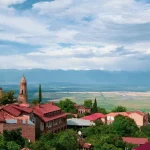
📷 Featured image by Bao Menglong on Unsplash.