On this page
- The Borjomi Bazroba: The Town’s Central Open-Air Market
- Mineral Water & Spa Products: What’s Worth Buying and Where
- Shops Near the Borjomi-Kharagauli National Park Entrance
- Georgian Sweets and Food Souvenirs to Buy in Borjomi
- Charade Street and the Town Centre: Everyday Shops Worth Knowing
- Antiques, Soviet Memorabilia, and Vintage Finds
- 2026 Budget Reality: What Things Actually Cost in Borjomi
- Practical Tips for Shopping in Borjomi in 2026
- Frequently Asked Questions
💰 Click here to see Georgia Budget Breakdown
💰 Prices updated: August, 2026. Budget figures are estimates — always verify before travel.
Exchange Rate: $1 USD = ₾2.61
Daily Budget (per person)
Shoestring: ₾80.00 – ₾170.00 ($30.65 – $65.13)
Mid-range: ₾150.00 – ₾420.00 ($57.47 – $160.92)
Comfortable: ₾650.00 – ₾1,200.00 ($249.04 – $459.77)
Accommodation (per night)
Hostel/guesthouse: ₾25.00 – ₾50.00 ($9.58 – $19.16)
Mid-range hotel: ₾80.00 – ₾200.00 ($30.65 – $76.63)
Food (per meal)
Budget meal: ₾20.00 ($7.66)
Mid-range meal: ₾40.00 ($15.33)
Upscale meal: ₾100.00 ($38.31)
Transport
Single metro/bus trip: ₾1.00 ($0.38)
Monthly transport pass: ₾40.00 ($15.33)
Borjomi has always attracted visitors for its famous mineral water and green valley air, but in 2026 the town is seeing a sharper divide between the polished souvenir traps near the central park and the genuinely rewarding local shops tucked a few streets further in. With tourist numbers rebounding strongly after the regional infrastructure upgrades on the Tbilisi–Batumi railway corridor — trains now stop at Borjomi more reliably and on a tighter schedule — more first-time visitors are arriving without any idea where to spend their money wisely. This guide cuts straight to the point: what to buy, where to buy it, and what to ignore.
The Borjomi Bazroba: The Town’s Central Open-Air Market
The local bazroba sits near the lower end of the town, a short walk from the central park entrance. It’s not a tourist market — it’s where Borjomi residents actually shop, which is exactly why you should go. On weekday mornings the stalls are quieter and the prices are lower. On Saturdays, the market fills up with sellers from surrounding villages in the Samtskhe-Javakheti region, bringing produce and handmade goods you simply won’t find in any of the souvenir shops.
The layout is informal. Vegetable and dairy sellers occupy the inner covered section. Around the edges, especially on the weekend, you’ll find women selling hand-knitted wool socks, felt slippers, and thick woven blankets. These are functional items made for local winters, not for tourists, and the quality shows. A pair of hand-knitted wool socks costs somewhere between 15 and 25 GEL depending on thickness and the seller’s mood. Woven blankets run from 80 to 150 GEL.
The dairy section is worth a slow walk even if you’re not buying. Wheels of fresh sulguni cheese are stacked on wooden boards, and the sharp, milky smell hits you before you even reach the stalls. Bring cash in small denominations — most sellers here don’t use card readers, and ₾50 notes can be awkward for small purchases.
Mineral Water & Spa Products: What’s Worth Buying and Where
Borjomi mineral water is one of Georgia’s most recognised exports, and in 2026 the brand has expanded its range noticeably. Beyond the standard glass and plastic bottles, you can now find Borjomi-branded skincare lines — face mists, mineral-infused creams, and bath salts — sold at the spa facilities inside Likani and at a small dedicated shop near the central park’s drinking fountain pavilion.
The drinking fountain itself is free. You fill your own cup or bottle directly from the natural spring, and the water has that distinctive iron-and-sulphur taste that takes some getting used to. Locals drink it daily for digestive health; most visitors drink it once for the experience.
For actual purchases, the Borjomi mineral water gift shop near the park entrance sells bottled water in presentation gift sets — useful if you want to bring home a genuine Georgian product. Prices are fixed and reasonable: a box of 12 glass bottles runs about 45 to 55 GEL. The spa product range is pricier. A mineral salt scrub costs around 35 GEL; face creams range from 40 to 80 GEL depending on size.
What to avoid: the generic “Borjomi souvenir” bottles sold by street vendors near the park gate. These are often tap water in branded bottles, or heavily diluted mineral water. Stick to sealed, properly labelled products from established shops.
Shops Near the Borjomi-Kharagauli National Park Entrance

The road leading toward the national park entrance has developed noticeably since 2024. A cluster of small craft stalls and semi-permanent wooden kiosks now lines the approach path, particularly active from May through October when hiking traffic peaks. The quality here varies enormously, but there are genuine finds if you know what to look for.
Local woodcarvers sell items made from regional timber — small decorative boxes, walking sticks, carved spoons, and drinking horns (kantsi). The kantsi here tend to be more honestly priced than those in Tbilisi tourist shops: expect to pay 30 to 70 GEL for a medium-sized horn depending on the carving detail. The carved wooden spoons and spatulas, practical for cooking, start at around 8 GEL and make excellent low-weight gifts.
A few stalls sell dried herbs collected from the national park surroundings — wild thyme, mint, and chamomile, bundled and dried. These are legitimately local. A bundle costs 5 to 10 GEL and the scent is strong and clean, nothing like the watered-down herb bags you find in Tbilisi’s tourist corridors.
One permanent shop near the park information centre sells handmade felt goods from a cooperative of women in the Borjomi area. The felt work — small bags, coin purses, decorative wall pieces — is noticeably high quality. Prices are fair and tagged, which removes the awkwardness of negotiating.
Georgian Sweets and Food Souvenirs to Buy in Borjomi
Food is consistently the best value souvenir category in any Georgian town, and Borjomi is no exception. The local food options here reflect the mountain-adjacent character of the region — denser, more preserved, and less commercially packaged than what you’d find in Tbilisi’s tourist markets.
Churchkhela — the walnut-and-grape-must sausage — hangs in strings outside several small shops along the main street. In Borjomi, the grape must used often comes from Kartli region vineyards, giving the churchkhela a slightly tarter, less sweet flavour than the Kakheti version most tourists know. A string of three to four pieces costs 10 to 18 GEL.

Tklapi is the flat dried fruit leather made from plum, cornelian cherry, or tkemali sour plum. Borjomi-area tklapi is some of the most sharply flavoured in the country. It’s sold in rolled sheets from market vendors and a few of the food shops on the main street. A 200-gram roll costs around 8 to 12 GEL.
Homemade jams deserve particular attention. Vendors at the bazroba and small roadside sellers carry jars of walnut-and-fig preserves, rose petal jam, and cornelian cherry jam. The cornelian cherry jam from this region — dark red, intensely tart — is genuinely special. Expect to pay 15 to 25 GEL per jar, which is excellent value given the quality.
Local honey is also worth buying. Sellers from nearby villages bring mountain honey to the Saturday market; the wildflower and linden varieties are the most common. A 500-gram jar runs 20 to 35 GEL, with the price varying based on whether you’re at the bazroba (cheaper) or a dedicated honey shop near the park entrance (more expensive but with better labelling).
Charade Street and the Town Centre: Everyday Shops Worth Knowing
Borjomi’s main commercial street runs through the town centre and is where residents do most of their everyday shopping. It’s not a polished pedestrian zone — it’s a working town street with pharmacies, small clothing shops, hardware stores, and a few bakeries. For travellers, it’s useful in several specific ways.
The pharmacies (aptiaki) along this street sell Georgian-made herbal tinctures, mineral supplement tablets made from Borjomi mineral salts, and locally produced essential oils. These make excellent, compact, and unusual gifts. The mineral salt supplement tablets — marketed for digestion — are genuinely popular with Georgian customers, not just tourists. A box costs around 12 to 18 GEL.

Two or three small clothing and textile shops on the main street carry Georgian-made wool and cotton goods — shawls, winter hats, and the loose linen shirts popular in the warmer months. These are not artisan boutiques; they are practical, affordable, and the quality is solid. A wool shawl might cost 40 to 60 GEL — considerably less than the equivalent in Tbilisi’s Fabrika market.
There’s a small bookshop on the town centre street that carries Georgian-language titles, regional maps of the national park and Samtskhe-Javakheti, and occasionally postcards and prints with Borjomi landscapes. The national park maps (in Georgian and partial English) cost 5 to 10 GEL and are genuinely useful for hikers.
Antiques, Soviet Memorabilia, and Vintage Finds
Borjomi has a longer history as a resort town than most visitors realise. It became a favoured destination for Russian imperial aristocracy in the 19th century and remained a prominent Soviet-era resort through the 20th century. That history leaves traces in the local antique trade.
There is no dedicated antiques market in Borjomi, but two or three shops in the town centre and one stall at the Saturday bazroba deal in vintage and Soviet-era objects. The range is unpredictable — some weeks there’s almost nothing; other times you’ll find Soviet-era enamelware, old postcards of the Borjomi valley, pre-Soviet ceramic pieces from the Caucasus, and occasionally Russian imperial-era mineral water bottles (genuinely old, not reproductions).
Prices here are negotiable and sometimes unrealistically high at the first ask. The shop owners know that foreign visitors associate anything “Soviet” with collectible value. The honest approach: if you know what something is worth, offer 50 to 60 percent of the asking price and see what happens. If you don’t know the value, buying on instinct is fine for small items — a Soviet-era enamel mug for 15 GEL is a reasonable impulse purchase regardless of its “collector” status.

Old Borjomi mineral water bottles — the thick dark glass ones from Soviet-era bottling — do appear occasionally and are among the more distinctive items specific to this town. If you find one in decent condition for under 30 GEL, it’s a genuine piece of local history.
2026 Budget Reality: What Things Actually Cost in Borjomi
Borjomi remains one of the more affordable towns in Georgia for shopping, particularly compared to Tbilisi and Batumi. The following ranges reflect actual 2026 prices across the categories covered in this guide.
Budget (under 20 GEL per item)
- Churchkhela (string of 3–4 pieces): 10–18 GEL
- Tklapi (200g roll): 8–12 GEL
- Hand-dried herb bundles: 5–10 GEL
- Carved wooden spoons: 8–15 GEL
- Soviet-era small collectibles (mugs, pins): 5–20 GEL
- Regional hiking map: 5–10 GEL
- Herbal tinctures from pharmacy: 10–18 GEL
Mid-Range (20–80 GEL per item)
- Homemade jam (per jar): 15–25 GEL
- Mountain honey (500g jar): 20–35 GEL
- Hand-knitted wool socks: 15–25 GEL
- Felt goods (bags, purses): 25–50 GEL
- Mineral spa products (scrubs, creams): 35–80 GEL
- Wool shawl or winter hat: 40–65 GEL
- Kantsi (drinking horn, medium): 30–70 GEL
- Borjomi water gift set (12 glass bottles): 45–55 GEL
Comfortable (80 GEL and above)
- Hand-woven blankets from village sellers: 80–150 GEL
- Larger carved woodwork pieces: 80–200 GEL
- Antique Soviet or pre-Soviet ceramics: 60–250 GEL (varies widely)
- Large felt wall hangings from the park cooperative: 90–180 GEL
Practical Tips for Shopping in Borjomi in 2026
Opening Hours
The bazroba operates daily, but Saturday is the main market day with the largest selection. Most permanent shops along the town centre street open between 9:00 and 10:00 and close around 19:00 or 20:00. Craft stalls near the national park entrance operate seasonally — reliably from May to October, sporadically in winter months.
Cash vs. Card
Cash remains essential at the bazroba and with street vendors. Most of the permanent town-centre shops now accept card payments following the expansion of Georgia’s banking card infrastructure through 2024 and 2025. The mineral water gift shop and the felt cooperative near the park accept both card and cash. Bring a mix — having ₾5 and ₾10 notes makes market transactions much smoother.

There is an ATM at the Bank of Georgia branch in central Borjomi and another at TBC Bank nearby. Both are reliably stocked in 2026, including through peak summer season.
Bargaining Culture
Fixed-price shops (pharmacies, the mineral water shop, most clothing stores) don’t negotiate. At the bazroba, polite bargaining is normal, especially if you’re buying multiple items from the same seller. At craft stalls near the park, prices are often fixed or near-fixed — the sellers are aware of tourist pricing norms and won’t drop significantly. Attempting aggressive bargaining with small craft vendors rarely ends well and frankly isn’t worth it for amounts under 20 GEL.
Getting Around to the Different Shopping Areas
The bazroba, town centre street, and park entrance are all within comfortable walking distance of each other — the town is compact. The national park entrance area is about a 15-minute walk from the central park, or a very short taxi ride (5–8 GEL). If you’re arriving by train — the Tbilisi–Borjomi service runs on an improved 2026 schedule with morning and afternoon departures — the station is close enough to the town centre to reach most shopping areas on foot within 10 minutes.
Frequently Asked Questions
What is the best souvenir to buy in Borjomi?
Cornelian cherry jam, mountain honey, and churchkhela from the Saturday bazroba are the most distinctive and genuinely local options. For non-food items, hand-knitted wool goods from village sellers and carved wooden pieces near the national park entrance offer the best combination of quality and authentic regional character. Mineral water gift sets travel well if packed carefully.

Is there a dedicated souvenir market in Borjomi?
There is no single dedicated souvenir market. Craft stalls near the Borjomi-Kharagauli National Park entrance are the closest equivalent, operating from May to October. For the widest variety of goods — including both souvenirs and genuine local products — the Saturday bazroba in the lower town is the better option overall.
Can I use a credit card when shopping in Borjomi?
Most permanent shops in the town centre accept card payments in 2026. However, the bazroba, street vendors, and smaller craft stalls operate on cash only. Bring GEL in small denominations. ATMs from Bank of Georgia and TBC Bank are available in the town centre and are reliably operational year-round, including during the busy summer tourist season.
Are the Borjomi mineral water products sold in town genuine?
Products sold at the official mineral water gift shop near the central park and at the Likani spa facilities are genuine. Be cautious about bottled water sold by informal street vendors near the park gate — these are not always authentic. Always check for proper factory sealing and official Borjomi branding before purchasing bottled water or spa products from unlicensed sellers.
What time should I arrive at the Borjomi market for the best selection?
For the Saturday bazroba, arrive between 8:00 and 10:00 in the morning. Village sellers from Akhaltsikhe and Bakuriani bring their best wool goods, honey, and preserves early, and popular items sell out well before noon. On weekdays, the market is smaller but still worth visiting for fresh dairy, produce, and occasional craft items from local sellers.
Explore more
Borjomi Nightlife Guide: Best Bars, Clubs & Late-Night Spots
Where to Stay in Borjomi: Center, Likani, or a Spa Hotel? Your Ultimate Accommodation Guide
The Best Restaurants in Borjomi: A Culinary Guide for Travelers
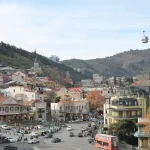
📷 Featured image by Irakli Kvaratskhelia on Unsplash.