On this page
- Getting There: Transport Options from Tbilisi to Mtskheta
- How Long Do You Need? Timing Your Visit
- Svetitskhoveli Cathedral: What to Expect Inside
- Jvari Monastery: The Hilltop View That Defines Georgia
- Beyond the Big Two: Lesser-Known Stops in Mtskheta
- Where to Eat in Mtskheta: Local Spots Worth Stopping For
- 2026 Budget Reality: What a Day Trip Actually Costs
- Practical Tips for 2026: What Has Changed
- Frequently Asked Questions
💰 Click here to see Georgia Budget Breakdown
💰 Prices updated: October, 2026. Budget figures are estimates — always verify before travel.
Exchange Rate: $1 USD = ₾2.60
Daily Budget (per person)
Shoestring: ₾70.00 – ₾130.00 ($26.92 – $50.00)
Mid-range: ₾180.00 – ₾350.00 ($69.23 – $134.62)
Comfortable: ₾500.00 – ₾1,000.00 ($192.31 – $384.62)
Accommodation (per night)
Hostel/guesthouse: ₾30.00 – ₾60.00 ($11.54 – $23.08)
Mid-range hotel: ₾110.00 – ₾200.00 ($42.31 – $76.92)
Food (per meal)
Budget meal: ₾15.00 ($5.77)
Mid-range meal: ₾35.00 ($13.46)
Upscale meal: ₾100.00 ($38.46)
Transport
Single metro/bus trip: ₾1.00 ($0.38)
Monthly transport pass: ₾40.00 ($15.38)
Mtskheta sits just 20 kilometres north of Tbilisi, yet in 2026 a surprising number of visitors still turn up without a plan — arriving at a closed monastery gate, haggling with an overpriced taxi driver, or missing Jvari entirely because they ran out of time. This guide cuts through all of that. Whether you have four hours or a full day, here is exactly how to do this trip right.
Getting There: Transport Options from Tbilisi to Mtskheta
You have three realistic options from central Tbilisi, and the right one depends entirely on your budget and how much flexibility you want.
Marshrutka (Minibus)
This is the cheapest and most local way to go. Marshrutkas to Mtskheta depart from Tbilisi’s Didube bus terminal, which connects directly to Didube metro station on Line 1. The ride costs around 1.50 GEL per person and takes 30 to 45 minutes depending on traffic. Minibuses fill up fast in the morning and run until early evening, but there is no fixed timetable — they leave when they are full. Step off at the main Mtskheta stop near the central square and you are a short walk from Svetitskhoveli Cathedral.
Taxi or Ride-Share
Bolt and Yandex both operate the Tbilisi–Mtskheta route in 2026. A one-way fare from central Tbilisi typically runs between 25 and 40 GEL depending on time of day and traffic. If you want to include Jvari Monastery — which requires a separate uphill drive — negotiating a round trip with a driver who will wait for you makes much more practical sense. Expect to pay 80–120 GEL for a full Mtskheta loop including Jvari wait time. Agree the price before you get in.
Organised Day Tour
Several Tbilisi-based operators run half-day Mtskheta tours for 50–90 GEL per person, often combining the site with Gori or Uplistsikhe. The upside is door-to-door transport and a guide. The downside is a fixed pace that rushes you through both monasteries. If you want to spend more than 20 minutes staring at 1,000-year-old frescoes, going independently is the better call.
How Long Do You Need? Timing Your Visit
Mtskheta is genuinely doable in half a day, but a full day is more rewarding. Here is how the timing breaks down in practice.
A tight four-hour visit covers Svetitskhoveli Cathedral and a quick lunch in the old town. That is the bare minimum to feel like you have actually been there rather than just photographed the sign. Five to six hours gets you Svetitskhoveli, Jvari, and a proper sit-down meal. A full day — seven to eight hours — adds the Samtavro Monastery complex, a walk along the Mtkvari riverbank, and browsing the craft stalls without feeling rushed.
Aim to arrive by 9:00 or 9:30 in the morning. Svetitskhoveli is significantly quieter before the tour buses begin pulling in around 10:30. Jvari at dawn or in the early morning has a completely different character to midday — the Caucasus light is softer, the air carries the smell of pine from the surrounding hills, and the Aragvi–Mtkvari river confluence below glows in tones that no photograph fully captures.
Avoid arriving on a Sunday morning if your primary goal is quiet contemplation rather than observing a live Georgian Orthodox service. Liturgies at Svetitskhoveli draw large local congregations and while this is fascinating in its own right, the cathedral fills completely and movement inside becomes restricted.
Svetitskhoveli Cathedral: What to Expect Inside

Svetitskhoveli is not just old — it is structurally remarkable. Built in the 11th century on the site of Georgia’s first church, the cathedral is a UNESCO World Heritage Site and the spiritual centre of the Georgian Orthodox Church. The exterior stone carvings alone warrant 20 minutes of slow looking before you step through the gate.
Inside, the scale surprises most visitors. The nave is vast and candlelit, the air thick with incense and the faint smokiness of beeswax that has been burning here for centuries. Frescoes in varying states of preservation cover almost every surface — some vivid, some faded to ghosts of colour. The most famous section is the 17th-century fresco cycle on the north wall depicting the zodiac, a deeply unusual choice for a Christian church and a detail that catches most visitors completely off guard.
Look for the small chapel structure inside the main nave, built over the spot where, according to Georgian tradition, the seamless robe of Christ was buried. It is the literal reason the cathedral exists and the reason Mtskheta became Georgia’s ecclesiastical capital.
Dress code: Shoulders and knees must be covered for all visitors. Headscarves are required for women. Cloth wraps are sometimes available at the entrance but bringing your own is more reliable. There is no admission fee, though donations are expected and appreciated.
Jvari Monastery: The Hilltop View That Defines Georgia
If Svetitskhoveli is Georgia’s spiritual heart, Jvari is its visual emblem. The 6th-century monastery sits on a rocky promontory directly above Mtskheta, and the view from its terrace — the two rivers meeting in a wide silver V below, the ancient town clustered around the cathedral, the Caucasus range fading into haze on the northern horizon — is one of the defining landscapes of the South Caucasus.
Jvari cannot be reached on foot from Mtskheta’s centre in any practical sense. The road is steep and roughly four kilometres of switchbacks. Your options are a taxi, a ride-share, or the driver you negotiated with at the bottom. Budget taxis waiting near Svetitskhoveli will offer the round trip for 20–30 GEL — this is normal and reasonable.

The monastery itself is small. A single cross-in-square church, beautifully proportioned, with carved relief panels on the exterior that reward close inspection. Inside, the space is intimate and often busy. Stand quietly for a moment and listen: the wind through the stone window openings makes a low, resonant sound that changes with the direction of the breeze coming off the river valley below.
Allow 45 minutes to an hour here — 20 minutes for the church interior, the rest for the terrace, the panorama, and not rushing. Sunrise visits are possible but require private transport from Tbilisi, as marshrutkas do not run before 8:00.
Beyond the Big Two: Lesser-Known Stops in Mtskheta
Most visitors see Svetitskhoveli and Jvari and call it done. If you have extra time, Mtskheta has more to offer.
Samtavro Monastery
A ten-minute walk north of Svetitskhoveli, Samtavro is an active nunnery with a working community of Georgian Orthodox sisters. The main church dates to the 11th century. Inside the small chapel to the left of the entrance lies the tomb of King Mirian III and Queen Nana, the Georgian monarchs who converted the country to Christianity in 337 AD. This is one of the most historically significant tombs in the entire Caucasus, and it gets a fraction of the attention it deserves. Women must wear headscarves; men must remove hats.
Bebristsikhe Fortress
Perched on a rocky hill just east of the old town, the remains of Bebristsikhe fortress are a 15-minute walk from the main square. The site is not heavily signposted and sees very few tourists. The ruins themselves are fragmentary — crumbled stone walls, an old tower, overgrown paths — but the elevated position gives clear views back over the old town and the river. Good for anyone who wants to escape the tourist centre for half an hour.

The Antiques and Craft Market
Along the main pedestrian street leading to Svetitskhoveli, vendors sell the usual mix of Soviet-era coins, khinkali pins, enamel jewellery, and local ceramics. Quality varies wildly. The more interesting pieces — hand-painted icons, handwoven wool items from the Caucasus highlands — tend to appear on the stalls furthest from the cathedral gate. Prices are negotiable, particularly later in the afternoon when sellers are less likely to have a queue behind you.
Where to Eat in Mtskheta: Local Spots Worth Stopping For
Mtskheta’s restaurant strip runs along the street between the main square and Svetitskhoveli, and the quality is uneven. The restaurants closest to the cathedral gate are the most tourist-facing and adjust their prices accordingly. Walking one block in either direction changes the equation significantly.
What to Order
Mtskheta is known for two things in particular: mtsvadi (Georgian pork or beef skewers grilled over vine cuttings) and freshly made churchkhela, the walnut-and-grape-juice cylinders sold at almost every stall. The mtsvadi here is often genuinely good — the charcoal smoke from the outdoor braziers drifts across the main street on weekends and is one of the more immediate sensory signals that you have arrived somewhere with a real culinary tradition rather than a theme park version of one.
A standard lunch of mtsvadi, a plate of lobiani (bean-filled flatbread), a fresh tomato and cucumber salad, and a half-litre of local wine runs 35–55 GEL per person at a mid-range restaurant. The bread arrives warm, tearing apart to release a puff of yeasty steam that is very difficult to resist.

Specific Spots
Restaurant Mtskheta on the main pedestrian street is a reliable, mid-priced option with outdoor seating and consistent food. Café Ananuri, slightly off the main drag toward the river, serves smaller portions at lower prices and is popular with Georgian day-trippers rather than international tourists — always a useful sign. For churchkhela, buy from a producer who makes it on-site; you can often see the walnuts being dipped fresh into the thickened grape juice right at the stall.
2026 Budget Reality: What a Day Trip Actually Costs
Costs have risen modestly in Mtskheta since 2024, primarily driven by restaurant price increases and slightly higher taxi rates. Here is an honest breakdown by spending level.
Budget (under 60 GEL per person)
- Marshrutka from Didube and back: 3 GEL total
- Local taxi Mtskheta to Jvari and back: 20–25 GEL
- Lunch at a basic café (lobiani, salad, soft drink): 18–22 GEL
- Churchkhela and small market purchase: 10 GEL
- Total: approximately 51–60 GEL
Mid-Range (60–120 GEL per person)
- Bolt intercity ride each way: 30–40 GEL total
- Negotiated taxi loop including Jvari wait time: 80–100 GEL (split between travellers)
- Sit-down lunch with wine at a mid-range restaurant: 45–60 GEL
- Market shopping: 20–30 GEL
- Total: approximately 95–130 GEL per person (assuming two sharing transport)
Comfortable (120–200 GEL per person)
- Private taxi booked through a Tbilisi hotel or agency: 100–150 GEL round trip with waiting
- Guided tour (private, English-speaking): 120–180 GEL per person
- Lunch with full wine and dessert at the best local restaurant: 70–90 GEL
- Total: approximately 190–240 GEL per person
Entry to Svetitskhoveli Cathedral, Samtavro Monastery, and Jvari Monastery carries no admission fee in 2026. The main costs on this trip are transport, food, and whatever you choose to buy at the market.
Practical Tips for 2026: What Has Changed

Several things have shifted since 2024 that are worth knowing before you go.
E-visa access: Georgia’s unified e-visa system, updated in late 2024, now covers citizens of over 100 countries with a streamlined online process. Most visitors from the EU, UK, US, and a growing list of Asian and Middle Eastern countries can obtain a 365-day multiple-entry visa within 24 hours. If you are entering Georgia to do this day trip as part of a longer stay, check the current list on the Georgian government’s official e-visa portal before travelling.
New flight routes: Both Tbilisi International Airport and Kutaisi International Airport saw new direct route announcements in 2025 and early 2026, including connections from several Central Asian capitals and new seasonal routes from Western Europe. This has increased visitor volume at sites like Mtskheta, particularly on weekends between May and October. Midweek visits in shoulder season — March to April or late October — are noticeably quieter.
Jvari road condition: The access road to Jvari was resurfaced in 2025, making the drive smoother than it was for several years prior. This has also encouraged more visitors, including cyclists, to attempt the climb. If you are driving yourself, the road is now in good condition but remains narrow with no guard rails on the outer edge — take it carefully.
Mtskheta pedestrian zone expansion: The old town pedestrian area was extended in 2025, restricting private vehicle access to a larger zone around Svetitskhoveli. Taxis now drop passengers at a designated point near the main square rather than directly at the cathedral gate. The walk from the drop-off point to the cathedral entrance is about 200 metres.
Photography inside Svetitskhoveli: Photography rules have been tightened in 2025. Photography without flash is still permitted in most areas, but video filming requires permission from the cathedral administration. Drones are prohibited over the entire Mtskheta historic zone and enforcement is active.

Frequently Asked Questions
How far is Mtskheta from Tbilisi?
Mtskheta is approximately 20 kilometres northwest of central Tbilisi. By taxi or Bolt the drive is typically 25 to 35 minutes depending on traffic on the S1 highway, which can back up during peak morning hours on weekdays. Marshrutka details and prices are covered in the transport section above.
Can you visit Mtskheta without a tour guide?
Absolutely. Both Svetitskhoveli and Jvari are easy to explore independently. Informational panels at Svetitskhoveli are available in English, Russian, and Georgian. For deeper historical context, a few hours with a good guidebook or audio guide app before the trip goes a long way. Private guides can be arranged on arrival for roughly 80–120 GEL for a half day.
Is Mtskheta worth visiting if you only have one day in Georgia?
Yes — it is the single most historically significant site in the country and sits close enough to Tbilisi to combine with a morning or evening in the capital. If you have exactly one full day, split it: Mtskheta in the morning, returning to Tbilisi by early afternoon to walk Rustaveli Avenue and have dinner in the Old Town.
What should visitors wear to the monasteries?
Dress code requirements are covered in detail in the Svetitskhoveli and Samtavro sections above. In short: covered shoulders and knees for all visitors, headscarves for women, hats off for men. Bring your own wrap rather than relying on one being available at the entrance.
Is Mtskheta family-friendly?
It is a good destination for families with children of most ages. The sites are open-air or easily accessible, the distances between stops are short, and Mtskheta’s streets are calm compared to central Tbilisi. The main challenge is the Jvari road, which requires a vehicle. Children generally respond well to the fortress ruins at Bebristsikhe, which allow for some free exploration without strict rules about where to stand.
Explore more
The Ultimate Mtskheta Food Guide: Where to Eat & What to Try
Mtskheta Old Town vs. Riverside: Where to Stay for Your Perfect Trip
Where to Go Out in Mtskheta: Your Guide to Evening Dining & Wine Bars
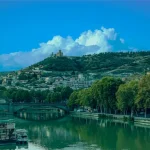
📷 Featured image by Albert Canite on Unsplash.