On this page
- What Kind of Place Is Gori, Really?
- Gori Fortress: The Hilltop That Puts Everything in Context
- The Stalin Museum: Go With Open Eyes
- Uplistsikhe Cave City: Gori’s Genuinely Unmissable Neighbour
- Where to Eat in Gori
- Day Trip or Overnight?
- Getting to Gori in 2026
- 2026 Budget Reality
- Frequently Asked Questions
💰 Click here to see Georgia Budget Breakdown
💰 Prices updated: August, 2026. Budget figures are estimates — always verify before travel.
Exchange Rate: $1 USD = ₾2.61
Daily Budget (per person)
Shoestring: ₾80.00 – ₾170.00 ($30.65 – $65.13)
Mid-range: ₾150.00 – ₾420.00 ($57.47 – $160.92)
Comfortable: ₾650.00 – ₾1,200.00 ($249.04 – $459.77)
Accommodation (per night)
Hostel/guesthouse: ₾25.00 – ₾50.00 ($9.58 – $19.16)
Mid-range hotel: ₾80.00 – ₾200.00 ($30.65 – $76.63)
Food (per meal)
Budget meal: ₾20.00 ($7.66)
Mid-range meal: ₾40.00 ($15.33)
Upscale meal: ₾100.00 ($38.31)
Transport
Single metro/bus trip: ₾1.00 ($0.38)
Monthly transport pass: ₾40.00 ($15.33)
What Kind of Place Is Gori, Really?
Gori has an image problem in 2026, and it has nothing to do with the city itself. Most travellers arrive expecting either a dark Soviet pilgrimage or a quick stop between Tbilisi and the west, and many leave without understanding what they actually visited. That’s a shame, because Gori — the capital of Shida Kartli region, sitting where the Mtkvari and Liakhvi rivers meet — is one of the more layered cities in central Georgia. It carries the weight of Stalin’s birth, the scar of the 2008 war with Russia, and several thousand years of human settlement on the same limestone hills. None of those things cancel each other out. They just make the city complicated in interesting ways.
The centre of Gori is compact and walkable, built around a wide Soviet boulevard that opens into a tree-lined square. The pace is slower than Tbilisi. Locals sit outside in the evenings, and the markets smell of dried herbs and churchkhela. It’s a real Georgian provincial city — not a tourist set piece.
Gori Fortress: The Hilltop That Puts Everything in Context
Before you look at anything else in Gori, climb the fortress hill. Goris Tsikhe sits on a rocky outcrop directly above the city centre and has been fortified in some form since at least the first century AD. What you see today — thick medieval walls, cylindrical towers, and a church ruin inside the compound — dates mostly from the Middle Ages, though the site was actively used right through the 18th century.
The climb takes about 15 minutes from the base. There’s no entrance fee as of 2026. At the top, the view stretches across the Mtkvari valley toward the Caucasus foothills in the north. On a clear morning you can see the Likhi Range to the west. Standing up there gives you a geographic sense of why this spot mattered — it controls the passage between eastern and western Georgia. Everything that happened here, from the medieval kingdoms to the Soviet industrialisation to the tanks rolling in from the north in August 2008, makes more sense when you can see the landscape laid out below you.
The fortress itself is in reasonable condition. Paths are uneven and there are no guardrails in places, so wear decent shoes. Early morning is the best time — you’ll likely have it almost to yourself, and the light is good for the view north.
The Stalin Museum: Go With Open Eyes
The Stalin Museum is the reason most foreign visitors come to Gori, and the experience is genuinely unlike anything else in Georgia. The museum was built in 1957, four years after Stalin’s death, during a period when Soviet Georgia still treated him as a national hero. The architecture is grandiose — a colonnaded neoclassical building flanking the wooden house where Stalin was born — and the interior still presents his life in largely hagiographic terms.
That framing is itself historically significant. This is not a sanitised Western museum about a dictator. It’s a Soviet museum about a Soviet leader, and walking through it tells you as much about how Georgians were asked to remember Stalin as it does about the man himself. Guides — and you should take a guided tour rather than wandering alone — vary considerably in how critically they frame the exhibits. Ask directly about the Gulags, the deportations, and the Georgian victims of collectivisation. A good guide will not avoid these questions.
Entry in 2026 is 20 GEL for foreigners, which includes access to Stalin’s personal railway carriage parked at the side of the museum. The carriage, with its original fittings, thick curtains, and armoured undercarriage, is oddly compelling. It was used for the Yalta Conference journey in 1945.
Uplistsikhe Cave City: Gori’s Genuinely Unmissable Neighbour
About 10 kilometres east of Gori, carved into a volcanic rock plateau above the Mtkvari River, is Uplistsikhe — one of the oldest urban settlements in the South Caucasus. People lived here from roughly the first millennium BC through to the 13th century AD. What remains is a honeycomb of cave rooms, carved tunnels, a basilica church, a small amphitheatre, and the outlines of streets. Walking through it feels genuinely ancient in a way that some heritage sites don’t quite manage.
The rock is a warm orange-brown, and in afternoon light the shadows cut sharply across the carved doorways and window niches. The wind through the tunnels carries a faint mineral coolness even in summer. Allow at least 90 minutes to walk the full site properly. The path up from the river is steep in one section — manageable for most people, but not easy if you have mobility limitations.
Entry is 15 GEL. There’s a small café at the car park below but nothing on the site itself, so bring water. Most visitors come from Tbilisi as part of a Gori day trip, but the combination of Uplistsikhe and Gori’s main sights is genuinely full-day territory. A taxi from Gori to Uplistsikhe costs around 25–30 GEL return with waiting time. Some marshrutkas from Gori run to the Uplistsikhe junction, from which it’s a 2-kilometre walk to the site entrance.
Where to Eat in Gori
Gori is not a culinary destination, but it feeds you well. The city sits in Shida Kartli, and the food reflects the broader central Georgian tradition — generous portions, heavy on meat and bread, with good churchkhela sold at the covered market near the central square.
Restaurant Moskuri on the main boulevard is the most reliable option for a sit-down meal. It’s been operating since the late Soviet period in various forms and still draws a local crowd at lunch. Order the shkmeruli (chicken roasted in garlic milk sauce) or the chakapuli if it’s spring and lamb is available. Mains run 18–30 GEL.
The bazaar on Stalinis Moedani (Stalin Square, yes, still named that) is the place to eat cheaply and well. Stalls sell lobiani (bean-filled flatbread), boiled corn, and grilled meat from mid-morning. A full market lunch costs under 12 GEL. The bread at the bakery on the square’s eastern edge comes out of a tone oven and is best torn apart while still warm enough to steam your hands.
For coffee, Café Gori near the museum has become a small gathering point for younger locals in 2026 and serves decent filter coffee alongside standard Georgian sweets. It’s nothing remarkable but it’s comfortable and has reliable Wi-Fi.
Day Trip or Overnight?
The honest answer: most people can do Gori as a day trip from Tbilisi, and most people do. You can comfortably fit the fortress, the Stalin Museum, and either the market or Uplistsikhe into a single day if you start early.
But staying overnight makes sense in specific circumstances. If you want to visit both Uplistsikhe properly and see Gori without rushing, an overnight gives you breathing room. It also lets you see the city in the evening, which is when it feels most like itself — locals out on the boulevard, the fortress lit up against a dark sky, the market winding down. There are a small number of guesthouses in the centre (typically 80–120 GEL per night for a double room) and at least two mid-range hotels that have been operating since before 2020.
Gori also works as a stopping point if you’re travelling overland between Tbilisi and Kutaisi or heading toward Borjomi and the southwest. The train line passes through, and the city breaks the journey usefully.
Getting to Gori in 2026
The most practical option from Tbilisi is the train. Georgian Railway runs multiple departures daily from Tbilisi Central Station (Didube is the stop for marshrutkas, but the train leaves from the main station). The Tbilisi–Gori journey takes approximately 1 hour 20 minutes and costs 4–6 GEL depending on the service. The 2026 timetable added one additional morning departure compared to 2024, making an early start easier. Check the Georgian Railway website directly for current times, as the schedule shifted again in spring 2026.
Marshrutkas to Gori depart from Tbilisi’s Didube bus terminal throughout the day. The journey takes around 1.5 hours depending on traffic and costs approximately 5 GEL. They are frequent but less comfortable than the train for a longer stay.
From Kutaisi, marshrutkas to Gori run via the main highway and take roughly 2.5 hours. There is no direct train connection from Kutaisi to Gori — you would need to go back toward Tbilisi on the rail line and change, which makes the marshrutka more sensible from the west.
Gori has no airport. The nearest international airport is Tbilisi (TBS), 88 kilometres east.
2026 Budget Reality
Gori is one of the more affordable places to visit in Georgia. Tourist infrastructure is modest, which keeps prices down across the board.
- Budget (under 80 GEL per person per day): Guesthouse bed (shared facilities) 40–55 GEL, market meals 8–12 GEL, train from Tbilisi 5 GEL, all entry fees (Stalin Museum + Uplistsikhe) 35 GEL total. Entirely achievable.
- Mid-range (80–200 GEL per person per day): Private double room at a central guesthouse or small hotel 80–120 GEL, sit-down restaurant meals 20–40 GEL, taxi to Uplistsikhe 25–30 GEL return. Comfortable without being extravagant.
- Comfortable (200+ GEL per person per day): The best hotel in Gori as of 2026 sits in this range. You’re not getting luxury for that price — you’re getting a clean, Western-standard room and possibly a private bathroom with hot water guaranteed. There is no five-star accommodation in Gori and none planned as of 2026.
Guided private tours from Tbilisi covering Gori and Uplistsikhe in a single day run 250–400 GEL per vehicle depending on the operator, which divided among a group of three or four becomes quite reasonable.
Frequently Asked Questions
Is Gori safe to visit in 2026?
Yes. Gori is a safe city for tourists in 2026. The conflict zone from 2008 is well to the north, and the administrative boundary line with South Ossetia is approximately 20 kilometres from the city. Visitors should not attempt to approach that boundary independently. Within the city and at all standard tourist sites, there are no safety concerns.
How long do you need in Gori?
A focused day trip from Tbilisi covers the fortress, Stalin Museum, and the central market. To also visit Uplistsikhe properly, either start very early or stay overnight. Two days is the maximum most visitors need. Gori does not have enough sights to fill more than that without repeating yourself.
Is the Stalin Museum worth visiting even if you find Stalin’s history troubling?
Yes, arguably more so. The museum’s largely uncritical presentation of Stalin’s life is itself a historical document about Soviet memory and Georgian identity. Going with a thoughtful guide turns the discomfort into something genuinely educational. It’s not a comfortable visit, but it’s a meaningful one that prompts real reflection on history and memory.
Can you visit Uplistsikhe without a car?
Yes, but it requires a bit of effort. From Gori, take a marshrutka toward Kaspi and ask to be dropped at the Uplistsikhe junction, then walk 2 kilometres to the site entrance. A taxi from Gori is more convenient and costs 25–30 GEL return with waiting time. There are no buses that go directly to the site entrance.
What is the best time of year to visit Gori?
April to June and September to October are ideal. Summers in Gori are hot — regularly above 35°C — and the exposed fortress and cave city at Uplistsikhe are uncomfortable in the afternoon heat. Spring brings green hills and manageable temperatures. Autumn is slightly drier and the light is excellent for photography at both sites. Winter visits are possible but cold and grey.
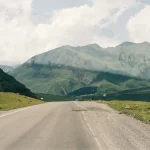
📷 Featured image by Anton Savinov on Unsplash.