On this page
- Why Kutaisi Rewards a Slow Pace
- Best Neighbourhoods for Walking and Transit
- Top Attractions and How to Reach Each One
- Eating Your Way Around on Foot
- City Buses and Marshrutkas
- Taxis and Ride-Hailing Apps
- Airport Transfers
- Day Trips by Public Transport and Taxi
- Getting Home After Dark
- Shopping and Moving With Luggage
- Where to Stay by Budget and Transport Access
- Best Time to Visit
- Practical Tips
- 2026 Budget Breakdown
- Frequently Asked Questions
💰 Click here to see Georgia Budget Breakdown
💰 Prices updated: October, 2026. Budget figures are estimates — always verify before travel.
Exchange Rate: $1 USD = ₾2.60
Daily Budget (per person)
Shoestring: ₾70.00 – ₾130.00 ($26.92 – $50.00)
Mid-range: ₾180.00 – ₾350.00 ($69.23 – $134.62)
Comfortable: ₾500.00 – ₾1,000.00 ($192.31 – $384.62)
Accommodation (per night)
Hostel/guesthouse: ₾30.00 – ₾60.00 ($11.54 – $23.08)
Mid-range hotel: ₾110.00 – ₾200.00 ($42.31 – $76.92)
Food (per meal)
Budget meal: ₾15.00 ($5.77)
Mid-range meal: ₾35.00 ($13.46)
Upscale meal: ₾100.00 ($38.46)
Transport
Single metro/bus trip: ₾1.00 ($0.38)
Monthly transport pass: ₾40.00 ($15.38)
Many travellers land at Kutaisi‘s airport on a cheap flight, then lose an hour trying to work out how to reach the city. Others spend three days here without ever finding the marshrutka that goes to Gelati. In 2026 Kutaisi is busier than ever, with more European routes into its airport than in 2024, but the transport system is still informal and a little chaotic. This guide shows you how it works, what it costs in lari, and when to just walk.
Why Kutaisi Rewards a Slow Pace
Kutaisi is Georgia’s third-largest city, but it feels like a big town. The historic centre sits on both banks of the Rioni River, and most of what visitors want to see is packed into an area you can cross on foot in 25 minutes. The pace is relaxed. Old men play backgammon on benches, and the pavement cafés fill up by mid-morning.
That small scale shapes everything about getting around. You will walk more than you expect, take a taxi for short hops that cost less than a coffee, and use marshrutkas (shared minibuses) for anything beyond the centre. You do not need a rental car in the city. A car only makes sense if you want to string together several remote sights in one day.
Best Neighbourhoods for Walking and Transit
Each part of Kutaisi has its own transport logic. Knowing which one you are in saves you time.
The Central Square Area
This is the heart of the city. The Colchis Fountain, the Lado Meskhishvili Theatre, the Opera House and the main shopping streets are all within a few minutes of each other. The pavements are wide, and there is a pedestrian-friendly feel around the theatre and the gardens. You never need a vehicle here. It suits first-time visitors who want everything on their doorstep.
The Rioni Embankment and the White Bridge Area
The riverside is flat, shaded and good for evening strolls. The White Bridge links the two banks, and you will use it often. Cafés and restaurants line the embankment. It suits couples and anyone who prefers a calm base with easy walking access to the centre.
The Bagrati and Old Town Hillside
This is the oldest part of the city. Streets are narrow, steep and often cobbled. Walking uphill takes effort, especially in summer. Taxis are cheap, so ride up and walk down. It suits history lovers and photographers who want atmospheric streets and quiet nights.

The Railway Station and Bus Station Districts
These areas are more practical than pretty. They have plenty of cheap guesthouses and quick access to marshrutkas heading out of town. They suit travellers who catch early buses or trains and do not mind a short taxi ride into the centre.
Top Attractions and How to Reach Each One
The main sights fall into two groups: those you can walk to, and those you need wheels for.
- Colchis Fountain and Central Square: on foot from anywhere central. The fountain’s golden statues glint in the evening light.
- Green Bazaar: walkable from the centre, about 10–15 minutes.
- White Bridge and the Rioni embankment: a flat walk from Central Square, about 5–10 minutes.
- Kutaisi Park cable car: the cabin climbs to the hillside park above the centre. It is walkable to the lower station, and a ride costs only a few lari. The cabin creaks as it climbs, and the red-tiled roofs spread out below you.
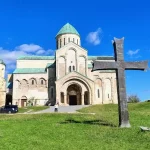
- Bagrati Cathedral: walk up from the centre (20–30 minutes uphill) or take a taxi for 4–7 GEL.
- Gelati Monastery: about 11 km from the centre. Take a taxi or marshrutka (see the day trips section).
- Motsameta Monastery: about 6 km out, above a gorge. A taxi is the easiest option.
For a first day, start with the walkable group. Use a taxi only for the uphill climb to Bagrati, then walk back down through the old streets.
Eating Your Way Around on Foot
The best food tour in Kutaisi needs no transport at all. Start at the Green Bazaar. In the morning the air smells of fresh coriander, smoked cheese and pickled vegetables. Vendors hand you samples of tkemali plum sauce, and farmers sell walnuts, honey and churchkhela.
From there, walk towards the central streets around the theatre. Small bakeries sell hot bread, and cafés serve khachapuri and local lunch specials for modest prices. The Rioni embankment has more relaxed restaurants with river views, and Palaty is one of the better-known places there. Streets around the centre have wine bars where you can try Imereti-style qvevri wines.
Because everything sits within a few blocks, you can eat in one place, walk 10 minutes, and eat again somewhere else. Most main courses cost 15–30 GEL. Street snacks and bakery items cost 2–6 GEL.
City Buses and Marshrutkas
Kutaisi’s public transport is simple once you accept that it is not very polished. There are two main types.

Municipal Buses
City buses run on numbered routes, and the fare in 2026 is about 1 GEL per ride. Pay the driver or the conductor in cash, preferably in coins. Cards are not reliable on every bus, so do not count on tapping a bank card. Routes show a number in the windscreen, usually in Georgian script and Arabic numerals. Google Maps shows some routes, but timing is not always accurate. Ask your guesthouse host which number goes where.
Marshrutkas
These white or yellow minibuses cover both local routes and nearby towns. They leave when full, not at fixed times. Fares are usually 1–3 GEL for city and short suburban routes. Raise your hand to stop one on the road. Tell the driver “gaacheret” (please stop) or simply say “stop” when you want to get off. In a crowded minibus, the money gets passed forward hand to hand. It is friendly chaos.
Longer routes leave from the main bus station. Marshrutkas to Tbilisi (about 20–25 GEL, 3.5–4 hours), Batumi and other cities depart there. The city also has a railway station, and the train to Tbilisi is slower but comfortable. Schedules shift with the season, so check the Georgian Railway website or app before you travel.
Taxis and Ride-Hailing Apps
For short city trips, taxis are the most convenient option, and they are cheap. Bolt and Yandex Go both work in Kutaisi. Most rides within the centre cost 4–8 GEL, and a trip from the centre to the railway station is typically 5–10 GEL. The apps show the price before you book, which removes the need to bargain.
Street taxis wait near the Central Square, the bus station and the main hotels. Many have no meter. Agree on a price before you get in. A fair rate for most local rides is 5–10 GEL. If a driver quotes 20 GEL for a ride across town, walk away and open an app.
Apps can be slower in the evening or in the rain, and a driver may call you in Georgian or Russian. Keep your pickup pin precise and have the destination written in Georgian or shown on the map. A basic “Gamarjoba” and a smile go a long way.

Another useful option is hiring a driver for several hours. For a tour covering Gelati, Motsameta and Bagrati, expect to pay 60–100 GEL depending on the waiting time. For longer day trips, prices rise, and you can negotiate directly or through your guesthouse.
Airport Transfers
Kutaisi International Airport (KUT) lies about 20–25 km west of the city. Low-cost flights, including Wizz Air and other carriers, make it a main entry point to Georgia, and more routes have been added since 2024.
- Taxi or Bolt: about 40–60 GEL to the centre, 25–30 minutes. Fixed-price airport taxis are available at the arrivals exit. Compare with the app before agreeing.
- Airport shuttle bus to the city: a few lari. These are timed to meet flights, but check the current schedule, which changes each season.
- Direct buses to Tbilisi and Batumi: several operators run buses from outside arrivals. Expect roughly 25–40 GEL to Tbilisi and 20–30 GEL to Batumi, depending on the operator. Departure times follow flight arrivals.
- Shared taxis: arrange a split fare with other travellers at the arrivals exit and the price per person drops.
Late-night flights are the tricky ones. Public buses may have finished, so pre-book a taxi through your guesthouse if you land after 11 p.m.
Day Trips by Public Transport and Taxi
Kutaisi is the best base in western Georgia for day trips. Here are the main ones.
Gelati Monastery and Motsameta (half day)
Gelati is about 11 km from the city, and Motsameta is on the way. A taxi round trip with waiting time costs about 50–80 GEL. Marshrutkas to Gelati run during the day, but the schedule is thin, so ask locally for the pickup point. Allow 3–4 hours in total. In the early morning, the stone walls are cool, and you hear birds and distant church bells.
Prometheus Cave and Tskaltubo (half to full day)
Take a marshrutka to Tskaltubo (about 2–3 GEL, 30 minutes), then continue by taxi to Prometheus Cave, roughly 20 km from Kutaisi. A taxi round trip from Kutaisi is about 70–100 GEL with waiting. Tskaltubo’s abandoned Soviet sanatoriums are worth a wander. Allow 5–6 hours for both.
Sataplia Nature Reserve (2–3 hours)
This sits about 10 km from the centre, with dinosaur footprints and a glass-floored viewing platform. A taxi costs around 10–15 GEL each way, and marshrutkas run in the direction of Tskaltubo and can drop you near the entrance.
Martvili and Okatse Canyons (full day)
These are further out, and public transport is tricky. The practical choices are a hired driver (about 150–250 GEL for a full day), a small group tour, or marshrutkas to Martvili town followed by a taxi to the canyon. Start early, as the canyon boat rides can be busy in summer. Allow 8–10 hours.
Getting Home After Dark
Kutaisi’s nightlife is modest and compact, and that helps with transport. Most bars, wine cellars and cafés cluster around the central streets and the Rioni embankment. You can bar-hop on foot, and the area stays reasonably lit and busy until midnight on weekends.
After about 10 p.m., city buses become rare and marshrutkas stop. A taxi is the realistic choice. Bolt rides from the centre to nearly any hotel cost 4–10 GEL, though late-night prices can be slightly higher and availability can drop after 1 a.m. If you are staying outside the centre, ask your host to give you a local taxi number before you go out.
Warm evenings by the river, with live folk music drifting out of a restaurant and the smell of grilled meat in the air, are best enjoyed without the stress of finding a ride. Book a return taxi or choose a base within a 15-minute walk.
Shopping and Moving With Luggage
Shopping in Kutaisi is mostly about markets and small local shops. The Green Bazaar is the main place for food, spices, honey, nuts and churchkhela. Streets around the centre have souvenir shops, ceramics, and small galleries. Everything is walkable.
If you buy bulky items such as wine bottles, a large bag of dried fruit or a ceramic piece, take a taxi back. Most drivers are happy to wait for 5 minutes while you load up. For flights, remember that low-cost airlines have strict baggage limits, and Kutaisi’s airport staff do check bag sizes.
Cobbled streets and uneven pavements are tough on wheeled luggage. If you have a large suitcase, choose accommodation with street-level access, or arrange a taxi from the bus station to the door.
Where to Stay by Budget and Transport Access
Budget (40–90 GEL per night)
Guesthouses and hostels near the railway station, bus station or the edge of the centre offer good value. You may need a short taxi ride (4–7 GEL) to reach the main sights, but you gain easy access to long-distance transport. Many hosts help with taxis and day trips.
Mid-range (120–250 GEL per night)
Boutique guesthouses and small hotels around Central Square and the Rioni embankment put you within walking distance of nearly everything. This is the best option for most visitors, and you will rarely need a taxi during the day.
Comfortable (250–500+ GEL per night)
Upper-end hotels and restored historic houses are often near the old town or the central area. Many offer airport pickups and can arrange private drivers for day trips. Confirm whether the road to the property is accessible by car, as some old-town streets are narrow.
Best Time to Visit
The seasons change how you move around.
- Spring (April–June): mild, 15–25°C, ideal for walking. Rain showers occur, so carry a light jacket.
- Summer (July–August): hot, often 30–35°C. Walk early and late, and use taxis in the afternoon. Marshrutkas can be stuffy.
- Autumn (September–October): warm, golden and often the best season. The grape harvest (Rtveli) fills the countryside with activity, and day trips are at their most enjoyable.
- Winter (November–March): cool and wet, 3–10°C. Pavements get slippery and some day-trip services run less often. Hire a driver for Gelati or Prometheus Cave.
Peak season for airport traffic is summer, so book airport transfers ahead. Shoulder seasons are quieter and cheaper.
Practical Tips
- Safety: Kutaisi is generally safe. Watch for uneven pavements and occasional stray dogs. Cross roads carefully, as drivers do not always yield at crossings.
- Language: Georgian is the main language. Younger people often speak some English. Learn “madloba” (thank you) and “ramdeni?” (how much?). Save your destination in Georgian script on your phone.
- Payment: carry cash for buses, marshrutkas and street taxis. Cards work in most hotels and many restaurants, and apps handle payment for rides, either in cash or by card.
- SIM cards: buy a local SIM from Magti, Silknet or Cellfie at the airport or in the city. Data is cheap, around 15–25 GEL for several gigabytes, and you need it for Bolt, Yandex Go and Google Maps.
- Tipping: not expected for taxis, but rounding up is appreciated. Restaurants usually include a service charge, or you can leave about 10%.
- Midday pause: some small shops close for an hour or so at lunch. Do not plan errands for exactly 1–2 p.m.
- Water: tap water is generally drinkable in the city, but many visitors prefer bottled water. Carry a refillable bottle for day trips.
- Schedules: marshrutka and shuttle times change, especially after summer. Always confirm the last return trip before heading out of town.
2026 Budget Breakdown
Transport in Kutaisi is cheap. Here are typical daily transport costs per person in 2026.
Budget (about 5–15 GEL per day)
Walk almost everywhere, take one or two city bus rides (1 GEL each), and use a taxi once for a hill climb (4–6 GEL). On a day trip, use marshrutkas where possible.
Mid-range (about 20–50 GEL per day)
Mix walking with several Bolt or Yandex Go rides (4–8 GEL each) and a cable car ride. Add a taxi to Bagrati or Motsameta and back.
Comfortable (about 80–250 GEL per day)
Hire a private driver for a half or full day, use taxis for all non-walking trips, and arrange an airport transfer (40–60 GEL). A full-day private trip to Martvili and Okatse costs about 150–250 GEL, and splits easily among several passengers.
Typical one-off costs: airport taxi 40–60 GEL, airport bus to Tbilisi 25–40 GEL, marshrutka to Tbilisi 20–25 GEL, short local taxi 4–8 GEL, city bus 1 GEL.
Frequently Asked Questions
Is Kutaisi walkable?
Yes. The central area, including Central Square, the White Bridge, the Green Bazaar and the riverside, is compact and easy to explore on foot. Only the hillside sights such as Bagrati and places outside the city, such as Gelati, need a taxi or marshrutka. Wear comfortable shoes, as pavements can be uneven.
How do I get from Kutaisi airport to the city centre?
The easiest option is a taxi or Bolt, which costs about 40–60 GEL and takes 25–30 minutes. A cheaper option is the airport shuttle bus to the city, which costs a few lari. Check the current schedule, as times follow flight arrivals and may change by season.
Does Kutaisi have Uber or Bolt?
Uber does not operate in Kutaisi, but Bolt and Yandex Go both work well. Rides in the centre usually cost 4–8 GEL, and the price shows in the app before you book. Street taxis are also available, but you should agree on the fare before getting in.
How much does a bus cost in Kutaisi?
A city bus ride costs about 1 GEL in 2026, and most marshrutka rides within the city or to nearby towns cost 1–3 GEL. Pay in cash to the driver, preferably with coins. Longer routes, such as Kutaisi to Tbilisi, cost around 20–25 GEL.
Can I visit Gelati Monastery without a car?
Yes. You can take a taxi, which costs about 50–80 GEL round trip including waiting time, or use a marshrutka that runs towards Gelati during daytime. Marshrutka times are irregular, so confirm the return schedule with the driver. Allow around three hours for the visit itself.
📷 Featured image by Sergio Guardiola Herrador on Unsplash.