On this page
- What a Local SIM Does for You on the Road
- The Three Operators: Magti, Silknet and Beeline
- How to Buy and Activate a SIM Card, Step by Step
- eSIM: Local Operators vs Global Providers
- 2026 Budget Reality: What You Will Pay in GEL
- Mountain Coverage in Kazbegi and Svaneti
- Wi-Fi in Cafés and Accommodation: Where It Works and Where It Doesn’t
- What Has Changed Since 2024
- Topping Up and Managing Your Plan
- Common Mistakes to Avoid
- Frequently Asked Questions
You land in Tbilisi, your phone shows one bar of roaming signal, and your home carrier is already charging you by the megabyte. You need a taxi, a map, and a way to tell your host you’re running late. Roaming bills are one of the most common travel complaints in 2026. A Georgian SIM or eSIM fixes the problem for the price of a few coffees. This guide explains which operator to pick, how to buy the SIM, what it costs, and where the signal fades.
What a Local SIM Does for You on the Road
Wi-Fi is easy to find in cities. The trouble starts when you move. A local SIM gives you data, local calls, and usually lower costs than international roaming. In practice, that covers a few daily tasks:
- Getting between cities. On a Georgian Railway (Sakartvelos Rkinigza) train or a marshrutka minibus, you have no café Wi-Fi. Mobile data lets you check schedules, book train tickets online, and find marshrutka departure points and times.
- Taxis. Yandex Go works best with live data, so you can see the price and track your driver.
- Navigation. Google Maps needs a connection whether you drive, walk, or look for a guesthouse down a village lane.
- Translation and urgent questions. Georgian script is hard to read at first. Pointing your camera at a menu or road sign is much easier with data.
The Three Operators: Magti, Silknet and Beeline
Georgia has three main mobile operators. Each suits a different kind of trip.
MagtiCom (Magti)
Magti is generally considered to have the widest and most reliable coverage, especially in mountainous and rural areas. If your plans include Kazbegi or Svaneti, this is the safe choice. Its website is www.magticom.ge/en and its app is MyMagti.
Silknet
Silknet is the second-largest operator. You may still see the old Geocell name, but Silknet acquired Geocell, so services now run under the Silknet brand. Coverage is good in urban centres and along major routes. The website is www.silknet.com/en and the app is MySilknet.
Beeline Georgia
Beeline is the third operator. It is often competitive on price, but its coverage is generally less extensive, especially outside the main cities. The website is www.beeline.ge/en/ and the app is MyBeeline.
How to Buy and Activate a SIM Card, Step by Step
The process is quick, but you need to know where to go and what to bring.

Where to buy
- Tbilisi International Airport (TBS): Magti, Silknet and Beeline all have kiosks or dedicated stores in the arrival hall. This is the most convenient option. Waits run from 5 to 15 minutes, depending on the queue.
- City stores: Operator stores are widely available in Tbilisi, Batumi, Kutaisi and other major cities. They often have more staff and can handle complex requests.
- Small shops and resellers: Possible, but buying directly from an official operator store or airport kiosk is the safer way to make sure the SIM is registered properly.
What to bring
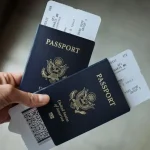
You need your original passport. A valid passport is mandatory to buy and register any SIM card in Georgia, and copies are usually not accepted. Tourists do not need a local address or tax ID.
The process
- Choose an operator based on where you are going and which packages suit you.
- Go to the kiosk or store and approach the counter.
- Hand over your passport to the sales representative.
- Choose a plan. Say what you need, such as “tourist SIM,” “data package,” or “unlimited data.” They will show you the prepaid plans and tourist packages available.
- Pay in Georgian lari (GEL). Cash and credit or debit cards are generally accepted, but confirm the payment methods at the counter in 2026.
- Let the representative insert and activate the SIM. They will usually make sure it works before you leave. If needed, they can set up APN settings, though modern smartphones rarely need this.
- Ask them to help you download the operator’s app (MyMagti, MySilknet or MyBeeline) so you can check your balance, manage packages, and top up.
eSIM: Local Operators vs Global Providers
If your phone supports eSIM, you have two routes.
Local operator eSIM
- Magti was the first Georgian operator to offer eSIM. As of early 2024, tourists could activate one directly at Magti service centres, including Tbilisi airport. The process is similar to buying a physical SIM: you need your passport and a compatible device. An activation fee may apply on top of the package cost.
- Silknet introduced eSIM support for prepaid users in late 2023 or early 2024. It was expected to be available for tourists at service centres, including the airport.
- Beeline has been slower. As of early 2024, availability for tourists was limited or non-existent. If eSIM matters to you, check with Beeline directly.

Global eSIM providers
Airalo, Nomad and Holafly let you buy and activate a Georgia plan before you arrive, usually by scanning a QR code.
- Pros: You set it up at home and don’t need to visit a store.
- Cons: It is often more expensive per GB than a local SIM, the plan is typically data-only (no Georgian phone number), and support is international.
A Georgian number matters more than you might think. Guesthouse hosts, drivers and tour operators often prefer calls or messages to a local number.
2026 Budget Reality: What You Will Pay in GEL
The figures below come from the most recent published package examples, which date from early 2024. Operators change their packages and promotions often, so treat these as a guide and confirm the exact price at the counter. A basic SIM card typically costs 5 GEL at all three operators.
Budget: Beeline
- 15 days: 8 GB data, 50 local minutes, about 15–20 GEL
- 30 days: 15 GB data, unlimited local minutes, about 25–35 GEL
- Beeline often runs “unlimited” promotions for social media or specific apps, and sometimes truly unlimited data for a limited period.
Mid-range: Silknet
- 15 days: 10 GB data, 50 local minutes, about 20–25 GEL
- 30 days: 20 GB data, unlimited local minutes, about 35–45 GEL
- Tourist packs may include international calls to popular destinations.
Comfortable: Magti
- 15 days: 15 GB data, 100 local minutes, 100 local SMS, about 25–30 GEL
- 30 days: 30 GB data, unlimited local minutes and SMS, about 40–50 GEL
- Add-on bundles on a basic SIM: 5 GB for 10 GEL, 10 GB for 15 GEL, or unlimited for 35 GEL for 30 days.
The cheapest plan is not always the best value. If you are heading to the mountains, an extra 10 or 15 GEL for Magti’s coverage can be worth more than extra gigabytes on a network with no signal.
Mountain Coverage in Kazbegi and Svaneti
Georgia’s mountains are the most beautiful part of the country, and the hardest for mobile networks. Out on the trails, the signal can disappear.
Magti
- Kazbegi (Stepantsminda): Strong 4G/LTE in town and reasonably good coverage on the main road toward Gergeti Trinity Church. It becomes patchy on hiking trails further into the mountains.
- Svaneti (Mestia, Ushguli): Good 4G/LTE in Mestia. Coverage extends to parts of the road toward Ushguli, and Ushguli itself may have limited 3G/E signal that can be intermittent. Beyond those main points, coverage drops significantly.

Silknet
Silknet offers decent coverage in larger mountain towns like Stepantsminda and Mestia. In more remote areas it is less extensive than Magti and drops to 3G or E (EDGE) more often.
Beeline
Beeline typically has the weakest coverage in remote mountain regions. It may work in the centres of Stepantsminda and Mestia, but in the rural parts of Kazbegi or Svaneti it is often unreliable or absent.
On any mountain hike, download offline maps before you leave town and tell someone your route. Even the best network won’t cover every trail.
Wi-Fi in Cafés and Accommodation: Where It Works and Where It Doesn’t
Wi-Fi is common in Georgia, but it is not a full replacement for mobile data.
- Cafés, restaurants and bars: Most in urban and tourist areas offer free Wi-Fi to customers. Quality varies from fast to barely usable.
- Hotels, guesthouses and hostels: Almost all provide free Wi-Fi, and the quality is generally good in modern places.
- Public Wi-Fi: Some city centres and squares have it, but it is often unreliable and insecure, and it is not widespread enough to depend on. Avoid using banking apps on it.
What Has Changed Since 2024
The biggest shift is eSIM. In early 2024, Magti was ahead, Silknet was just starting, and Beeline was behind. By 2026, all three operators are expected to offer eSIM activation for tourists at their main service points, including Tbilisi airport, and the process should be smoother. Because this is an expectation and not a guarantee, check with your chosen operator before you travel.
Other points to keep in mind for 2026:
- Packages and prices: Details and GEL prices change often. No major structural price changes were indicated for basic services, but the exact contents of tourist packages will likely keep changing.
- Rules: As of early 2024, no changes had been announced to passport registration for SIM cards or other basic tourist SIM rules.
- Networks: Operators keep investing in upgrades. Coverage along major routes and in developing tourist zones may improve, but deeply remote mountain areas will likely stay challenging.
Topping Up and Managing Your Plan
- Top-up locations: Operator stores, the operator apps (usually with a Georgian bank card, and sometimes international cards, so test yours), and payment terminals such as PayBox and Nova Technology. You will find terminals in supermarkets, metro stations and on street corners, and they accept cash.
- Checking balance: Use MyMagti, MySilknet or MyBeeline. You can also dial USSD codes: *111# for Magti, *100# for Silknet, *102# for Beeline. If a code doesn’t work in 2026, use the app or ask in a store.
- Help in person: Operator stores are the best place for assistance. Airport kiosks and major city stores generally have English-speaking staff.

Common Mistakes to Avoid
- Forgetting your original passport. Copies are usually not accepted, and you can’t register a SIM without it.
- Buying from a random reseller. Official stores and airport kiosks reduce the risk of registration problems.
- Choosing by price alone. A cheap plan with weak mountain coverage is poor value if you’re heading to Kazbegi or Svaneti.
- Assuming eSIM is available everywhere. Beeline was limited for tourists in early 2024, so confirm before you rely on it.
- Buying a data-only global eSIM and expecting a phone number. Most won’t give you a Georgian number.
- Leaving the counter without testing. Check data and the app while the representative is still there.
- Relying on public Wi-Fi. It is often unreliable and insecure.
Frequently Asked Questions
Do I need a passport to buy a SIM card in Georgia?
Yes. A valid original passport is mandatory to buy and register any SIM card in Georgia, and copies are usually not accepted. Tourists do not need a local address or tax ID, so the process is simple once you have your passport at the counter.
Which mobile operator is best for Kazbegi and Svaneti?
Magti is generally the best choice for mountain areas. It offers strong 4G/LTE in Stepantsminda and Mestia and wider coverage on main roads. Silknet is decent in larger mountain towns, while Beeline is typically the weakest in remote regions. Even Magti can be patchy on trails.
Can I buy a SIM card at Tbilisi airport?
Yes. Magti, Silknet and Beeline all have kiosks or dedicated stores in the arrival hall at Tbilisi International Airport (TBS). Waits usually run from 5 to 15 minutes, depending on the queue. It is the most convenient way to get connected immediately after landing.
Is an eSIM better than a physical SIM in Georgia?
It depends on your phone and plans. Local eSIMs avoid swapping cards, and Magti has offered them to tourists at its service centres. Global eSIMs like Airalo, Nomad and Holafly can be set up before arrival, but they are often pricier per GB and typically have no Georgian number.
How much does a tourist SIM card cost in Georgia?
A basic SIM typically costs 5 GEL. Based on early 2024 examples, 30-day tourist packages ran about 25–35 GEL at Beeline, 35–45 GEL at Silknet, and 40–50 GEL at Magti. Prices change often, so confirm the current cost at the counter.
📷 Featured image by Daria Nepriakhina 🇺🇦 on Unsplash.