On this page
- How the Visa-Free Stay Actually Works in 2026
- The Remotely from Georgia Programme: What It Offers and Who Qualifies
- Tax Status and the 1% Small Business Regime Explained
- 2026 Budget Reality: What You’ll Actually Spend Month to Month
- Health Insurance: What’s Required and What It Costs
- Long-Term Accommodation: Renting in Tbilisi, Kutaisi, and Batumi
- The Honest Pros of Basing Yourself in Georgia
- The Honest Cons That Nomad Blogs Don’t Talk About
- Frequently Asked Questions
Georgia has been on the nomad radar since the early 2020s, but 2026 brings a more complicated picture. Airbnb saturation in Tbilisi‘s Old Town has pushed short-stay prices up, the Remotely from Georgia programme has been updated with new documentation requirements, and a wave of long-term residents from Ukraine, Russia, and Western Europe has tightened the mid-range rental market significantly. If you’re making a real decision about spending one to six months here — not just fantasising about it — this is the article that treats you like an adult.
How the Visa-Free Stay Actually Works in 2026
Georgia remains one of the most permissive countries on earth for long-stay visitors. Citizens of around 95 countries — including the United States, the United Kingdom, the European Union member states, Canada, and Australia — can enter Georgia and remain for up to 365 days without a visa. This is not a tourist visa. It is a visa-free arrangement built into Georgian law, and it resets when you leave and re-enter the country.
In practice, this means a citizen of one of those eligible countries can arrive at Tbilisi International Airport, pass through border control, and immediately have the right to live and work remotely in Georgia for up to one year. There is no registration requirement for the first 90 days. After 90 days, many nomads do a short border run — typically to Armenia via the Sadakhlo crossing or to Turkey via Sarpi — and the clock resets on re-entry. Georgian border officials are accustomed to this practice. As of 2026, there is no official stated limit on how many times you can do this, though immigration officers retain discretionary authority.
One important clarification: the 365-day visa-free stay covers physical presence, not a rolling 12-month window. If you leave and re-enter, your previous days in-country do not necessarily count against the new period. Keep a personal record of your entry and exit stamps regardless.
The Remotely from Georgia Programme: What It Offers and Who Qualifies
The Remotely from Georgia programme is a government-backed initiative administered through Enterprise Georgia. It was originally launched in 2020 as a pandemic-era measure and has since been formalised into a structured programme with updated eligibility rules introduced in late 2025 and active through 2026.
The programme is aimed at employed or self-employed people who work remotely for a company or clients based outside Georgia. It is not simply a rebranding of the visa-free stay — it provides a formal certificate of participation that can simplify dealings with banks, landlords, and in some cases tax authorities.
To qualify in 2026, applicants must meet the following criteria:
- Be a citizen of a country eligible for Georgia’s visa-free regime
- Be employed by or working for a company or clients registered outside Georgia
- Earn a minimum monthly income of 2,000 USD (the threshold was raised from 1,500 USD in the 2025 update)
- Hold valid health insurance covering the duration of the stay in Georgia
- Submit documentation including employment confirmation or freelance contracts, bank statements for the past three months, and proof of health insurance
Approval grants a certificate valid for up to 12 months. The certificate does not replace or alter your visa-free status, but it signals to Georgian institutions — particularly banks — that you are a legitimate long-term resident. Opening a Georgian bank account (most commonly with TBC Bank or Bank of Georgia) is considerably easier with this certificate in hand.
Tax Status and the 1% Small Business Regime Explained
This is where Georgia genuinely stands out, and where a lot of nomads misunderstand what’s on offer. Georgia operates a territorial tax system, which means income earned from foreign sources and not remitted to Georgia is generally not subject to Georgian income tax for non-residents. However, if you plan to stay longer than 183 days in a calendar year, you become a Georgian tax resident — and at that point, the rules change.
For freelancers and self-employed individuals who do become residents, the most relevant structure is Individual Entrepreneur (IE) status combined with Small Business status, which caps tax at 1% of annual turnover — provided that turnover does not exceed 500,000 GEL per year (roughly 185,000 USD at 2026 exchange rates). This is not a flat income tax; it applies to gross revenue, not profit. That distinction matters if you have significant business expenses.
Registering as an Individual Entrepreneur in Georgia is straightforward and can be done at any House of Justice (Sakhalkho Samartyalo) office, often within a single day. You will need your passport and an address in Georgia. The registration fee is nominal.
Important caveats for 2026:
- The 1% rate applies to turnover up to 500,000 GEL. Beyond that threshold, the rate increases to 3%.
- You must file quarterly tax declarations with the Georgian Revenue Service.
- Your home country’s tax obligations are entirely separate. Citizens of countries with global taxation systems — most notably the United States — are still required to report and potentially pay tax in their home country. Consult a tax professional familiar with both jurisdictions before making any decisions.
- VAT registration becomes mandatory if your turnover exceeds 100,000 GEL annually.
2026 Budget Reality: What You’ll Actually Spend Month to Month
Georgia is genuinely affordable by European or North American standards, but the gap has narrowed since 2022 as long-term migration has raised prices in city centres. Here is an honest breakdown of monthly costs in 2026, separated by tier.
Accommodation (monthly rental, unfurnished or furnished)
- Budget: 800–1,200 GEL — a studio or one-bedroom apartment in outer Tbilisi districts (Gldani, Didi Dighomi) or in secondary cities like Kutaisi
- Mid-range: 1,500–2,500 GEL — a one- or two-bedroom furnished apartment in central Tbilisi (Vera, Saburtalo, Chugureti) or central Batumi
- Comfortable: 2,800–4,500 GEL — a well-appointed two-bedroom in Vake or a renovated apartment in the Old Town
Food and groceries
- Budget: 400–600 GEL — cooking at home with local produce, occasional street food
- Mid-range: 700–1,100 GEL — a mix of home cooking and eating out at local restaurants three to four times per week
- Comfortable: 1,200–1,800 GEL — regular restaurant meals, imported goods, specialty coffee daily
Transport, utilities, and incidentals
- Public transport in Tbilisi (bus and metro): 30–50 GEL per month
- Electricity and gas: 80–180 GEL per month depending on season (winters are cold)
- Mobile data (unlimited 4G plan): 25–40 GEL per month
- Gym membership: 60–120 GEL per month
A realistic total monthly budget for a single person living comfortably but not extravagantly in central Tbilisi in 2026 sits at approximately 3,500–5,500 GEL, including rent, food, health insurance, transport, and utilities.
Health Insurance: What’s Required and What It Costs
Georgia’s public healthcare system covers Georgian citizens but does not extend to foreign nationals. As a nomad, private health insurance is not optional — it is a requirement of the Remotely from Georgia programme, and a practical necessity regardless.
You have two main options: international travel insurance extended to cover a long-term stay, or a local Georgian private health insurance policy.
International policies from providers such as SafetyWing or Cigna Global typically run between 50 and 120 USD per month depending on your age and coverage level. These are useful if you plan to move between countries during your stay.
Local Georgian private health insurance from providers such as Imedi L, Aldagi, or GPI Holding costs considerably less — typically 80 to 200 GEL per month for a standard plan covering outpatient and emergency care. These plans are accepted at private clinics across Tbilisi and other cities. Coverage for pre-existing conditions varies significantly between providers and must be verified before purchase.
Private medical care in Georgia is good in Tbilisi at facilities like the Tbilisi Referral Hospital and the Aversi clinic network. Outside the capital, quality drops off noticeably, which is worth factoring in if you plan to spend extended time in rural areas or the mountains.
Long-Term Accommodation: Renting in Tbilisi, Kutaisi, and Batumi
Finding a long-term rental in Georgia in 2026 requires patience and local knowledge. The Airbnb market and the long-term rental market operate almost in parallel, and short-stay prices are roughly 40 to 70 percent higher than monthly rates for the same apartment.
The primary platforms for long-term rentals are myhome.ge and ss.ge, both Georgian property portals available in Georgian, Russian, and partial English. Most listings are in Georgian or Russian; using Google Translate or a local contact to help navigate listings is standard practice for foreigners. Agents charge one month’s rent as a fee, which is negotiable for longer leases.
Lease agreements are typically signed for three, six, or twelve months. Landlords generally require the first and last month’s rent upfront plus a security deposit. Written contracts are recommended even when a landlord resists — notarised agreements offer the strongest legal protection but are not always standard practice.
In Tbilisi, the rental market remains the tightest. Central districts have absorbed thousands of long-term residents since 2022, and available inventory in desirable areas turns over quickly. Expect to view several apartments before finding one that is both well-maintained and fairly priced.
In Kutaisi, Georgia’s second city and the hub of Kutaisi International Airport, the rental market is noticeably more relaxed and affordable. Infrastructure has improved since the airport expanded its European route network in 2025, and the city is increasingly viable as a base. The quality of furnished apartments is more variable than in Tbilisi.
In Batumi, seasonality dominates. Summer months push rental prices up sharply as tourism peaks. For nomads planning a stay from October through April, Batumi offers good value and a quieter environment. The Black Sea coast in autumn — mild temperatures, empty promenades, the smell of salt air in the morning — is a genuinely pleasant experience that the summer crowds obscure.
The Honest Pros of Basing Yourself in Georgia
The advantages are real and substantial, which is why Georgia continues to attract serious long-term residents rather than just short-term visitors passing through.
- Genuine visa flexibility. A full year without bureaucratic interruption is rare in any country. Combined with easy border runs, Georgia offers longer effective stays than almost anywhere in Europe or Asia for most nationalities.
- Low and straightforward taxation. The 1% small business regime is among the most favourable in the world for freelancers with moderate to high income. The registration process is transparent and fast.
- Cost of living. Despite price rises, Georgia remains meaningfully cheaper than Western Europe. A budget that feels stretched in Lisbon or Berlin provides a comfortable lifestyle in Tbilisi.
- Flight connectivity. Tbilisi International Airport in 2026 has direct connections to over 50 cities, including new routes to several Central Asian capitals added in 2025. Kutaisi handles a large volume of Wizz Air and Ryanair traffic to European destinations.
- Food and culture. The wine, the cuisine, and the hospitality are genuine pleasures. Tearing into a hot Adjarian khachapuri — the yolk-and-butter pooling in the bread boat’s hollow centre, the dough still steaming from the oven — is the kind of small daily reward that makes a long stay feel worthwhile rather than transactional.
- Safety. Georgia consistently ranks as one of the safest countries in its region for personal safety, including for women travelling and living alone.
The Honest Cons That Nomad Blogs Don’t Talk About
Georgia has real friction points that tend to get glossed over in enthusiasm pieces. They won’t necessarily change your decision, but you should go in with eyes open.
- Banking remains genuinely difficult. Despite programme certificates, many foreigners report TBC Bank and Bank of Georgia declining personal account applications or requesting extensive documentation with no guarantee of approval. The situation has improved since 2023 but has not been fully resolved. Operating entirely on a foreign card is possible but incurs fees and creates complications for local payments.
- Internet reliability outside Tbilisi. Tbilisi has reliable fibre broadband in most central apartments. Outside the capital — including in parts of Batumi and most of Kutaisi’s residential stock — fibre coverage is patchy. Mobile data (4G via Magti or Silknet) is a functional backup but not a substitute for stable work-grade connectivity.
- Language barrier. The Georgian script is entirely unique and takes months to learn. English proficiency among landlords, municipal offices, and non-tourist businesses is low. Russian is widely spoken as a second language among older residents and is functionally useful, but cannot be assumed across all demographics in 2026.
- Air quality in Tbilisi. This is rarely mentioned. Tbilisi’s traffic and geography create periodic air quality problems, particularly in winter months when cold air traps pollution in the valley. People with respiratory sensitivities should check air quality data (available on apps such as IQAir) before committing to a cold-season stay in the capital.
- Political and economic uncertainty. Georgia’s political environment has been volatile since the 2024 elections and the protests that followed. The situation has stabilised in 2026, but it has not been resolved. For nomads, the practical day-to-day impact has been minimal, but the currency (GEL) did experience depreciation pressure in late 2024. Monitoring this is sensible if your income is in a currency other than USD.
- Rental market competition. Finding a good apartment at a fair price in central Tbilisi takes longer than it did two or three years ago. Arriving with a two-week buffer to search properly — rather than booking a long-term Airbnb from abroad and hoping for the best — is the more realistic approach.
Frequently Asked Questions
Can I legally work remotely from Georgia without any special visa or programme?
Yes. Citizens of visa-free eligible countries can enter Georgia and work remotely for foreign clients or employers for up to 365 days without any special permit. The Remotely from Georgia programme is optional but provides a certificate that makes banking and leasing easier. You are not legally required to enrol in it to work remotely.
Do I need to register with Georgian tax authorities if I’m staying less than 183 days?
No. If you spend fewer than 183 days in Georgia in a calendar year, you are not a Georgian tax resident and have no Georgian tax obligations on foreign-sourced income. The 183-day threshold is the trigger for tax residency. Stays under that threshold do not require registration with the Georgian Revenue Service.
Is the 1% tax rate really that simple, or are there hidden obligations?
The 1% rate on gross turnover is real and applies up to 500,000 GEL annually. However, you must register as an Individual Entrepreneur, file quarterly declarations, and manage your home-country tax obligations separately. For US citizens, FBAR and FATCA reporting still applies. The Georgian side is simple; the international side requires professional advice.
How difficult is it to open a Georgian bank account as a foreigner in 2026?
Moderately difficult. TBC Bank and Bank of Georgia are the two main options. Both have tightened compliance requirements since 2022. Approval is not guaranteed. Having a Remotely from Georgia certificate, proof of income, and a local lease agreement significantly improves your chances. Expect the process to take one to two weeks even with complete documentation.
Is Georgia suitable for nomads with families or children?
Increasingly yes, particularly for stays of three months or longer. Tbilisi has a growing number of international and bilingual schools. The city is safe, family-oriented by culture, and has green parks and accessible outdoor spaces. Healthcare at private facilities is adequate for routine needs. Longer-term schooling arrangements require advance planning and budget well above solo-nomad figures.
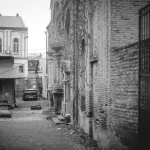
📷 Featured image by David L. Espina Rincon on Unsplash.