On this page
- Kutaisi Is Not What Most Travelers Expect
- What Kind of City Is Kutaisi?
- Best Neighborhoods to Base Yourself
- Unmissable Sights & Experiences
- Where to Eat and Drink in Kutaisi
- Getting Around Kutaisi and Arriving from the Airport
- Day Trips That Are Actually Worth the Effort
- Kutaisi After Dark
- Shopping in Kutaisi
- Where to Stay in Kutaisi
- When to Visit Kutaisi
- Practical Tips for First-Timers
- 2026 Budget Breakdown — What a Day in Kutaisi Actually Costs
- Frequently Asked Questions
💰 Click here to see Georgia Budget Breakdown
💰 Prices updated: October, 2026. Budget figures are estimates — always verify before travel.
Exchange Rate: $1 USD = ₾2.60
Daily Budget (per person)
Shoestring: ₾70.00 – ₾130.00 ($26.92 – $50.00)
Mid-range: ₾180.00 – ₾350.00 ($69.23 – $134.62)
Comfortable: ₾500.00 – ₾1,000.00 ($192.31 – $384.62)
Accommodation (per night)
Hostel/guesthouse: ₾30.00 – ₾60.00 ($11.54 – $23.08)
Mid-range hotel: ₾110.00 – ₾200.00 ($42.31 – $76.92)
Food (per meal)
Budget meal: ₾15.00 ($5.77)
Mid-range meal: ₾35.00 ($13.46)
Upscale meal: ₾100.00 ($38.46)
Transport
Single metro/bus trip: ₾1.00 ($0.38)
Monthly transport pass: ₾40.00 ($15.38)
Kutaisi Is Not What Most Travelers Expect
In 2026, most visitors to Georgia still funnel straight into Tbilisi and treat everything else as an afterthought. Kutaisi keeps getting described as a “day trip from Tbilisi” in travel forums, which is genuinely misleading. The city is Georgia’s third largest, sits at the heart of the ancient Colchis kingdom, and has enough medieval monasteries, cave systems, and canyon hikes within reach to fill four or five solid days. The real pain point for first-timers right now is arriving without enough time. Ryanair and Wizz Air expanded their Kutaisi International Airport routes again in 2025, meaning many travelers are now flying directly into western Georgia rather than Tbilisi — and they’re arriving with no plan. This guide fixes that.
What Kind of City Is Kutaisi?
Kutaisi is a working Georgian city. It has a university, a functioning parliament building (moved here from Tbilisi in 2012, now housing government ministries), loud marshrutkas, a crumbling Soviet residential district behind the center, and a riverfront that genuinely comes alive on warm evenings. It does not feel polished the way parts of Tbilisi or Batumi do. Balconies are draped with laundry. Cats own the streets near the Green Bazaar. The church bells from Bagrati Cathedral echo down the hill into the apartment blocks below.
That’s the charm. Kutaisi still functions as a real city for real people, and tourists are welcomed without the commercial sheen you sometimes find elsewhere. Locals are visibly curious about visitors and genuinely hospitable — you’ll be invited for coffee or wine more than once if you make any effort to talk to people.
The old town district around Gabashvili Street and the Rioni River has been gradually restored over the past decade, and by 2026 it’s become a pleasant place to walk without feeling like a theme park. The contrast between the carefully restored facades near the river and the rough edges two blocks back is very Kutaisi.
Best Neighborhoods to Base Yourself
Central Kutaisi (Around Davit Agmashenebeli Square)
This is the practical choice for first-timers. The main square and the streets radiating from it — particularly Tsminda Nino Street and Rustaveli Avenue — have the highest concentration of guesthouses, budget hotels, cafés, and restaurants. You’re walking distance from the Green Bazaar, the White Bridge, and the riverside. Noise levels can be high during summer evenings when locals gather outdoors, but that’s also when the city feels most alive.
Garejvari Hill Area
The neighborhood climbing up toward Bagrati Cathedral is quieter, more residential, and gives you spectacular views over the Rioni River valley. A few guesthouses operate here and rates tend to be slightly lower. The tradeoff is a 20–25 minute walk down to the center, though taxis cover it for 5–6 GEL.
Riverside (Rioni Embankment)
The embankment area has seen the most visible investment since 2022. Small boutique guesthouses and wine-bar restaurants have opened along the river walk. It suits travelers who want a quieter base with easy access to the evening riverside scene. Not many options at the budget end, but mid-range stays here feel noticeably more pleasant than equivalents one block inland.
Unmissable Sights & Experiences
Gelati Monastery
Eleven kilometres east of the city, Gelati is the site that genuinely earns Kutaisi its place on any Georgia itinerary. Built by King David the Builder in 1106, it’s a UNESCO World Heritage site and still an active monastery. The interior mosaics — particularly the apse mosaic of the Virgin and Child — are among the best preserved in the South Caucasus. Come early morning if possible. The light through the eastern windows between 8:00 and 10:00 is extraordinary, and the grounds are quiet before tour groups arrive. Entry is free. A shared taxi from the city costs around 10–15 GEL one way.
Bagrati Cathedral
Visible from much of the city, sitting on Ukimerioni Hill, Bagrati is the most immediate landmark. The exterior is more compelling than the interior (reconstruction work has been controversial, and the inside lacks the age-worn character of Gelati), but the views over the river and rooftops of Kutaisi from the cathedral terrace are worth the climb alone. Free entry. Walk up from the center in about 20 minutes or take a taxi for 5 GEL.
Prometheus Cave
Twenty-one kilometres from the city near Tskaltubo, Prometheus is Georgia’s most-visited cave system and for good reason. The formations are enormous — stalactites and stalagmites in chambers that take about 90 minutes to walk through. An optional boat ride at the end through a lit underground river adds another 20 minutes. In 2026, entry costs 35 GEL for the walking tour and 55 GEL combined with the boat. Book via the official site or buy on arrival — queues are manageable on weekday mornings.
Motsameta Monastery
Often skipped in favor of Gelati, Motsameta is only a few kilometres away and makes a natural combined trip. The monastery sits on a dramatic narrow cliff promontory above the Tskhaltsitela River gorge. The forest around it muffles the outside world entirely. Standing on the terrace and looking down at the green water below, the silence interrupted only by wind — this is the kind of moment you don’t get in a city.
The White Bridge
Kutaisi’s pedestrian suspension bridge across the Rioni is covered in padlocks, strung with lights in the evening, and used constantly by locals crossing between the center and the embankment. It’s not a tourist attraction exactly, but it’s the social spine of the riverside area and the best place to watch Kutaisi daily life at dusk.
Where to Eat and Drink in Kutaisi
The Green Bazaar (Mwvane Bazroba) on Rustaveli Avenue is the first place to go. It opens early and runs until mid-afternoon. The covered section sells churchkhela, tkemali, dried herbs, and local cheeses — the tangy, slightly crumbly Imeruli cheese produced across western Georgia is sold here in large wheels and small cut portions. Eating a freshly torn piece of still-warm Imeretian khachapuri from one of the stalls just inside the market entrance, the thin dough slightly charred on the bottom and the cheese still stringy from the heat — that’s not a restaurant experience, and it’s not replaceable by one.
For sit-down meals, the cluster of restaurants along the Rioni embankment has expanded significantly since 2023. Look for places with handwritten daily menus in Georgian — these tend to rotate their dishes based on what’s at the market and serve better food than the laminated tourist menus. The side streets around Gabashvili Street have a mix of local canteens (stolovaya-style, with point-and-choose counters) and small family-run restaurants where a full meal with wine costs 25–40 GEL per person.
For coffee, the café strip along Tsminda Nino Street near the square has the highest concentration of specialty coffee spots that have opened since 2022. These serve proper espresso-based drinks and are usually open from 9:00 until late.
Getting Around Kutaisi and Arriving from the Airport
Kutaisi International Airport
The airport sits about 16 kilometres west of the city center. In 2026, the most reliable transfer is the airport bus (marshrutka), which meets most arriving flights and runs to the central Kutaisi bus station near the Green Bazaar for 3 GEL. Journey time is 25–40 minutes depending on traffic. Taxis from the official airport taxi rank cost 35–50 GEL to the center and take 20–30 minutes. Bolt operates in Kutaisi and usually quotes slightly lower — open the app before you clear customs and compare.
Arriving from Tbilisi
The Georgian Railway Tbilisi–Kutaisi route runs multiple times daily. In 2026, the fast Pendolino service covers the journey in approximately 3 hours and 20 minutes, departing Tbilisi Central at fixed morning and afternoon slots. Book through the Georgian Railway website or app at least a day ahead — seats sell out on weekends. Second-class fare is around 25–30 GEL. Marshrutkas from Tbilisi’s Didube station run the same route in similar time for 15 GEL but are less comfortable for longer legs.
Within the City
Kutaisi is manageable on foot in the center. The main sights — White Bridge, bazaar, cathedral hill, riverside — can be linked in a half-day walk. For outlying areas and monastery visits, shared taxis (negotiated from the bus station or central square) are the practical option. Bolt works reliably within the city for 4–8 GEL per ride. City buses exist but routes are not well-signposted for visitors in 2026, so treat them as a backup rather than a primary option.
Day Trips That Are Actually Worth the Effort
Okatse Canyon
About 45 kilometres south of Kutaisi near Zeda Gordi village, Okatse is a narrow limestone canyon with a steel cantilevered walkway bolted along the cliff face above the river. The walkway is one of the more exhilarating short hikes in Georgia — not because it’s particularly strenuous, but because the drop below is sheer and the canyon walls close in on both sides. Allow 2–3 hours on site. Hire a driver from Kutaisi (70–100 GEL for a round trip, often combinable with Martvili) or book a shared day-tour from the city.
Martvili Canyon
Forty kilometres northwest of Kutaisi, Martvili offers a boat ride through a forested canyon on clear turquoise water. It’s busier than Okatse in peak season, but the combination of boat ride and short gorge walk makes it appealing. Entry plus boat: 25 GEL. Often combined with Okatse into a full-day circuit.
Sataplia Nature Reserve
Nine kilometres from the city center, Sataplia is accessible without a driver — though most people take a taxi for convenience (15 GEL each way). The reserve contains a small karst cave, a glass-floored cantilevered viewing platform over a forested valley, and — most unusually — a set of genuine dinosaur footprints preserved in limestone. Entry is 15 GEL. A half-day trip is enough.
Rabati Castle, Akhaltsikhe
Further afield at roughly 100 kilometres southeast, the restored Rabati Castle complex in Akhaltsikhe (Rabati means “suburb” in Arabic) is a full day trip. The restoration is polarizing — it feels very clean and new compared to Gelati — but the scale is impressive and the Samtskhe-Javakheti Museum inside has good historical coverage. Marshrutkas run from Kutaisi’s bus station for around 12 GEL each way. Allow 5–6 hours for the round trip including travel.
Kutaisi After Dark
Kutaisi is not Tbilisi’s nightlife scene, and it doesn’t pretend to be. What it has is more low-key: wine bars that stay open until 01:00–02:00, a handful of live music venues where local bands play on weekends, and a genuine culture of people sitting outside until midnight on warm evenings.
The Rioni embankment concentrates most of the evening activity. Several wine bars here have live acoustic music on Fridays and Saturdays from around 21:00. The atmosphere is relaxed — wine, conversation, the sound of the river. For something louder, the area around Davit Agmashenebeli Square has a couple of bars with DJ nights on weekends that draw a younger local crowd.
Georgians eat late. Restaurant service in Kutaisi runs until at least 23:00 and peak dinner hour is closer to 21:00 than 19:00. Arriving at a restaurant at 18:30 as a tourist will often mean you’re eating alone in an empty room. Time your evening accordingly.
Shopping in Kutaisi
The Green Bazaar is the main event. Beyond food, the outer sections of the market sell household goods, second-hand clothing, Soviet-era trinkets, and locally produced honey in unmarked jars that are genuinely good. The honey sellers near the back of the market often let you taste before buying — dark, thick chestnut honey from the Imereti forests is the one to look for.
For artisan goods and Georgian craft, the small cluster of shops on Gabashvili Street near the river sells hand-painted ceramics, woodwork, and jewelry from local makers. Quality is inconsistent but the prices are lower than equivalent shops in Tbilisi’s tourist districts. Budget 20–80 GEL for most small craft items.
Churchkhela — the walnut-and-grape-juice confection sold throughout Georgia — is available everywhere in Kutaisi but the market versions made with local Imeretian grape varieties have a slightly different character than the Kakhetian versions sold in Tbilisi. They make good gifts and keep for weeks.
Where to Stay in Kutaisi
Budget (Under 80 GEL per night)
Guesthouses in the central area and Garejvari neighborhood regularly come in at 50–75 GEL per night for a private room with breakfast included. Quality varies widely — read recent reviews carefully, particularly for noise and bathroom conditions. Hostels with dormitory beds operate from around 30–40 GEL per bed.
Mid-Range (80–200 GEL per night)
The best value in this bracket sits along or near the Rioni embankment. Small boutique hotels with renovated rooms, reliable Wi-Fi, and sometimes a small terrace or garden. Breakfast often included or available for 10–15 GEL extra. Booking well in advance is advisable from May through September — Kutaisi’s accommodation stock is not large relative to visitor numbers in 2026.
Comfortable (200 GEL+ per night)
Options at the higher end are limited compared to Tbilisi or Batumi. A small number of boutique properties with proper en-suite bathrooms, air conditioning, and professional service operate in this range. If you’re visiting primarily for canyon day trips and want a comfortable base, this tier delivers. Expect 200–350 GEL per night for the best available options in the city center.
When to Visit Kutaisi
Late April through June and September through October are the practical sweet spots. Temperatures are 18–26°C, the canyon foliage is either green or turning, and crowds at Prometheus Cave and Martvili are manageable. The Rioni River is higher in spring from snowmelt, which makes Martvili’s boat ride more dramatic.
July and August are hot — regularly 32–36°C — and Kutaisi International Airport’s expanded routes mean more tourists than the city’s infrastructure is comfortable with. If you visit in summer, book accommodation early and do canyon trips on weekday mornings.
Winter (December–February) is quiet, cold (4–10°C average), and some day-trip sites reduce hours or close entirely. Gelati and Bagrati are accessible year-round. The caves operate year-round at a stable underground temperature of about 14°C, which is actually pleasant in summer heat.
No major city-specific festival dominates the calendar, but the Imeretoba regional festival held in autumn celebrates local wine and food. Dates shift year to year — check local listings closer to your travel date.
Practical Tips for First-Timers
- SIM cards: Magti and Beeline both have coverage in central Kutaisi. Buy at the airport or at any mobile shop in the center. A data-heavy tourist SIM costs 15–25 GEL and lasts 30 days.
- Language: Georgian script is genuinely difficult to read for newcomers. Download the Google Translate camera function before you arrive — it handles Georgian moderately well in 2026 and is useful for restaurant menus and street signs.
- Tipping: 10% is standard and appreciated at sit-down restaurants. Not expected at market stalls or canteen-style eateries.
- Tap water: Drinkable in central Kutaisi. Mountain spring water is piped in from the surrounding hills. Locals drink it without issue.
- Safety: Kutaisi has low violent crime. The main practical risk is uneven pavements and poorly lit streets at night in residential areas. Standard urban awareness is sufficient.
- Cash: Many smaller restaurants, guesthouses, and market stalls remain cash-only. ATMs are widely available in the center. Withdraw lari on arrival rather than exchanging foreign currency at the airport (airport rates are poor).
- Dress codes at monasteries: Women need to cover shoulders and knees; headscarves are required inside active churches. Loaners are usually available at the entrance to Gelati and Bagrati but bringing your own scarf is more comfortable.
2026 Budget Breakdown — What a Day in Kutaisi Actually Costs
Kutaisi is noticeably cheaper than Tbilisi for accommodation and food. Here’s a realistic daily cost in GEL across three tiers:
Budget Traveler — 80–130 GEL per day
- Dormitory bed or basic guesthouse: 30–50 GEL
- Meals (market breakfast, canteen lunch, simple dinner): 25–35 GEL
- Local transport (taxis, shared marshrutkas): 10–20 GEL
- One paid attraction (e.g., Prometheus Cave walking tour): 35 GEL
Mid-Range Traveler — 180–280 GEL per day
- Boutique guesthouse with breakfast: 100–160 GEL
- Meals at riverside restaurants with wine: 60–80 GEL
- Bolt rides and shared day-trip transport: 30–50 GEL
- Attractions and tips: 20–40 GEL
Comfortable Traveler — 350–500 GEL per day
- Best boutique hotel in center: 200–350 GEL
- Private driver for canyon day trips: 100–150 GEL
- Full sit-down meals with quality wine: 80–120 GEL
- Entrance fees and incidentals: 30–50 GEL
Frequently Asked Questions
How many days should I spend in Kutaisi?
Three days is the minimum that does the city justice. Day one for the city itself — Gelati, Bagrati, the bazaar, riverside. Day two for Prometheus Cave and Sataplia. Day three for Okatse and Martvili canyons. If you’re using Kutaisi as a base for broader western Georgia exploration, four to five days gives you breathing room.
Is Kutaisi worth visiting or should I just do a day trip from Tbilisi?
A day trip from Tbilisi is a poor use of your time. The train takes over three hours each way, leaving almost no time on the ground. Kutaisi and its surrounding sites genuinely need multiple days. Flying directly into Kutaisi International Airport, which had expanding routes in 2025–2026, and basing yourself there is a far better approach.
What is the best way to get from Tbilisi to Kutaisi?
The Pendolino express train is the most comfortable option at around 25–30 GEL for a second-class ticket and roughly 3 hours 20 minutes journey time. Book via the Georgian Railway website in advance, particularly for weekend travel. Marshrutkas from Tbilisi Didube station are cheaper at 15 GEL but offer less comfort for the same travel time.
Is Kutaisi safe for solo travelers?
Yes. Kutaisi has a low crime rate and locals are hospitable toward visitors. Solo female travelers report feeling comfortable in the city, including at night in the central riverside area. The usual precautions — staying aware in poorly lit areas, securing valuables — apply as they would in any city. The biggest practical inconvenience for solo travelers is that shared taxi rates for day trips are quoted per vehicle, not per person.
Can I visit Kutaisi without speaking Georgian or Russian?
Yes, though English is less widely spoken here than in Tbilisi. Younger Georgians and anyone working in tourism or hospitality will generally manage basic English. For markets and smaller local restaurants, the Google Translate camera app handles Georgian script adequately in 2026. Pointing and smiling still works too — Georgian hospitality doesn’t require a shared language.
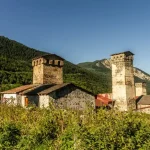
📷 Featured image by ALEKO KEZEVADZE on Unsplash.