On this page
- Old Tbilisi in 2026: Still Magical, Now Busier
- Where to Start: Freedom Square as Your Launch Point
- Meidan Square and the Sulfur Baths of Abanotubani
- Narikala Fortress: The Walk Up and the View That Earns It
- The Lanes of Kala: Getting Off the Main Drag
- Metekhi Church: The Cliff Above the River
- Where to Eat and Drink During the Walk
- Getting to Old Tbilisi and Moving Through It
- 2026 Budget Reality: What This Walk Actually Costs
- Best Time to Do This Walk
- Practical Tips for Walking Old Tbilisi
- Frequently Asked Questions
💰 Click here to see Georgia Budget Breakdown
💰 Prices updated: October, 2026. Budget figures are estimates — always verify before travel.
Exchange Rate: $1 USD = ₾2.60
Daily Budget (per person)
Shoestring: ₾70.00 – ₾130.00 ($26.92 – $50.00)
Mid-range: ₾180.00 – ₾350.00 ($69.23 – $134.62)
Comfortable: ₾500.00 – ₾1,000.00 ($192.31 – $384.62)
Accommodation (per night)
Hostel/guesthouse: ₾30.00 – ₾60.00 ($11.54 – $23.08)
Mid-range hotel: ₾110.00 – ₾200.00 ($42.31 – $76.92)
Food (per meal)
Budget meal: ₾15.00 ($5.77)
Mid-range meal: ₾35.00 ($13.46)
Upscale meal: ₾100.00 ($38.46)
Transport
Single metro/bus trip: ₾1.00 ($0.38)
Monthly transport pass: ₾40.00 ($15.38)
Old Tbilisi in 2026: Still Magical, Now Busier
Old Tbilisi — locally called Dzveli Tbilisi — has always drawn visitors, but in 2026 the crowds have genuinely changed the experience. New boutique hotels, a renovated cable car, and sharply increased foot traffic along Shardeni Street mean you need a smarter approach than simply showing up and wandering. The tourists who get the most out of this neighbourhood are the ones who know the right sequence: which end to start from, when the sulfur bath alleys are quiet, and how to slip into the side streets before the tour groups find them. This guide gives you exactly that.
Where to Start: Freedom Square as Your Launch Point
Most people enter Old Tbilisi from Freedom Square (Tavisuplebis Moedani), and for good reason. The metro station drops you directly here, taxis know it by name, and the golden statue of Saint George on its tall column gives you an immediate landmark. From the square, Kote Afkhazi Street — a wide, slightly downhill pedestrian corridor — pulls you naturally south toward the heart of the old town.
Start early. By 9:00 the bread sellers near the Anchiskhati Basilica have fresh shoti loaves coming out of the tone oven, and you can feel the heat radiating from the clay pit even from the doorway. The smell is yeasty and faintly smoky, nothing like supermarket bread. That first stretch between Freedom Square and Anchiskhati is calmer than anything further into the district, so take your time. The Basilica itself is the oldest surviving church in Tbilisi, dating to the fifth century, and the interior is deliberately dim — a good place to pause before the walk gets busier.
Meidan Square and the Sulfur Baths of Abanotubani
Continue south through the narrow lane behind Anchiskhati and you reach Meidan, the historic trading hub of Tbilisi. In the Ottoman period this was the busiest commercial point in the entire Caucasus. Today it functions as a junction between the touristy Shardeni wine bar strip and the genuinely lived-in Abanotubani quarter. The domed brick rooftops poking out of the hillside to your right are the sulfur bathhouses — the ones Pushkin famously visited and wrote about.

Walk down into Abanotubani along Gorgasali Street. The air here has a faint mineral warmth, slightly like a struck match, that thickens as you approach the bathhouse buildings. Most of the historic domes belong to operating baths: Royal Bath (Chreli Abano), No. 5 Orbeliani Bath with its blue-tiled Moorish facade, and several smaller private ones. A private cabin at one of the mid-tier bathhouses costs 60–100 GEL per hour in 2026. You do not need to book weeks in advance for a weekday morning visit, but weekend afternoons are packed.
The small waterfall at the end of the Abanotubani alley — fed by the same sulfur springs — is a favourite photo stop. The rocks below it are slippery, so step carefully.
Narikala Fortress: The Walk Up and the View That Earns It
From Abanotubani, a steep path cuts uphill through an overgrown residential area toward Narikala Fortress. You can also take the cable car from Rike Park on the opposite river bank — it reopened with upgraded cabins in late 2024 and is running smoothly in 2026. The cable car costs 5 GEL each way and takes about three minutes.
If you walk up, allow 20–25 minutes from the bathhouse district. The path passes through a neighbourhood of crumbling balconied houses where local families have lived for generations. Cats are everywhere. Laundry crosses the lanes overhead. It does not feel curated for tourists, which is precisely why it’s worth the climb before you reach the fortress walls.
Narikala itself requires no entry fee. The fortress dates to the fourth century and was expanded by Arab, Mongol, and eventually Russian rulers. The walls are largely ruined but stabilised, and you can walk along the upper section for panoramic views over the Mtkvari River, Metekhi Church on its cliff, and the chaotic, beautiful sprawl of rooftops below. On a clear morning the Caucasus ridgeline is visible to the north.
Directly below Narikala on the southern slope is the Tbilisi Botanical Garden. The entrance is a 10-minute walk downhill from the fortress. The garden covers 161 hectares and stretches into a narrow gorge with a waterfall about 1.5 km inside. Entry is 2 GEL in 2026. It is genuinely quiet compared to the fortress above — a good place to decompress mid-walk.
The Lanes of Kala: Getting Off the Main Drag
Kala is the oldest residential core of Old Tbilisi, the cluster of streets between Narikala and the river. Most visitors stay on Shardeni Street or Erekle II Street — the obvious, café-lined pedestrian lanes. The better experience is in the alleys that branch off these: Ioane Shavteli, Sioni Street, and the tangle of unnamed paths between them.
Sioni Cathedral sits on its own square roughly in the middle of Kala. It is quieter than most churches in the centre, usually attended by locals rather than tour groups, and the interior has genuinely old frescoes that were partially covered and uncovered multiple times over the centuries. There is no entry fee. Dress modestly — a scarf for women is expected at the entrance.
The balcony architecture along these lanes is the visual signature of Old Tbilisi: stacked wooden galleries, often sagging slightly, painted in faded greens and blues, with carved wooden brackets. Many are in various states of gentle decay. A preservation programme backed by the Tbilisi City Hall began reinforcing some of the most at-risk structures in 2023 and work continues in 2026, so you may see scaffolding on particular buildings — it does not spoil the atmosphere.
On Ioane Shavteli Street, a small workshop near the corner with Erekle II sells hand-printed Georgian alphabet textiles and ceramics. It is not a tourist trap — the owner has been here for over a decade and the prices are honest.
Metekhi Church: The Cliff Above the River
Cross to the eastern side of the old town to reach Metekhi Church, which stands on a sheer basalt cliff directly above the Mtkvari River. The approach from Kala takes you across the pedestrian Bridge of Peace (the modern steel-and-glass structure) or via the older Metekhi bridge further upstream. Either way, the view back toward Old Tbilisi from the Metekhi clifftop is one of the most complete panoramas of the historic skyline you will find.
The church was built in the 13th century on a site of repeated religious significance going back to the 5th century. The equestrian statue of King Vakhtang Gorgasali — Tbilisi’s founder — stands at the cliff edge nearby, slightly wind-battered and very photogenic at golden hour. The interior is atmospheric rather than elaborate: dark stone, hanging oil lamps, the smell of beeswax candles.
The cliff below was used as a prison under Soviet rule. The building adjacent to the church was actually a prison complex until the 1990s and was later converted into a theatre. That history is visible in the architecture if you look closely at the building’s proportions.
Where to Eat and Drink During the Walk
Old Tbilisi has no shortage of restaurants, but the quality gap between places aimed at tourists and places where locals actually eat is significant. Here is what actually works along this route.
- Shemoikhede Genatsvale (Abanotubani branch) — reliable, reasonably priced Georgian food a short walk from the sulfur baths. The lobiani (bean-filled bread) here is consistent. Mains from 18–35 GEL.
- Cafe Gabriadze on Shavteli Street — run by the family of the late Rezo Gabriadze, famous Georgian artist. The food is secondary to the atmosphere, but the courtyard is one of the most beautiful in the old town and coffee is good. 12–20 GEL for drinks and snacks.
- Wine bars on Shardeni Street — this pedestrian strip is overtly commercial, but several wine bars here serve natural Georgian wine by the glass at 10–18 GEL. Useful for a mid-walk stop without committing to a full meal.
- Street churchkhela vendors near Meidan — the walnut-and-grape-must candies hanging in rows at outdoor stalls. One piece is 3–5 GEL. Buy from stalls where the product looks freshly made (the grape coating should be matte, not shiny and dry).
- Lavash bakeries in Kala side streets — follow the smell. Bread fresh from the tone oven costs 1.50–3 GEL. Eat it immediately.
Getting to Old Tbilisi and Moving Through It
The most direct public transport option is Tbilisi Metro Line 1 to Freedom Square station. A single metro journey costs 1 GEL with an activated Metromoney card (the tap-to-ride transport card). The card itself costs 2 GEL at any station kiosk. In 2026 the metro runs from roughly 06:00 to 00:00 daily.
From Tbilisi International Airport, the Airport Express Bus (Bus 37) runs to Freedom Square in around 40 minutes and costs 0.50 GEL. Taxis from the airport to Old Tbilisi via Bolt or Yandex Go cost approximately 25–40 GEL depending on traffic and time of day. Avoid negotiating with unmetered drivers at the arrivals hall.
Inside Old Tbilisi, walking is the only sensible option. Streets in Kala and Abanotubani are frequently too narrow for cars, and many are pedestrianised. The entire walking route described in this article — Freedom Square to Metekhi — covers roughly 4–5 km at a comfortable pace with stops, taking 3–5 hours depending on how long you linger.
2026 Budget Reality: What This Walk Actually Costs
Old Tbilisi can be done cheaply or expensively — the infrastructure supports both. Here is what honest spending looks like across three tiers.
- Budget (under 60 GEL for the day): Metro to Freedom Square (1 GEL), street food and bakery lunch (15–20 GEL), Botanical Garden entry (2 GEL), cable car one way (5 GEL), wine by the glass at a Shardeni bar (10–12 GEL), churchkhela (4 GEL). Total: around 40–45 GEL.
- Mid-range (60–180 GEL): Bolt taxi from hotel (10–15 GEL), sit-down lunch at Shemoikhede Genatsvale (35–50 GEL with drinks), private sulfur bath cabin 1 hour (80–100 GEL), cable car both ways (10 GEL), coffee and snacks (20–25 GEL). Total: around 155–200 GEL.
- Comfortable (180 GEL+): Private licensed guide for 4 hours (200–350 GEL), lunch at a higher-end Kala restaurant like Barbarestan or Culinarium Khasheria (60–90 GEL), premium bathhouse cabin (120 GEL), boutique wine purchases (50–150 GEL). Total: 430–710 GEL depending on wine spending.
Best Time to Do This Walk
April to June and September to November are the sweet spots. Temperatures sit between 15–24°C, the light is warm and directional (great for the balcony architecture), and the streets are busy but not overwhelming. July and August push temperatures above 35°C in Tbilisi, and walking the uphill sections of this route in the midday heat is genuinely unpleasant. If you visit in summer, start by 08:00 and finish by 13:00, then return to the river-adjacent areas after 18:00.
Winter (December to February) is underrated. Tourist numbers drop sharply, the Kala lanes are quiet, and the sulfur baths are a genuine pleasure after a cold morning walk. Narikala occasionally has light snow, which transforms the fortress visually. The trade-off is shorter daylight — sunset around 17:30 in December limits your afternoon range.
Two festivals worth timing around: Tbilisoba (the city’s main harvest festival, held in late October) fills the old town with craft stalls, folk music, and wine. It is crowded but celebratory and very Georgian in character. The Tsinandali Classical Music Festival in September is based in Kakheti but has associated events in Tbilisi that week.
Practical Tips for Walking Old Tbilisi
- Footwear: The streets in Kala and on the path up to Narikala are uneven cobblestone. Wear shoes with grip. Heels are a bad idea on wet days.
- Dress code at churches: Shoulders and knees should be covered to enter any active church. Most church doorways have spare fabric you can borrow, but bringing your own is simpler.
- Water: Tap water in Tbilisi is safe to drink. Refill a bottle at your hotel before setting out — buying bottled water along the route from tourist-facing shops costs 3–5 GEL for 0.5 litres.
- Safety: Old Tbilisi is safe by any reasonable standard in 2026. Petty theft exists in very crowded spots (Shardeni Street on weekend evenings), so keep bags zipped. The streets at night are generally well-lit and populated.
- SIM cards: Magti and Silknet both sell tourist SIM cards at the airport arrivals hall. A 10 GB data SIM costs around 15–20 GEL. Maps.me works offline and is reliable for the old town’s unmarked lanes.
- Language: English is widely spoken in Old Tbilisi’s tourist-facing businesses. Side-street bakeries and older residents may only speak Georgian or Russian. A few words of Georgian (madloba = thank you, gamarjoba = hello) are genuinely appreciated.
- Tipping: 10% is standard at sit-down restaurants. No expectation at bakeries, street stalls, or self-service spots.
Frequently Asked Questions
How long does it take to walk through Old Tbilisi?
A focused walk from Freedom Square through Abanotubani, up to Narikala, through Kala, and ending at Metekhi takes about 3–4 hours at a relaxed pace. Add time for a sulfur bath, a sit-down meal, or the Botanical Garden and it easily becomes a full day. There is no need to rush — this neighbourhood rewards slow exploration.
Is it possible to visit the sulfur baths without booking in advance?
Yes, on weekday mornings. Walk-in private cabin availability is generally good before noon Monday through Thursday. On weekends, particularly Saturday afternoons, the popular bathhouses like Royal Bath and Orbeliani fill up quickly. Booking online 24 hours ahead through the individual bathhouse websites is straightforward and costs no extra in 2026.
Is Old Tbilisi safe for solo travelers?
Yes. Old Tbilisi is one of the safer historic districts in the region. Solo travelers — including solo women — move through the area without significant issues. Normal urban awareness applies: secure your phone on busy Shardeni Street, do not leave bags unattended at outdoor cafes. The streets remain populated well into the evening.
What is the best viewpoint in Old Tbilisi?
Narikala Fortress offers the widest panorama, but the Metekhi clifftop is arguably more dramatic — you are level with the rooftops rather than above them, and the view includes the Bridge of Peace and the entire Old Town skyline. The cable car station platform near Narikala also has an excellent unobstructed view, particularly at sunset.
Do I need a guide to explore Old Tbilisi?
Not strictly. The route is walkable independently with a good map, and most key sites are clearly signed in English. A licensed guide adds value if you want architectural context, access to specific private courtyards some guides can arrange, or deeper history of the Silk Road–era buildings. Expect to pay 200–350 GEL for a 4-hour private guide in 2026.
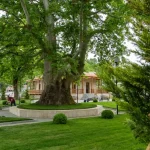
📷 Featured image by Evgenii Svitelskii on Unsplash.