On this page
- Who Gets In Without a Visa — and for How Long
- Applying for a Georgian E-Visa
- What Happens at Tbilisi and Batumi Airports
- Getting Out of the Airport: Transport, SIMs, and Cash
- Crossing by Land: Turkey, Armenia, Azerbaijan, and Russia
- 2026 Updates: What Has Changed Since 2024
- Documents to Have Ready — and Mistakes That Catch People Out
- 2026 Budget Reality: Entry-Related Costs in GEL
- Frequently Asked Questions
In 2026, Georgia remains one of the easiest countries in the world to enter — but travelers still show up at Tbilisi airport unsure whether they need a visa, get caught off guard by the cash-only bus, or, in the worst cases, attempt to cross into Abkhazia from the Russian side and face serious legal consequences. This guide covers exactly what happens from the moment you land or cross the border, so none of that happens to you.
Who Gets In Without a Visa — and for How Long
Georgia’s visa-free policy is genuinely one of the most generous in the world. Citizens of over 90 countries can enter without any prior application and stay for up to 365 days — a full year — from the date of entry. This includes citizens of all 27 EU member states, the United Kingdom, the United States, Canada, Australia, and New Zealand.
The list extends well beyond the usual Western countries. Citizens of Japan, South Korea, Israel, Switzerland, Norway, Iceland, Kuwait, Qatar, the UAE, Saudi Arabia, Bahrain, Oman, Argentina, Brazil, Chile, Mexico, and Uruguay are all included, among many others. For a complete and current list, check the official Ministry of Foreign Affairs website at www.mfa.gov.ge.
What you need at the border is simple:
- A valid passport — it must cover your entire intended stay. There is no formal minimum validity requirement beyond that, though having at least six months remaining is always sensible practice.
- Onward or return travel — not strictly required by law, but immigration officers can and occasionally do ask for it, especially if you’re arriving for a long stay.
- Proof of accommodation — have your first night’s booking accessible. You may not be asked, but it’s a two-second insurance policy.
- Proof of funds — rarely requested from tourists arriving from visa-free countries, but officers retain the right to ask.
Travel insurance is not mandatory for visa-free arrivals, but given the cost of medical care without coverage, it would be a false economy to skip it.
Applying for a Georgian E-Visa
If your country is not on the visa-free list, Georgia’s e-visa system is straightforward. All applications go through the official portal at www.evisa.gov.ge — there is no other legitimate application channel. Avoid any third-party sites charging inflated fees to “process” your application.
Here is the process step by step:
- Go to www.evisa.gov.ge and select your nationality and passport type.
- Fill in the online form: personal details, intended travel dates, and your accommodation information.
- Upload a digital scan of your passport bio-page and a recent passport-style photo.
- Pay the e-visa fee — approximately 55–60 GEL for standard processing, plus a small service charge of around 2–4 GEL.
- Wait for approval by email.

Standard processing takes up to five working days. If you need it faster, express processing is available for an additional fee of approximately 100 GEL, with a turnaround of one to two working days. Apply with enough lead time that you are not relying on the express option.
The e-visa is typically issued for a single or multiple-entry visit, permitting a stay of up to 30 days within a 120-day period. This is significantly shorter than the one-year allowance for visa-free nationalities, so plan your dates carefully.
E-visa applicants are usually required to show travel or health insurance as part of the application — unlike visa-free arrivals where it is only recommended. Have your policy document ready as a PDF when you apply.
What Happens at Tbilisi and Batumi Airports
Georgia’s two main international airports are Shota Rustaveli Tbilisi International Airport (TBS) and Batumi International Airport (BUS). The arrival process at both follows the same sequence.
After disembarking, follow signs to Passport Control. Queues are divided between Georgian and EU/EEA/Swiss citizens and everyone else. There are no dedicated fast-track lanes at passport control for business or first-class passengers.
When you reach the desk, present your passport. If you hold an e-visa, have a printed copy or the PDF open on your phone. Officers may ask where you’re staying and how long you plan to be in Georgia. Keep answers brief and accurate. For most visitors, this exchange lasts under two minutes.
Biometric data collection — fingerprint scans and a photo — is standard procedure for most non-Georgian nationals. This adds a minute or two per person but is unavoidable.
Wait times vary considerably. At Tbilisi, expect 15 to 45 minutes under normal conditions. During peak arrival windows — early-morning European flights landing simultaneously in summer — queues can stretch to 60–90 minutes. The hall smells of recycled air and mild industrial cleaner; by the time you reach the desk, the quiet click of a passport stamp feels satisfying after the wait. Batumi is generally faster at 10–30 minutes, though summer peaks push that to 45–60 minutes.

After passport control, collect your bags from the carousel shown on the arrivals screen, then pass through customs. The rules are clear:
- Alcohol: up to 4 litres
- Tobacco: up to 200 cigarettes, 50 cigars, or 250 grams of tobacco
- Currency: amounts over 30,000 GEL (or the foreign equivalent) must be declared at the Red Channel
- Personal items: generally duty-free
Most tourists walk straight through the Green Channel without being stopped.
Getting Out of the Airport: Transport, SIMs, and Cash
Once through customs into the arrivals hall, three things are worth sorting before you leave the building: a local SIM card, some Georgian lari, and your transport into the city.
SIM cards are sold by MagtiCom, Silknet (formerly Geocell), and Beeline right in the arrivals hall. Show your passport, choose a plan, and the staff activates the card on the spot. Tourist packages in 2026 run 30–50 GEL for one to two weeks, usually with generous or unlimited data and local calls included. This is genuinely worth doing immediately — you’ll need connectivity for taxis and maps the moment you step outside.
ATMs from TBC Bank, Bank of Georgia, and Liberty Bank are available inside both airports. Exchange booths exist too, but rates in the city center are typically better. Withdraw enough for your first day and exchange more later at a city office.
From Tbilisi airport to the city center, your options are:
- Bus #337: Runs 24 hours, every 15–20 minutes, to Freedom Square and Rustaveli Avenue. Fare is 1.50 GEL. Contactless Visa or Mastercard bank cards are now accepted directly on the bus, so you no longer need a Metromoney card for a single journey. If you want the card for metro use later, it costs 2 GEL to buy at metro stations.
- Bolt or Yandex Go: The fastest option after a long flight. Expect 35–50 GEL to the city center depending on time and demand. Official airport taxis with fixed pricing run 50–70 GEL.
- Train: A Georgian Railway service runs from a station near the airport to Tbilisi Central Station for just 0.50 GEL, but with only two or three departures daily, it is rarely practical.
From Batumi airport, Bus #10 or #10a connects to the city center for around 0.80 GEL. Taxis run 20–30 GEL, and Bolt or Yandex Go typically come in at 15–25 GEL.

Crossing by Land: Turkey, Armenia, Azerbaijan, and Russia
Georgia’s land borders are active crossings used daily by travelers, traders, and workers. The procedure mirrors airports: passport control, possible questions about your visit, and customs if you’re bringing a vehicle or declaring goods.
If you are driving into Georgia, two things are non-negotiable: vehicle registration documents and mandatory third-party liability insurance. You can buy this insurance in advance at www.tpl.ge, which is strongly recommended to avoid queues at the border booths. 2026 prices:
- 15 days: 30–50 GEL
- 30 days: 70–90 GEL
- 90 days: 120–150 GEL
- 1 year: 220–250 GEL
Key crossings by country:
Turkey
Sarpi, near Batumi on the Black Sea coast, is the main crossing and the busiest. In summer, vehicle queues of one to two hours are normal. Marshrutkas run frequently between Batumi and Sarpi. The Vale (Akhaltsikhe) and Kartsakhi (Akhalkalaki) crossings are quieter options connecting to Turkey’s Ardahan and Kars provinces respectively.
Armenia
Sadakhlo-Bagratashen is the main route, used by Tbilisi–Yerevan marshrutkas. Vehicle queues can run one to three hours. Bavra-Ninotsminda is quieter but sits at high altitude and can be snow-affected from November through April.
Azerbaijan
Red Bridge (Tsiteli Khidi), near Rustavi, handles the bulk of Tbilisi–Baku traffic and can be slow during holidays. Lagodekhi-Balakan in eastern Georgia is a far more relaxed crossing and worth considering if you are heading into Kakheti anyway.
Russia
Dariali-Kazbegi (Upper Lars) is the only open land crossing between Georgia and Russia. Truck queues here are legendarily long — sometimes measured in days. Private vehicles and pedestrians face shorter but still unpredictable waits. The pass is also vulnerable to closure from rockfalls, heavy snow, and periodic geopolitical tension. Always check the current status before relying on this route.
Critical warning: There are no legal border crossings directly into South Ossetia or Abkhazia from the Russian side. Entering these territories from Russia is illegal under Georgian law and can result in fines or imprisonment if you later enter Georgian-controlled territory. Entry to these regions is only legally possible from within Georgia, and even then may require special permits.
2026 Updates: What Has Changed Since 2024
A few practical changes have taken effect that previous travel guides won’t reflect:
- Airport bus renumbering: The Tbilisi airport bus is now #337, replacing the old #37 route. If older sources mention #37, they are out of date.
- Contactless bank cards on public transport: Tbilisi buses and the metro now accept contactless Visa and Mastercard payments for single journeys. You no longer need to buy a Metromoney card just for a one-off bus ride, though the card remains useful if you plan to use public transport regularly.
- Upper Lars processing: Scrutiny at the Dariali-Kazbegi crossing has increased for certain nationalities, and processing times are longer than pre-2024 norms. Budget extra time if using this crossing.
- Digital insurance via tpl.ge: The online purchase system for mandatory third-party vehicle insurance has been significantly streamlined. Buying in advance now takes about five minutes and eliminates a common bottleneck at land borders.

Documents to Have Ready — and Mistakes That Catch People Out
Most entry problems are avoidable. These are the ones that come up repeatedly:
- Expired e-visa printout: Double-check the validity dates on your e-visa before travel. A common mistake is printing the approval email without confirming the start and end dates match your itinerary.
- No onward ticket: For visa-free nationals planning to stay several months, not having proof of onward travel occasionally prompts extra questions. Having a refundable outbound booking costs nothing and saves an awkward conversation.
- Driving without tpl.ge insurance: Foreign vehicle insurance is not accepted as a substitute for Georgian third-party liability cover. You need the Georgian policy regardless of what your home insurer provides.
- Assuming Abkhazia or South Ossetia can be entered from Russia: This is the most serious mistake on this list. See the warning in the land borders section above.
- Relying on cash exchange at the airport: Rates are worse than in the city. Take just enough to cover transport, then use a city exchange office or ATM once you’ve settled in.
2026 Budget Reality: Entry-Related Costs in GEL
Here is what to expect to spend just on getting into Georgia and reaching your first accommodation.
Visa costs
- Visa-free entry: 0 GEL
- E-visa (standard, up to 5 working days): 55–60 GEL plus 2–4 GEL service charge
- E-visa (express, 1–2 working days): Approximately 155–165 GEL total
Airport transport from Tbilisi TBS (budget / mid-range / comfortable)
- Budget: Bus #337 — 1.50 GEL
- Mid-range: Bolt or Yandex Go — 35–50 GEL
- Comfortable: Official airport taxi — 50–70 GEL
Airport transport from Batumi BUS
- Budget: Bus #10/#10a — 0.80 GEL
- Mid-range: Bolt or Yandex Go — 15–25 GEL
- Comfortable: Airport taxi — 20–30 GEL
SIM card (arrivals hall)
- Tourist package, 1–2 weeks: 30–50 GEL
Vehicle insurance (land border arrivals)
- 15 days: 30–50 GEL
- 30 days: 70–90 GEL
- 90 days: 120–150 GEL
Frequently Asked Questions

Can EU, UK, US, Canadian, and Australian citizens enter Georgia without a visa?
Yes. Citizens of all EU member states, the UK, the US, Canada, and Australia receive visa-free entry to Georgia and may stay for up to 365 days from the date of arrival. No prior application or permission is needed — just a valid passport covering your intended stay.
How long does a Georgian e-visa take to process, and what does it cost?
Standard e-visa processing takes up to five working days and costs approximately 55–60 GEL plus a small service charge. Express processing, available for around 100 GEL extra, reduces this to one or two working days. Apply through the official portal only: www.evisa.gov.ge.
What transport options are there from Tbilisi airport to the city center?
Bus #337 runs 24 hours for just 1.50 GEL and accepts contactless bank cards. Bolt and Yandex Go taxis cost 35–50 GEL and are fastest after a long flight. Official airport taxis run 50–70 GEL with fixed pricing. A Georgian Railway train exists but runs only two or three times daily.
Do I need special insurance to drive a car into Georgia at a land border?
Yes. All vehicles entering Georgia must carry Georgian mandatory third-party liability insurance. Your foreign policy does not count. Buy it in advance at www.tpl.ge — 15-day cover costs 30–50 GEL, and the process takes about five minutes online, avoiding queues at the border.
Is it legal to enter Abkhazia or South Ossetia from the Russian side?
No. Under Georgian law, crossing into Abkhazia or South Ossetia directly from Russia is illegal. Anyone who does so and later enters Georgian-controlled territory faces fines or imprisonment. The only legal access to these regions is from within Georgia, and even that may require special permits.
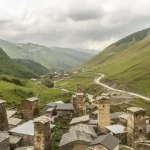
📷 Featured image by mostafa meraji on Unsplash.