On this page
- Why Most Visitors Miss the Real Kazbegi
- The Villages Beyond Stepantsminda
- Trails That Aren’t Gergeti
- The Truso Valley — Kazbegi’s Most Underrated Route
- Wildlife and High-Alpine Ecology
- Local Food in Stepantsminda and the Villages
- Getting Deep into the Region
- Seasonal Access and Weather Reality
- 2026 Budget Breakdown
- Practical Tips for the Kazbegi Region
- Frequently Asked Questions
💰 Click here to see Georgia Budget Breakdown
💰 Prices updated: October, 2026. Budget figures are estimates — always verify before travel.
Exchange Rate: $1 USD = ₾2.60
Daily Budget (per person)
Shoestring: ₾70.00 – ₾130.00 ($26.92 – $50.00)
Mid-range: ₾180.00 – ₾350.00 ($69.23 – $134.62)
Comfortable: ₾500.00 – ₾1,000.00 ($192.31 – $384.62)
Accommodation (per night)
Hostel/guesthouse: ₾30.00 – ₾60.00 ($11.54 – $23.08)
Mid-range hotel: ₾110.00 – ₾200.00 ($42.31 – $76.92)
Food (per meal)
Budget meal: ₾15.00 ($5.77)
Mid-range meal: ₾35.00 ($13.46)
Upscale meal: ₾100.00 ($38.46)
Transport
Single metro/bus trip: ₾1.00 ($0.38)
Monthly transport pass: ₾40.00 ($15.38)
By 2026, the queue of jeeps waiting at the base of Gergeti Trinity Church on a summer morning stretches longer than ever. Stepantsminda has become one of the Caucasus’s most Instagrammed destinations, and the pressure shows — crowded viewpoints, booked-out guesthouses, and a church that feels more like a turnstile than a place of worship by midday. None of that means Kazbegi has stopped being extraordinary. It means you have to look slightly harder than before.
Why Most Visitors Miss the Real Kazbegi
The district of Kazbegi — officially called Mtskheta-Mtianeti — covers roughly 1,500 square kilometres of high Caucasus terrain. Most visitors see less than ten of them: the road from Gudauri, the main square in Stepantsminda, and the trail up to Gergeti. That’s a thin slice of a region that contains active glaciers, sulfuric river valleys, Stone Age cave complexes, abandoned Khevsureti fortress villages, and high-alpine meadows where shepherds have been grazing flocks for thousands of years without a camera pointed at them.
This guide is for the traveler who has either already done Gergeti or arrived in Kazbegi and immediately sensed there was more to it. There is. Substantially more.
The Villages Beyond Stepantsminda
Stepantsminda is the hub, but the surrounding valleys hold villages that most day-trippers never reach. Each has a completely different character.
Sno Valley
Drive or hike 7 kilometres southeast from Stepantsminda into the Sno Valley and the tourist infrastructure essentially disappears. The village of Sno sits at around 1,900 metres and is overlooked by a medieval tower complex that rivals anything in Svaneti for drama, minus the crowds. The valley floor is broad and green in summer, and the drive itself — past stone walls and walnut orchards — is worth the detour. A family guesthouse here charges around 60–80 GEL per night including dinner, and you may be the only guests.
Juta
Juta sits at 2,150 metres at the end of a rough road branching off from the Georgian Military Highway near Stepantsminda. It’s the starting point for the Chaukhi Pass trail and for the approach toward the jagged Chaukhi massif — a wall of dolomite towers that local climbers call the Georgian Dolomites. The village has a handful of guesthouses and a summer feel that’s more genuine than anything in the main town. Arrive in the late afternoon when the peaks catch orange light and the air smells of wild thyme and woodsmoke drifting from the nearest kitchen window.
Roshka and the Abudelauri Lakes
Roshka is harder to reach — the road from Barisakho in the Pshav-Khevsureti direction is rough enough that most rental cars won’t make it — but it serves as the access point for the Abudelauri Lakes trail. Three glacial lakes sit at around 2,800 metres: one green, one blue, one white, their colours determined by dissolved minerals. The hike from Roshka takes four to five hours each way. Most visitors camp overnight, which means those lakes belong entirely to whoever is there.
Gveleti and Arsha
These smaller settlements along or just off the Military Highway are genuinely residential — people live here year-round, farming, keeping livestock, and largely ignoring the tourist flow passing through. Gveleti waterfall, a short walk from the road, stays half-empty even in August because it isn’t on the main apps. It takes 20 minutes to walk there and rewards you with a 30-metre cascade and cool spray mist that settles on your face in the heat of summer.
Trails That Aren’t Gergeti
The Gergeti trail is fine. It’s also one of the most walked paths in the entire South Caucasus. These alternatives offer genuine solitude.
Chaukhi Pass (Juta to Roshka)
This multi-day route crosses the Chaukhi Pass at 3,338 metres and connects Juta to Roshka, passing directly beneath the Chaukhi dolomite towers. The technical sections require confidence on steep scree but no ropes or climbing gear. Plan two days, carry a tent, and bring more water capacity than you think you need — the pass section has limited reliable sources. Trail markings in 2026 have improved slightly thanks to a joint EU-Georgian conservation project that placed painted rock cairns along the most confusing sections, but a downloaded offline map from Maps.me or Gaia GPS is still essential.
Mount Kazbek via the Non-Standard Approach
Most climbers approach Kazbek (5,047 metres) through Gergeti Glacier from the church. The Devdoraki Glacier approach from the eastern side of the mountain is less used, more technical, and requires an experienced mountain guide. The Devdoraki Valley itself — even without summiting — is worth a full-day excursion. The glacier has retreated measurably since 2020, which the guides will point out with a mix of scientific concern and personal sadness.
Arkhoti Valley Loop
This loop trail east of Stepantsminda takes around six hours and passes through forest zones rarely visited by anyone who arrived on a marshrutka from Tbilisi. Roe deer are regularly spotted here in the early morning. The trail involves a river crossing that’s straightforward from July through September but risky in June snowmelt — ask locally before you go.
The Truso Valley — Kazbegi’s Most Underrated Route
The Truso Valley runs west from Stepantsminda along the Terek River toward the South Ossetian administrative boundary. It’s a protected area, fully legal to visit, and one of the most visually unusual landscapes in the entire country.
The valley floor is dotted with travertine mineral springs — some bubbling at the surface, leaving bright orange and white mineral deposits on the rocks around them, others flowing into the Terek itself and turning sections of the river rust-coloured. The smell of sulfur is faint but present, like the memory of a match just struck. Several of the springs are cool enough to drink from, and locals insist the mineral water has health properties. Whether or not that’s true, drinking from a natural spring in a valley with no other humans visible for kilometres in any direction is its own kind of medicine.
The route also passes the abandoned Zakagori fortress and several ghost villages — communities that were depopulated during the Soviet period and have sat empty since. Crumbling stone houses, rusted agricultural tools half-buried in grass, a small church still standing with its cross intact. Sobering doesn’t quite cover it.
Truso is accessible by 4×4 (about 30 kilometres from Stepantsminda, the last stretch on rough track) or on foot — the full valley walk is around 25 kilometres one-way, which means camping or a long day with a vehicle pickup arranged in advance. Shared jeep excursions from Stepantsminda to the valley entrance run at around 150–200 GEL per vehicle in 2026.
Wildlife and High-Alpine Ecology
Kazbegi sits inside the Kazbegi National Park and adjacent to the Greater Caucasus range, which functions as a genuine wildlife corridor. The animals here aren’t for show — they’re wild, often elusive, and all the better for it.
The Caucasian chamois (an agile mountain ungulate, related to the European chamois) lives on rocky slopes above 2,500 metres and can be spotted with binoculars from most of the higher trails, particularly in the Sno and Truso valleys. Brown bears are present throughout the forested mid-elevation zones — your guesthouse host will know if there’s been recent activity near any particular trail. Encounters are rare but not impossible, especially around forest edges at dawn and dusk. Make noise when walking through dense vegetation.

Golden eagles nest in the cliffs above the Truso Valley. Watching one ride a thermal above the gorge while the orange mineral springs glitter below is the kind of moment you don’t forget. The region also holds populations of Caucasian snowcocks, bearded vultures (lammergeiers), and in the river valleys, dippers bobbing in fast-moving water.
Wildflower seasons peak in June and July — the subalpine meadows between 2,000 and 2,500 metres fill with gentians, wild roses, Caucasian rhododendron, and varieties of crocus that exist nowhere else on Earth.
Local Food in Stepantsminda and the Villages
The town of Stepantsminda has grown its food scene noticeably since 2023, though it remains small. The main street and the square area are where most eating happens.
Guesthouses remain the most reliable source of good food in the region. A typical dinner spread at a village guesthouse involves khinkhali (soup dumplings, always eaten by hand), kubdari (the Svan meat-filled bread that’s common in this part of Georgia), fresh tkemali (wild plum sauce), and locally produced cheese that’s saltier and denser than the Imereti cheese you’d find in western Georgia. Dinner is usually included in the guesthouse rate.
In Stepantsminda itself, the cluster of small restaurants near the central square serves standard Georgian mountain food. Look for places with handwritten menus and local families eating inside — those are typically better than the ones with laminated menus and photos. The small local market on the main road sells dried herbs, honey, churchkhela, and preserved vegetables from local producers. Honey from Kazbegi’s high meadows is distinctly floral and worth buying in quantity — prices run around 25–40 GEL per jar depending on size.
One newer addition in 2026 is a small wine-and-cheese bar near the tourist information office that sources from small Kartli producers and stays open until midnight in summer — a good place to be after a long day on the trails when your boots are off and your legs don’t want to go anywhere else.
Getting Deep into the Region
Getting to Stepantsminda is simple enough — marshrutkas run from Tbilisi’s Didube bus station daily for around 15–20 GEL. The journey takes roughly three hours on the Georgian Military Highway (when conditions are good) and the road itself, especially through the Dariali Gorge and past Gudauri, is spectacular.

Getting beyond Stepantsminda is a different matter. For Juta, a local jeep from the main square costs around 30–50 GEL each way — the road is rough but manageable in a capable vehicle. For Truso Valley, Roshka, and any trail that goes significantly off the main road, a 4×4 is non-negotiable. Rental vehicles from Tbilisi that are not specifically designated as off-road capable will not make it and you could damage the car, yourself, or both.
Local drivers who know the roads are available through guesthouses in Stepantsminda. Rates for a full-day 4×4 hire with driver run 200–350 GEL depending on destination and hours. This is money worth spending. These drivers know which river crossings are passable that day, where the road washed out last week, and where the chamois were spotted that morning.
In 2026, a small electric shuttle service began running between Stepantsminda’s main square and the Gergeti trailhead to reduce jeep traffic on the lower slopes — this is for Gergeti-bound visitors only and doesn’t affect the other routes.
Seasonal Access and Weather Reality
Kazbegi operates on a compressed outdoor season. Here’s what actually opens when:
- May: The town is accessible and pleasant, but most high trails still have snow above 2,500 metres. Good for lower valley walks, wildflower starts at lower elevations.
- June: Trails open progressively. Snowmelt makes river crossings unpredictable. Juta is accessible. Truso Valley opens. The Abudelauri Lakes route usually clears by mid-June.
- July and August: Peak season. Everything is open including the Chaukhi Pass. Weather is warm by day (18–25°C in the valley) but cold drops fast after sunset at altitude. Expect afternoon thunderstorms — start hikes early.
- September: The best month. Crowds thin dramatically, especially after the first week. Light is golden, temperatures are ideal (12–20°C), and the trails are dry and stable. Shepherds are beginning to bring flocks down.
- October: The high routes close with first snowfall, usually mid-month. Lower valley walks remain possible and the autumn colours in the forests are exceptional.
- November through April: Stepantsminda is accessible (the Military Highway stays open except in extreme weather), but most sights beyond town require snowshoes or ski equipment. Some guesthouses stay open year-round for winter visitors.
2026 Budget Breakdown
Kazbegi remains genuinely affordable compared to equivalent mountain destinations in Europe or even compared to Tbilisi for accommodation.

- Budget: 80–130 GEL per day. Dorm bed in a Stepantsminda hostel (25–35 GEL), guesthouse meals (breakfast 10 GEL, dinner 20–25 GEL), marshrutka transport from Tbilisi (15 GEL each way), self-guided hiking.
- Mid-range: 200–300 GEL per day. Private room in a guesthouse with meals included (80–120 GEL), one shared jeep excursion to Truso or Juta (40–60 GEL per person in a group), small restaurant dinner (30–40 GEL).
- Comfortable: 400–600 GEL per day. One of the newer boutique properties in or near Stepantsminda (180–280 GEL per night), private 4×4 hire for day trips (250–350 GEL), licensed mountain guide for full-day trekking (150–200 GEL).
Note: ATMs in Stepantsminda are limited and sometimes out of cash on summer weekends. Bring GEL from Tbilisi. In 2026, a small number of guesthouses now accept card payment but don’t count on it outside the main hotels.
Practical Tips for the Kazbegi Region
Altitude Awareness
Stepantsminda sits at 1,740 metres. Most serious hikes take you above 2,500 metres and the Chaukhi Pass crosses above 3,300 metres. If you arrive from sea level, give yourself at least one day of light activity before attempting anything strenuous. Symptoms of altitude sickness — persistent headache, nausea, confusion — mean descend immediately.
Bear Safety
Brown bears are active throughout the region. On forest trails, make noise as you walk, particularly on blind corners. If staying in a tent, store food in bear-safe bags away from your sleeping area. Encounters are uncommon but guesthouse owners track bear activity and will advise on current hotspots.
Connectivity
Mobile coverage in Stepantsminda is decent (Magti and Beeline both work). In the side valleys — Juta, Truso, Roshka — expect no signal at all. Download offline maps before leaving town. Tell your guesthouse host your planned route and expected return time.
Water
Mountain streams above human habitation are generally safe to drink in this region. Avoid water downstream of any village or shepherd camp. In the Truso Valley, the mineral springs look dramatic but some have very high mineral content — the local guides will tell you which ones are drinkable.
Language and Money
English is spoken at most guesthouses catering to foreign visitors in Stepantsminda. In the remote villages, Russian is more useful than English. Georgian gets you very far in terms of goodwill even if you only know madloba (thank you) and gamarjoba (hello). Cash in GEL is essential outside the town centre.
Frequently Asked Questions
Is Kazbegi worth visiting beyond just seeing Gergeti Trinity Church?
Absolutely. Gergeti is impressive but represents a small fraction of what the region offers. The Truso Valley, Juta village, the Abudelauri Lakes, and the Chaukhi massif trails are all genuinely spectacular and far less crowded. Visitors who spend three or more days in the region consistently say the time away from Gergeti was the highlight.
How do I get from Tbilisi to the remote parts of Kazbegi?
Take a marshrutka or taxi from Tbilisi to Stepantsminda, then arrange local 4×4 transport from there. Guesthouses can connect you with trusted local drivers. Renting a regular car in Tbilisi and attempting the off-road sections is not recommended and can be dangerous.
Is the Truso Valley safe to visit given its proximity to the South Ossetian boundary?
Yes. The Truso Valley is fully within Georgian government-controlled territory and open to all visitors. The administrative boundary line is marked and you simply don’t cross it. Local guides know the boundary locations well. Foreign visitors require no special permit as of 2026, though registration in the national park system is advised.
What is the best month to visit Kazbegi for trekking?
September is consistently the best month. Crowds drop sharply after mid-August, weather is stable and clear, temperatures are comfortable for hiking, and the light is exceptional. Trails are fully open and dry. July and August are also good but busier and prone to afternoon thunderstorms above 2,500 metres.
Do I need a guide for the trails around Kazbegi?
For day hikes below 2,500 metres — including Juta-area walks, Gveleti waterfall, and Truso Valley road access — confident hikers with good maps can go independently. For the Chaukhi Pass crossing, Kazbek summit approaches, and multi-day remote routes, a licensed local guide is strongly recommended. Guide rates in 2026 run 150–200 GEL per day and are worth every lari on unfamiliar high terrain.
Explore more
Kazbegi Travel Budget: How Much Does a Trip to Stepantsminda Really Cost?
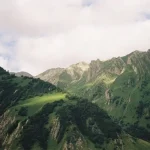
📷 Featured image by Mike Swigunski on Unsplash.