On this page
- September 2026 Is the Best Month Georgia Has Had for Visitors in Years
- Why September Is Georgia’s Sweet Spot for Sightseeing
- Tbilisi’s Old City: Where Every Lane Has a Story
- The Ancient Capitals: Mtskheta and Uplistsikhe
- Kakheti’s Monastery Circuit During Rtveli Season
- The Military Highway: Ananuri to the High Caucasus
- 2026 Budget Reality: What Sightseeing Costs in September
- Planning the Logistics: Getting Between Sites Without Stress
- Frequently Asked Questions
September 2026 Is the Best Month Georgia Has Had for Visitors in Years
September 2026 is shaping up to be an exceptional month to visit Georgia, and not just because the weather cooperates. The summer crowds that clog Tbilisi’s old lanes and pack marshrutkas to Kazbegi have thinned. The grape harvest — Rtveli — is beginning across Kakheti, filling the air with the sharp sweetness of crushed fruit. Prices at guesthouses have not yet climbed back to August peaks. The one real concern travellers are raising right now is how to structure a trip that covers Georgia’s extraordinary density of historic sites without wasting days on poor logistics. This guide answers exactly that.
Why September Is Georgia’s Sweet Spot for Sightseeing
Georgia sits in a climatic band where summer heat in the lowlands can make walking ancient sites genuinely uncomfortable. Tbilisi regularly hits 35°C in July and August. By September, daytime temperatures settle into the mid-20s Celsius — warm enough for light clothing, cool enough to walk uphill to a church without arriving soaked. In the mountains, the air sharpens and the high trails remain clear well into October.
The light also changes. September in Georgia produces the kind of long golden afternoons that make stone churches glow amber and vineyard terraces look like something from a painted icon. For anyone who cares about experiencing historic sites as more than a checklist, that quality of light matters. It changes the feel of standing inside Svetitskhoveli Cathedral or looking across the Alazani Valley from a monastery ridge.
There is also a practical angle. Many of Georgia’s most significant sites — Mtskheta, Sighnaghi, Vardzia — see their peak visitor traffic in July and August. By September, the ratio of visitors to atmosphere tips back in your favour. Tour groups still come, but you can find quiet corners.
Tbilisi’s Old City: Where Every Lane Has a Story
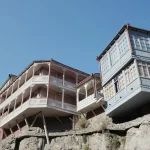
Start in Tbilisi. Not because it is the easiest option, but because the Old City — Kala and Abanotubani — is genuinely one of the most layered historic urban environments in the South Caucasus. Persian, Ottoman, Russian Imperial, and Soviet influences all left visible marks, and they sit beside each other without resolution, which is exactly what makes it interesting.
The smell of sulphur rises from the bathhouse domes in Abanotubani even before you see them. That warm mineral scent mixed with the faint char of churchkhela being grilled on a street cart nearby is the sensory signature of this part of Tbilisi — you notice it every time you descend from the fortress hill. Narikala Fortress itself rewards the uphill walk. From the walls, you see the city’s logic: the Mtkvari River bending below, the modern bridge, the old quarter pressing against the cliff.
Key sites to anchor your days here include the Anchiskhati Basilica — the oldest surviving church in the city — the Metekhi Church above the river gorge, and the Sioni Cathedral near the central bazaar. None of these requires a tour guide. Each has open access during daylight. Give yourself at least two full days in the Old City before moving on. Rushing it is the most common mistake first-time visitors make.
The Ancient Capitals: Mtskheta and Uplistsikhe
Both of these sites sit within comfortable day-trip distance of Tbilisi, but they belong to completely different chapters of Georgian history and should not be lumped into the same rushed morning.
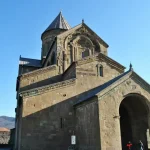
Mtskheta, about 20 kilometres northwest of Tbilisi, was Georgia’s capital for several centuries before Tbilisi took that role. Svetitskhoveli Cathedral — the Living Pillar Cathedral — stands at its centre and has been a UNESCO World Heritage Site for decades. The scale of it surprises people who have only seen it in photographs. Standing in the nave, the carved stone columns above you seem to absorb sound. September crowds here are manageable, and the town itself, small and walkable, is worth a slow afternoon.
Uplistsikhe is a different experience entirely. This cave city carved into volcanic rock above the Mtkvari River was already old when the first Georgian kingdoms were forming. It is about 10 kilometres from Gori. The carved chambers, wine storage pits, and the small basilica cut into the rock give you a physical understanding of how people actually lived here — not in abstract historical terms, but in the immediate sense of crouching through a doorway and seeing where a cooking fire once burned. Come in the late afternoon when the shadows define the rock surfaces and the site feels properly ancient rather than like a museum exhibit.
Kakheti’s Monastery Circuit During Rtveli Season
Kakheti is Georgia’s wine heartland, and September is when Rtveli — the grape harvest — runs across the region. The timing creates a rare combination: some of the country’s most significant religious architecture set against working vineyards in full harvest activity. The scent of fermenting grapes drifts across roads that wind between monastery walls and family plots. It is not a staged experience. It is just what happens here in September.
The monastery circuit in eastern Kakheti anchors around three major sites. Bodhi Monastery near Sighnaghi dates to the sixth century and its position above the Alazani Valley provides views that give you a genuine sense of the region’s geography. David Gareja, on the border with Azerbaijan, is more remote — a series of cave monasteries cut into a semi-desert ridge — and requires more planning to reach, but rewards that effort with frescoes and a silence that is hard to find anywhere else in Georgia. Alaverdi Cathedral in the Alazani plain is one of the tallest medieval churches in the entire Caucasus and sits in a compound that feels removed from the twenty-first century.
If you are staying in Sighnaghi — a practical base for eastern Kakheti — the fortress walls and their views over the plain are worth an evening walk as the light drops.
The Military Highway: Ananuri to the High Caucasus
The Georgian Military Highway running north from Tbilisi through the Caucasus has been a significant route for centuries and today provides access to some of the most dramatic historic sites in the country alongside mountain scenery that is simply not replicated elsewhere in Georgia.
Ananuri Fortress, about 70 kilometres north of Tbilisi above the Zhinvali Reservoir, is the first major stop. The fortress is compact but photogenic — two towers, a domed church, carved stone reliefs — and the reservoir below it turns a deep blue-green in September light. It takes less than an hour to walk properly, which makes it easy to fold into a journey north.
Kazbegi — officially Stepantsminda — sits near the end of the paved road at around 1,700 metres elevation. The Gergeti Trinity Church above the town, at roughly 2,170 metres, is one of the most recognisable images in Georgian tourism. In September, the trail up takes about 90 minutes at a steady pace. The crunch of early morning frost on the path, the smell of pine and thin cold air, and the view of Mount Kazbek above the clouds when conditions cooperate — these are not exaggerated in photographs. They are accurate. Plan to stay at least one night in Stepantsminda to give yourself the chance of catching the mountain clear.

2026 Budget Reality: What Sightseeing Costs in September
Georgia remains genuinely affordable for historic sightseeing in 2026. Most of the country’s major churches and monasteries charge no entrance fee — that includes Svetitskhoveli, Alaverdi, Gergeti Trinity, and Anchiskhati. Where fees apply, they are modest.
- Uplistsikhe entrance: approximately 15 GEL per adult
- David Gareja entrance: approximately 10–15 GEL depending on area accessed
- Narikala cable car (Tbilisi), one way: approximately 5 GEL
- Marshrutka Tbilisi to Mtskheta: 1–2 GEL
- Shared taxi or marshrutka to Kazbegi: approximately 20–30 GEL per seat
For accommodation, the tiers in September 2026 look roughly like this:
- Budget: Guesthouse bed in Sighnaghi or Stepantsminda, 50–80 GEL per night
- Mid-range: Small hotel with breakfast in Tbilisi Old City or Kakheti, 150–250 GEL per night
- Comfortable: Boutique property with wine cellar access or mountain views, 350–600 GEL per night
A realistic daily budget for a couple travelling independently — covering accommodation, food, transport, and site fees — sits around 200–300 GEL per person in September, assuming mid-range choices and no private tour vehicles.
Planning the Logistics: Getting Between Sites Without Stress
Georgia’s historic sites are spread across a country that is not enormous — roughly 500 kilometres from west to east — but the mountain terrain means road times are longer than maps suggest. A few principles help.
Use Tbilisi as your base for the first and last legs of any trip. The city has direct marshrutka and shared taxi connections to Mtskheta, Gori (for Uplistsikhe), and the Military Highway north toward Kazbegi. Georgian Railway connects Tbilisi to Kutaisi and Batumi on regular schedules if you are extending west.
For Kakheti, the most flexible approach is renting a car from Tbilisi — the roads in the Alazani Valley are good and the distances between monasteries are short enough that a single day can cover Bodhi, Alaverdi, and Sighnaghi comfortably. David Gareja requires a separate dedicated day due to the road conditions on the final approach.
Book guesthouses in Stepantsminda at least two to three weeks ahead for September. The village has limited beds and the combination of hikers, history visitors, and weekend travellers from Tbilisi fills them fast. The same applies to Sighnaghi during peak Rtveli weekends, typically mid to late September.
Build in margin. Georgian travel rewards flexibility. A fog-covered Kazbek clears. A monastery you passed through turns out to have a caretaker who opens a locked chapel. A family at a harvest table waves you in. These are not rare exceptions — they are what September in Georgia actually feels like when you leave space for them.
Frequently Asked Questions
Is September a good month to visit Georgia’s historic sites?
Yes — it is one of the best months of the year. Temperatures are comfortable for walking, summer crowds have eased, and the Rtveli harvest in Kakheti adds a layer of atmosphere to the eastern monastery circuit. The weather in the high Caucasus remains stable enough for trails up to sites like Gergeti Trinity Church through most of September.
Do Georgia’s historic churches and monasteries charge entrance fees?
Most do not. The majority of Georgia’s significant religious sites — including Svetitskhoveli in Mtskheta, Alaverdi Cathedral, and Gergeti Trinity Church — are free to enter. A small number of archaeological sites, such as Uplistsikhe and David Gareja, charge modest entry fees of around 10–15 GEL per adult in 2026.
How many days do you need to see Georgia’s main historic sites?
A well-planned ten to fourteen day trip gives you genuine time in Tbilisi, a Kakheti monastery circuit, Mtskheta, Uplistsikhe, and at least two nights in the Kazbegi area. Shorter trips of seven days can cover the highlights but require tighter logistics and leave less margin for mountain weather delays or spontaneous detours.
Is it necessary to hire a tour guide for Georgia’s historic sites?
Not necessary, but useful for sites like David Gareja and Uplistsikhe where context significantly improves the experience. Tbilisi’s Old City and the Mtskheta churches are manageable independently. If budget allows, a local guide for one or two days in Kakheti adds considerable depth — local knowledge of monastery history and harvest traditions is not easily found in signage alone.
What should visitors wear when entering Georgian churches and monasteries?
Shoulders and knees must be covered for both men and women. Women are expected to cover their heads inside most churches — scarves are often available at entrances, but carrying your own is more reliable. In September, light layers serve double duty for both modesty requirements and cooler mountain mornings. This applies at every religious site, regardless of how remote or how visited.
Explore more
September 2026 in Georgia: Autumn Colors and Cooler Days
Your September 2026 Guide to Georgia’s Rtveli (Wine Harvest)
Farm-to-Table Fresh: Georgia’s August 2026 Culinary Journey