💰 Click here to see Georgia Budget Breakdown
💰 Prices updated: August, 2026. Budget figures are estimates — always verify before travel.
Exchange Rate: $1 USD = ₾2.61
Daily Budget (per person)
Shoestring: ₾80.00 – ₾170.00 ($30.65 – $65.13)
Mid-range: ₾150.00 – ₾420.00 ($57.47 – $160.92)
Comfortable: ₾650.00 – ₾1,200.00 ($249.04 – $459.77)
Accommodation (per night)
Hostel/guesthouse: ₾25.00 – ₾50.00 ($9.58 – $19.16)
Mid-range hotel: ₾80.00 – ₾200.00 ($30.65 – $76.63)
Food (per meal)
Budget meal: ₾20.00 ($7.66)
Mid-range meal: ₾40.00 ($15.33)
Upscale meal: ₾100.00 ($38.31)
Transport
Single metro/bus trip: ₾1.00 ($0.38)
Monthly transport pass: ₾40.00 ($15.33)
Ushguli sits at 2,200 metres in the Upper Svaneti region, and in 2026 it still draws travellers who are willing to earn it. The road from Mestia has been partially improved, but it remains rough, slow, and genuinely impassable after heavy snow or summer storms. Plenty of visitors plan a day trip, hit unexpected mud or a closed pass, and turn back. Getting the timing and transport right is still the biggest challenge this destination throws at you.
What Makes Ushguli Unlike Anywhere Else in Georgia
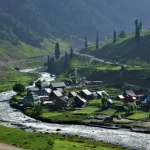
Europe’s highest permanently inhabited village is not a marketing slogan — it is a UNESCO-listed fact. The settlement has been continuously occupied for roughly a thousand years, and the medieval Svan towers that define its skyline were not built for decoration. They were survival infrastructure, used to shelter families during blood feuds and raids. Some still belong to families who have lived here for generations.
The landscape is the other thing. Standing at the edge of the village in clear weather, you look directly at Shkhara — at 5,193 metres, the highest peak entirely within Georgia. The glacier pushes down into the upper Enguri valley below the mountain, and on a cold morning you can smell the ice in the air before you see it. The light here is also different: high-altitude UV makes the meadows an almost aggressive green in July, and the rock faces glow amber for about twenty minutes at sunset.
Ushguli is not a resort. There is no ski lift, no manicured promenade. The streets are unpaved, cows wander between guesthouses, and the electricity supply remains intermittent. That combination of raw landscape and medieval architecture is exactly what makes it worth the journey.
The Four Tower Villages — Understanding the Settlement
Most visitors arrive, photograph the towers near the entrance, and leave thinking they have seen Ushguli. The settlement is actually four separate hamlets clustered within about two kilometres of each other:
- Chvibiani — the most photographed cluster, with the highest concentration of Svan towers
- Chazhashi — home to the Ushguli Community Museum, housed in a genuine medieval tower
- Murkmeli — quieter, with older residential architecture and fewer tourists
- Zhibiani — the upper hamlet, closest to the Shkhara Glacier trailhead
The Lamaria Church in Chvibiani sits on a small hill above the main cluster and is one of the oldest functioning churches in Svaneti. It is not always open to visitors, but the exterior and the hilltop position above the towers and meadows reward the short climb regardless.
The Community Museum in Chazhashi charges around 10 GEL entry and contains a genuine collection of medieval icons, chainmail, and domestic objects that were kept in these towers across centuries. It is small but the context it provides for everything you are seeing outside is real.
Getting to Ushguli
The Road Situation in 2026
The 45-kilometre road from Mestia to Ushguli follows the Enguri River upstream. As of 2026, the section from Mestia to Ipari (roughly 25 kilometres) has been resurfaced and is manageable in a standard vehicle during dry months. The final 20 kilometres from Ipari to Ushguli remains unpaved, rocky, and deeply rutted in places. A high-clearance 4×4 is not optional on this stretch — it is required.
The drive takes between two and three hours depending on conditions. After heavy rain, sections become soft enough to trap vehicles. In winter (typically November through April), the road is often closed entirely due to snow, and Ushguli can be cut off for weeks at a time.
Your Transport Options
- Shared jeep from Mestia — the standard approach. Jeep drivers gather near the Mestia central square from around 09:00. A seat costs approximately 40–60 GEL one way. You can negotiate a full jeep for a private round trip, which runs 400–500 GEL depending on waiting time.
- Renting a 4×4 in Mestia — possible but costs 250–400 GEL per day for vehicle hire. Only worth it if you want full flexibility or are travelling in a group.
- Organised tours from Tbilisi or Mestia — several operators run multi-day Upper Svaneti tours that include Ushguli as the endpoint. Prices vary widely; budget around 800–1,200 GEL per person for a 3-day package from Tbilisi including transport and guesthouse accommodation.
Getting to Mestia First
Mestia is the gateway. From Tbilisi, you can fly with Vanilla Sky (the domestic carrier operating the Tbilisi–Mestia route in 2026) in about 40 minutes, or take the overnight train to Zugdidi followed by a marshrutka. The marshrutka from Zugdidi to Mestia runs twice daily and takes around three hours, costing 20–25 GEL. The road from Zugdidi has improved significantly since 2024 after roadworks on the Jvari–Mestia section were completed.

Day Trip or Overnight?
Technically possible as a day trip from Mestia. Practically, it shortchanges you badly.
A shared jeep leaving Mestia at 09:00 arrives in Ushguli around 11:30. If you leave for the return at 16:00 to get back before dark, you have four and a half hours. That is enough to walk the four hamlets and eat lunch, but nothing more. You will not reach the glacier, you will not see sunset over Shkhara, and you will not get any feel for how this place actually functions as a living village.
One night is the minimum that makes the journey worthwhile. Two nights lets you hike to the Shkhara Glacier (a 10–12 kilometre round trip), explore the hamlets without rushing, and adjust if the weather closes in on your first afternoon — which it does, regularly, in summer. The mountains here generate their own weather and cloud cover builds fast after midday.
What to Do Once You’re There
Hike to the Shkhara Glacier
This is the main active highlight. The trail starts from Zhibiani and follows the Enguri valley upstream for five to six kilometres to the glacier tongue. The path is well-worn and does not require a guide, though the terrain beyond the glacier itself demands mountaineering experience. Allow four to five hours round trip at a relaxed pace. The path crosses several streams; waterproof boots are advisable.
Walk Between the Hamlets
The 2-kilometre walk connecting all four hamlets along the valley floor is the best way to absorb the scale of the tower clusters against the mountain backdrop. Early morning, before the day-trip jeeps arrive, the light is flat and cold and the village feels genuinely medieval. Later in the day it feels like a set.
Visit the Towers Up Close
A handful of families open the ground floor of their towers to visitors for a small fee (typically 5–10 GEL). The interior smell — old stone, smoke-cured wood, damp earth — tells you more about how people lived here than any museum display. Ask at your guesthouse about which towers are currently accessible.
Where to Eat and Sleep in Ushguli
Ushguli has around a dozen functioning guesthouses, most operating from May through October. Standards are basic by design — this is a village at 2,200 metres with irregular power. What you get is a bed, a shared bathroom in most cases, and dinner cooked by whoever runs the place.
The food is Svan, not generically Georgian. Kubdari — the Svan meat-filled bread, spiced with a blend that includes blue fenugreek — is the dish to order. It comes off the pan hot and dense, and the crust has a satisfying chew that khachapuri does not. Most guesthouses charge 30–50 GEL per person for dinner and breakfast combined.
Guesthouse Lile in Chvibiani is consistently recommended by travellers in 2026 for the quality of the food and the tower views from the terrace. Guesthouse Nino in Zhibiani is closer to the glacier trailhead and suits those planning an early start. Both run on word-of-mouth booking — contact through the Mestia tourism office or ask your Mestia host to call ahead.
2026 Budget Reality
Ushguli is not an expensive destination, but getting there is. Budget your trip accordingly:
- Budget tier — shared jeep (50 GEL each way), dorm-style guesthouse room (40–60 GEL per night including dinner and breakfast), meals covered by guesthouse. Total per day in Ushguli: 90–120 GEL, excluding transport.
- Mid-range tier — private jeep split between two or three people, private room with better facilities (80–120 GEL per night), one paid tower visit, museum entry. Total per day in Ushguli: 150–220 GEL, excluding transport.
- Comfortable tier — private jeep hire (400–500 GEL round trip), best available guesthouse rooms, flexibility to stay an extra night if weather turns. Total per day in Ushguli: 250–350 GEL, excluding long-distance transport.
The Tbilisi–Mestia flight (when available) costs around 120–180 GEL one way. The overnight train to Zugdidi plus marshrutka runs around 40–60 GEL total and takes longer but gets you there.
Practical Tips Before You Go
- Go between June and September. July is the most reliable month for clear weather and passable roads. October can work but snow arrives early above 2,000 metres.
- Bring cash. There is no ATM in Ushguli. The nearest is in Mestia. Bring more than you think you need — guesthouse owners cannot take card.
- Pack layers. Even in July, temperatures at 2,200 metres drop sharply after sunset. Evenings regularly fall to 5–8°C.
- Charge everything in Mestia. Power in Ushguli is intermittent. A power bank is essential.
- Tell someone your plans. Mobile signal is very weak and sometimes absent. If you are hiking to the glacier, leave your itinerary with your guesthouse host.
- Respect the village. Ushguli is a living settlement, not a heritage park. Photograph people only with permission. Stay on marked paths near private property.
Frequently Asked Questions
Is Ushguli open year-round?
In practice, no. The road from Mestia closes during heavy snowfall, typically from November through April, sometimes longer. A small permanent population stays through winter, but guesthouses and tourism services shut down. Attempting the journey outside June–October without local guidance and winter-equipped transport is genuinely risky.
Do I need a guide to visit Ushguli?
Not for the village itself or the Shkhara Glacier trail — both are straightforward to navigate independently. A guide becomes valuable if you want to explore higher terrain beyond the glacier, attempt any peak ascents, or want deep context on Svan history and the specific tower families. Guides can be arranged in Mestia for around 100–150 GEL per day.
How long does the drive from Mestia take?
Plan for two to three hours each way. The first half of the road is now improved but the final 20 kilometres from Ipari is rough and slow. After rain, add at least 45 minutes. Jeep drivers know the road and set a pace that fits conditions — do not rush them on this section.
Is Ushguli suitable for children or older travellers?
Yes, with realistic expectations. The village itself is flat and walkable. The glacier hike is long but not technical. The main challenge is the jeep ride on rough roads, which is bumpy for two to three hours. Anyone with serious back problems or motion sickness should think carefully. Altitude at 2,200 metres is noticeable but not extreme for most people.
Can I visit Ushguli without staying in Mestia first?
Technically yes — some multi-day tours drive directly from Zugdidi or Tbilisi without stopping in Mestia. But Mestia is the logical hub for organising transport and stocking up on cash and supplies. Skipping it makes the logistics harder and removes your safety net if road conditions force a change of plan.