On this page
- Why Getting to Borjomi Is More Complicated Than It Should Be
- Getting to Borjomi from Tbilisi
- Getting to Borjomi from Kutaisi
- Getting to Borjomi from Batumi
- Getting to Borjomi from Akhaltsikhe
- The Borjomi–Bakuriani Narrow-Gauge Railway
- Renting a Car and Driving to Borjomi
- Getting Around Once You Arrive in Borjomi
- 2026 Transport Budget Breakdown
- Practical Tips for a Smooth Journey
- Frequently Asked Questions
💰 Click here to see Georgia Budget Breakdown
💰 Prices updated: October, 2026. Budget figures are estimates — always verify before travel.
Exchange Rate: $1 USD = ₾2.60
Daily Budget (per person)
Shoestring: ₾70.00 – ₾130.00 ($26.92 – $50.00)
Mid-range: ₾180.00 – ₾350.00 ($69.23 – $134.62)
Comfortable: ₾500.00 – ₾1,000.00 ($192.31 – $384.62)
Accommodation (per night)
Hostel/guesthouse: ₾30.00 – ₾60.00 ($11.54 – $23.08)
Mid-range hotel: ₾110.00 – ₾200.00 ($42.31 – $76.92)
Food (per meal)
Budget meal: ₾15.00 ($5.77)
Mid-range meal: ₾35.00 ($13.46)
Upscale meal: ₾100.00 ($38.46)
Transport
Single metro/bus trip: ₾1.00 ($0.38)
Monthly transport pass: ₾40.00 ($15.38)
Why Getting to Borjomi Is More Complicated Than It Should Be
Borjomi is one of Georgia’s most visited towns, famous for its mineral water, Soviet-era park, and mountain air. Yet in 2026, a surprising number of travelers still arrive frazzled — they missed their marshrutka, booked the wrong train, or didn’t realize the road from Akhaltsikhe had a seasonal closure. Unlike Tbilisi or Batumi, Borjomi has no single obvious transit hub, and the options vary wildly depending on where you’re coming from. This guide cuts through the confusion and tells you exactly how to get there, what each option costs in GEL, and what to watch out for before you leave.
Getting to Borjomi from Tbilisi
Tbilisi is where most international travelers start, and the good news is that the Tbilisi–Borjomi corridor has several options. The bad news is that none of them are perfect, so the right choice depends on your budget, comfort level, and how much luggage you’re hauling.
By Marshrutka (Minibus)
The cheapest and most local way to travel is by marshrutka from Didube bus terminal in Tbilisi. Marshrutkas to Borjomi depart throughout the morning from roughly 08:00 to 14:00, though there is no strict timetable — they leave when full. The journey takes around 2.5 to 3 hours depending on traffic through the Mtkvari River valley. In 2026, the fare sits at approximately 12–15 GEL per person. Seats are not assigned, the minibuses are often full, and luggage goes on your lap or under your feet if the overhead rack is packed. If you have a large bag, arrive early and claim a seat near the door.
Didube terminal is accessible via Tbilisi Metro Line 1 (the red Saburtalo line) — exit at Didube station and follow signs for the bus terminal. As of 2026, the metro expansion toward Gldani has not changed the Didube interchange, so navigation there remains the same as before.
By Train
Georgian Railway operates a service from Tbilisi Central Station (Tbilisi-Passenger) to Borjomi-Mineral Waters station. In 2026, there are typically two departures per day — one in the morning and one in the afternoon — though the Georgian Railway schedule for this line does shift seasonally, so confirm times at least a week before travel at the official Georgian Railway website or at the station ticket hall. The journey takes approximately 3 to 3.5 hours. Second-class (economy) seats cost around 7–10 GEL, making this the cheapest comfortable option. The train is slower than a marshrutka but vastly more comfortable — you have a proper seat, legroom, and windows wide enough to watch the Borjomi Gorge open up around you as the train climbs through the valley. That slow reveal of the gorge, with pine slopes rising sharply on both sides and the river running silver below, is genuinely one of the better rail journeys in the South Caucasus. In 2026, the online booking interface now supports English and Georgian language options with card payment fully functional — book up to 30 days in advance, as seats fill quickly on summer weekends and around Georgian public holidays.

By Private Taxi or Transfer
A private taxi from Tbilisi to Borjomi costs between 120 and 180 GEL for the full car, not per person. Negotiate the price before you get in. Bolt and Yandex Go both operate in Tbilisi but do not offer intercity rides to Borjomi through the app — you’ll need to arrange directly with a driver, either through your accommodation, a reputable local agency, or by approaching drivers at Didube. Door-to-door travel time is roughly 2 to 2.5 hours depending on the driver’s pace and traffic leaving Tbilisi.
Getting to Borjomi from Kutaisi
Travelers arriving at Kutaisi International Airport — which handles a significant volume of Ryanair and Wizz Air traffic — often want to head directly to Borjomi without routing through Tbilisi. This is entirely possible but requires a connection.
From Kutaisi, take a marshrutka or shared taxi toward Khashuri. Khashuri is the main rail and road junction point for the Borjomi direction. From Khashuri, you can pick up a local marshrutka heading south into the Borjomi Gorge, or wait for the Tbilisi–Borjomi train to pass through. The total journey from Kutaisi to Borjomi via Khashuri runs approximately 2.5 to 3.5 hours depending on connections, with the Khashuri wait being the wildcard. Budget around 15–20 GEL for the combined fare. Alternatively, a private transfer from Kutaisi Airport directly to Borjomi runs approximately 150–200 GEL and takes around 2 hours — a much cleaner option if you land with luggage and no appetite for multiple connections.
Getting to Borjomi from Batumi

The Batumi-to-Borjomi journey is the longest of the common routes — roughly 4 to 5 hours — and involves crossing from the Black Sea coast into the inland mountains. There is no direct marshrutka service between the two cities. The practical options are:
- Via Kutaisi: Take a Batumi–Kutaisi marshrutka (around 15 GEL, 1.5–2 hours), then connect to Khashuri and onward to Borjomi as described above.
- Via train to Khashuri: Georgian Railway operates Batumi–Tbilisi services that stop at Khashuri. From Khashuri, connect south to Borjomi by local marshrutka. The Batumi–Tbilisi express line has seen schedule updates in 2026, with faster morning departures — check the Georgian Railway website for the current Batumi–Khashuri stop time.
- Private transfer: The most direct option. A private car from Batumi to Borjomi costs roughly 250–320 GEL and takes around 3.5 to 4 hours via the E60 highway and then south through the gorge.
The Batumi–Borjomi road journey through the Kolkheti lowlands and then up into the Mtkvari valley is genuinely beautiful in spring and summer. Pine forests close in from both sides as you leave the highway and enter the gorge, and the air cools noticeably in the final 20 kilometres before town.
Getting to Borjomi from Akhaltsikhe
This is the most overlooked connection, but it’s fast and useful if you’re combining Borjomi with a visit to Rabati Castle or the cave city of Vardzia. Akhaltsikhe is only about 60 kilometres from Borjomi, and the road through the Samtskhe-Javakheti plateau is paved and reasonably well maintained through three seasons of the year.
Local marshrutkas run between Akhaltsikhe and Borjomi, with a journey time of roughly 1 to 1.5 hours and a fare of around 8–10 GEL. Departures are most frequent in the morning. A taxi between the two towns costs 50–70 GEL for the full car — very reasonable for a group. If you’re coming directly from Vardzia, you’ll need to return to Akhaltsikhe first, as there is no direct route from Vardzia to Borjomi without significant off-road driving.
The Borjomi–Bakuriani Narrow-Gauge Railway
Separate from the main Georgian Railway network, the narrow-gauge train runs from Borjomi town up to the ski resort of Bakuriani in the Trialeti mountains. It does not connect to Tbilisi. The train takes roughly 2.5 to 3 hours to reach Bakuriani, climbing through forests and past small villages. In 2026, the narrow-gauge runs once or twice daily depending on the season, with more frequent service in the ski season (December–March) and summer weekends. The fare is around 2–3 GEL — remarkable value for one of the most scenic train rides in the country. The narrow carriages, the smell of pine resin drifting through the open windows, and the occasional goat on the track make it feel like a journey from a different era entirely.

If you’re heading to Bakuriani from Tbilisi, you take the main Georgian Railway to Borjomi, then transfer to the narrow-gauge. Plan at least 30–45 minutes at Borjomi between connections.
Renting a Car and Driving to Borjomi
Driving to Borjomi gives you maximum flexibility, particularly if you’re planning to explore the wider Borjomi-Kharagauli National Park, continue to Akhaltsikhe and Vardzia, or make stops along the Borjomi Gorge. The road from Tbilisi follows the E60 highway westward to Khashuri, then turns south onto a well-paved regional road that runs the length of the gorge into Borjomi town. The total drive from Tbilisi is roughly 150 kilometres and takes about 2 hours in normal conditions.
Tbilisi has numerous car rental agencies at both the airport and city centre — international operators like Sixt and Europcar operate alongside reliable local companies. In 2026, daily rental rates start at around 120–150 GEL for a small hatchback. You do not need a 4×4 to reach Borjomi town itself in any season. However, if you plan to drive into the national park on unpaved forest tracks or travel to Bakuriani in winter, an SUV or crossover is strongly recommended.
Parking in Borjomi town is uncomplicated — there is roadside parking near the central park entrance and along the main street, and it is free in most areas. Georgian traffic law applies throughout, including a strict zero-tolerance policy on alcohol for drivers.
Getting Around Once You Arrive in Borjomi
Borjomi is a compact town and most visitors find they can reach the main park entrance, the central market area, and the majority of guesthouses on foot. The town stretches along the floor of the gorge, so distances are linear rather than sprawling — it is roughly 1.5 kilometres from Borjomi-Mineral Waters station to the main park gates along the river path.
Local taxis operate throughout town and are unmetered. Short rides within Borjomi town cost 5–10 GEL. For the journey to the upper cable car station or to trailheads inside Borjomi-Kharagauli National Park, expect to pay 15–30 GEL depending on distance. Negotiate the fare before you get in. There is no Bolt or Yandex coverage in Borjomi as of 2026.

The cable car inside Borjomi Central Park operates seasonally and offers a direct lift to the hillside pavilion and mineral spring area above the gorge — a useful shortcut if you’re not up for the trail climb. Operating hours and prices are posted at the park entrance and typically run 10:00–18:00 in summer, with reduced hours in winter.
2026 Transport Budget Breakdown
Here is a realistic cost summary for reaching Borjomi from the main points of origin, based on 2026 prices in GEL:
- Budget (marshrutka/train, per person):
- Tbilisi to Borjomi by train: 7–10 GEL
- Tbilisi to Borjomi by marshrutka: 12–15 GEL
- Kutaisi to Borjomi via Khashuri: 15–20 GEL
- Akhaltsikhe to Borjomi by marshrutka: 8–10 GEL
- Batumi to Borjomi via connections: 20–30 GEL
- Mid-range (shared or negotiated taxi, per car):
- Tbilisi to Borjomi: 120–160 GEL
- Kutaisi Airport to Borjomi: 150–200 GEL
- Akhaltsikhe to Borjomi: 50–70 GEL
- Batumi to Borjomi: 250–320 GEL
- Comfortable (rental car, per day plus fuel):
- Car rental in Tbilisi: 120–200 GEL/day
- Fuel Tbilisi–Borjomi return: approximately 30–40 GEL for a small car
Practical Tips for a Smooth Journey
Book Trains in Advance in Summer
The Tbilisi–Borjomi train fills up on summer weekends and around Georgian public holidays. In 2026, you can now book Georgian Railway tickets online up to 30 days in advance. Do it. Walking up to Tbilisi Central Station on a Friday morning in July hoping for a same-day ticket to Borjomi is a gamble you may lose.
Marshrutkas Don’t Wait
If you’re at Didube terminal and a marshrutka to Borjomi is sitting full except for your seat, the driver will not wait more than two minutes for you to finish your coffee. These vehicles run on their own logic. Be at the terminal with your bag, ready to leave, before you start looking for the right minibus.
Winter and Shoulder Season Road Warnings
The road through the Borjomi Gorge itself rarely closes in winter, as it follows the valley floor. However, the road between Akhaltsikhe and Borjomi over the higher ground can get icy and occasionally blocked by snow between December and February. Check the Roads Department of Georgia’s real-time road closure map before any winter travel. If you’re driving, carry chains or at minimum all-season tires.
Luggage on Marshrutkas
Large suitcases are a problem on marshrutkas. The vehicles have limited storage, and if the minibus is full when you arrive at Didube, there may be no room for a 25-kilogram rolling case. If you’re traveling with substantial luggage, either arrange a private taxi or take the train, where overhead racks and vestibule space handle bags more comfortably.
Arriving at Borjomi-Mineral Waters Station
The station name sounds more spa-resort glamorous than the reality — it is a small provincial station with a single platform and a waiting room. Taxis wait outside. The walk into central Borjomi from the station takes about 15–20 minutes along the river. At 08:00 on a clear morning in autumn, that walk through the gorge with mist still hanging above the Mtkvari River and the smell of mineral-tinged air coming off the spring outlets is genuinely worth skipping the taxi for.
Frequently Asked Questions
How long does it take to get from Tbilisi to Borjomi?
By marshrutka, expect 2.5 to 3 hours depending on traffic. By train, the journey is 3 to 3.5 hours but more comfortable. A private taxi gets you there in roughly 2 to 2.5 hours. All three options depart from or near central Tbilisi. The train is the best value for solo travelers willing to plan ahead.
Is there a direct bus from Tbilisi to Borjomi?
There is no large intercity coach service. The main option is the marshrutka (shared minibus) departing from Didube terminal in Tbilisi. These run several times each morning and cost 12–15 GEL per person in 2026. Departures are not fixed to a timetable — vehicles leave when they are full.
Can I take a train from Tbilisi directly to Borjomi?
Yes. Georgian Railway operates services between Tbilisi Central Station and Borjomi-Mineral Waters station, with typically two departures per day in 2026. The fare is 7–10 GEL for economy class. Book online in advance during summer and public holidays, as seats fill quickly on weekends.
What is the Borjomi–Bakuriani narrow-gauge railway?
It is a historic narrow-gauge train that runs from Borjomi town up to the mountain resort of Bakuriani. It is entirely separate from the main Georgian Railway network and does not connect to Tbilisi. The journey takes about 2.5 to 3 hours and costs 2–3 GEL. It is scenic but slow, and primarily used by tourists and local day-trippers.
Is it easy to drive to Borjomi from Tbilisi?
Yes, the drive is straightforward — take the E60 highway west to Khashuri, then turn south into the Borjomi Gorge on a well-maintained regional road. Total distance is roughly 150 kilometres and takes about 2 hours. You do not need a 4×4 for Borjomi town itself. Parking in town is free and easy to find near the central park entrance.
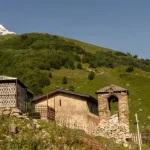
📷 Featured image by Nino Korkelia on Unsplash.