On this page
- Why Batumi Is on the Remote Worker Radar in 2026
- What Makes Batumi a Viable Co-working Base
- Types of Co-working Spaces: What You’ll Actually Find
- Internet Reliability and Power Infrastructure
- 2026 Budget Reality: Working from Batumi
- Legal Setup for Remote Workers: Visas, Programmes, and Tax Status
- Health Insurance and Practical Admin
- Seasonal Considerations: When to Base Yourself in Batumi
- Frequently Asked Questions
Why Batumi Is on the Remote Worker Radar in 2026
Batumi has always been Georgia’s wildcard city — a Black Sea resort town with a skyline that looks like it was designed by five architects who never spoke to each other. For years, remote workers passed through on a week’s holiday and quietly wished they could stay longer. In 2026, a growing number of them are doing exactly that. The challenge most people face isn’t finding a reason to come — it’s figuring out the practical reality: how fast is the internet, what does a month actually cost, how do you set yourself up legally, and can you get real work done between the palm trees and the chaos of Primorsky Boulevard?
This guide answers those questions directly, based on conditions on the ground in 2026.
What Makes Batumi a Viable Co-working Base
Batumi sits at roughly 42°N latitude, which gives it a genuinely subtropical climate — the only one in Georgia. Summers are hot and humid (32–36°C in July and August), winters are mild and rainy rather than cold (rarely below 5°C). That climate pattern alone makes Batumi attractive for the months that are brutal in Northern Europe or Central Asia.
The city has grown significantly since 2022. The influx of relocated professionals — many from Russia, Ukraine, and Belarus — permanently upgraded Batumi’s service infrastructure. Supermarkets, international pharmacies, multi-language bank branches, and faster residential internet became baseline expectations rather than luxuries. By 2026, that infrastructure has largely stabilised and matured.
Batumi International Airport added direct routes to Warsaw and Vienna in 2025, complementing existing connections to Istanbul, Dubai, and multiple CIS cities. Getting in and out of Batumi is easier than it was two years ago. The Georgian Railway Tbilisi–Batumi line runs multiple daily departures, with the overnight sleeper taking around five and a half hours and costing 35–50 GEL depending on class — a practical option if you need to visit Tbilisi for administrative reasons without flying.

The sensory reality of working in Batumi is worth naming honestly: the sound of the sea is never far away, and on a clear morning in spring when the air smells of salt and blossoming acacia trees, sitting down to a laptop feels like a small act of stubbornness. That tension between the city’s resort energy and the demands of a real working day is something every Batumi remote worker navigates.
Types of Co-working Spaces: What You’ll Actually Find
Batumi’s co-working market in 2026 spans three broad formats, and understanding the differences saves you from renting the wrong kind of desk.
Dedicated Co-working Spaces
These are purpose-built facilities with fixed desks, hot desks, private offices, meeting rooms, and reliable air conditioning. They operate on monthly, weekly, or daily passes. You get a locker, stable Wi-Fi backed by multiple ISPs, and usually a printer. Some have a small kitchen area. These are the right choice if you need consistent, professional conditions — video calls with clients, focused multi-hour work sessions, or a clear separation between work and living space.
Hybrid Café-Workspaces
Several venues in Batumi sit between a café and a co-working space. They serve food and coffee, have reasonable Wi-Fi, and are implicitly understood to be work-friendly. These work well for a morning session or an afternoon of independent tasks, but they are not reliable for calls requiring quiet, and air conditioning can be inadequate in peak summer. Power outlets are often limited.
Apartment-Based Working
Many long-stay workers in Batumi simply work from their rented apartment. Given that residential fibre internet is both cheap and fast here (see the internet section below), this is a genuinely reasonable option if your work doesn’t require face-to-face collaboration. The main drawback is isolation — something that matters more over a two-month stay than a two-week one.
Internet Reliability and Power Infrastructure
This is the section that matters most to anyone making a real working decision, so let’s be specific.
Fixed-Line Internet
Batumi has fibre-to-the-building coverage across most of the central city and the New Boulevard area. Providers include Silknet, Magticom, and Akhali.net. Residential fibre packages delivering 100–200 Mbps symmetric speeds cost 25–45 GEL per month. If you’re renting an apartment long-term, confirm before signing whether internet is included in the rent or whether you can install your own line. Many landlords include it; the quality varies.
Dedicated co-working spaces in Batumi typically run dual-ISP setups — if one provider drops, the connection automatically switches. For residential rentals, this redundancy doesn’t exist, which is worth factoring in if your work has zero tolerance for downtime.
Mobile Data as Backup
Georgia’s three main mobile operators — Magti, Geocell (Silknet), and Beeline — all offer competitive data packages. A 50 GB monthly data SIM costs around 20–35 GEL. 4G coverage across central Batumi is strong; 5G rollout in Batumi was ongoing in late 2025 and is now available in parts of the city centre. A mobile hotspot as a backup to residential fibre is a sensible setup for anyone whose livelihood depends on connectivity.
Power Cuts
Batumi’s grid is generally stable, but short outages do occur, particularly in summer when demand spikes from air conditioning loads. Dedicated co-working spaces have UPS systems and often a generator. In apartments, a quality UPS for your laptop and router buys you 30–60 minutes of continuity during minor interruptions. This is a worthwhile investment for a stay of more than a month.
2026 Budget Reality: Working from Batumi
Costs below reflect 2026 market conditions. The lari has remained relatively stable against the euro in 2025–2026, trading at approximately 2.85–3.00 GEL per euro.
Accommodation
- Budget (studio, outer districts, basic furnishing): 700–1,000 GEL/month
- Mid-range (1–2 bedroom, central or New Boulevard area, good internet included): 1,200–2,000 GEL/month
- Comfortable (modern apartment, sea view, reliable infrastructure): 2,200–3,500 GEL/month
Note that summer months (June–August) push prices 20–40% higher due to tourist demand. If you’re planning a longer stay, negotiating a fixed monthly rate in advance — and arriving in April or September — will get you meaningfully better value.
Co-working Space Passes
- Hot desk, daily rate: 30–50 GEL
- Hot desk, monthly pass: 250–400 GEL
- Fixed desk, monthly pass: 400–600 GEL
- Private office (1–2 person), monthly: 800–1,400 GEL
Monthly Living Costs (excluding accommodation)
- Groceries (cooking most meals): 400–600 GEL
- Eating out regularly (local restaurants): add 300–500 GEL
- Transport (local marshrutka and occasional taxi): 60–120 GEL
- Utilities (electricity, water — if not included): 80–180 GEL depending on season
- Health insurance (see below): 80–200 GEL/month
A realistic all-in monthly budget for a single person working comfortably from Batumi — mid-range apartment, co-working pass, health insurance, normal living — sits between 2,500 and 3,800 GEL (roughly €850–1,300). That’s a meaningful saving compared to most Western European cities for equivalent working conditions.
Legal Setup for Remote Workers: Visas, Programmes, and Tax Status
Getting the legal framework right before you arrive saves significant headaches. Here is where things stand in 2026.
Visa-Free Stay
Citizens of the EU, UK, US, Canada, Australia, and many other countries can stay in Georgia for up to 365 days without a visa. This is a calendar-year allowance, not a rolling 12-month one — the rules have not changed on this point. You can leave and re-enter. There is no formal work permit required for remote work for a foreign employer. You are not working in Georgia in the legal sense; you are working from Georgia for clients or employers outside it.
Remotely from Georgia Programme
The Remotely from Georgia programme, relaunched with updated eligibility criteria in 2024, allows qualifying remote workers to obtain a special status that facilitates opening a Georgian bank account and proves legal basis of stay. In 2026, the programme requires proof of remote employment or freelance income of at least 2,000 USD per month, demonstrated via employment contract or client invoices. Applications are submitted through the Georgian National Tourism Administration portal. Processing takes 5–10 business days.
Participation in the programme does not automatically create a Georgian tax obligation if you continue to pay taxes in your home country and your employer is foreign. However, if you plan to stay beyond six months and bill clients directly, the tax picture becomes more nuanced — see below.
Individual Entrepreneur (IE) Status and the 1% Small Business Regime
Many freelancers and self-employed remote workers register as an Individual Entrepreneur in Georgia. The process takes one working day at a Public Service Hall (სახალხო დარბაზი) in Batumi. You will need your passport and a Georgian address.
Under the small business tax regime, annual turnover below 500,000 GEL is taxed at 1% of gross revenue — one of the lowest effective rates anywhere. There is no VAT obligation below this threshold. The 1% rate has remained unchanged since its introduction and is confirmed as active in 2026.
Important caveat: registering as a Georgian IE does not automatically resolve your tax obligations in your home country. Several countries — including Germany, the Netherlands, and Australia — have specific rules about tax residency that may still apply if you return home within a tax year. Take advice from a tax professional in your home country before treating the 1% regime as a complete solution.
Health Insurance and Practical Admin
Georgia does not have a public healthcare system that covers foreign nationals. This is non-negotiable: you need health insurance.
Local Health Insurance Options
Georgian insurance companies — including Aldagi, GPI Holding, and Imedi L — offer visitor and resident health plans. In 2026, a basic plan covering outpatient visits, hospitalisation, and emergency care costs 80–130 GEL per month for a healthy adult under 45. More comprehensive plans with lower deductibles and dental coverage run 150–220 GEL per month. These plans are issued quickly, sometimes on the same day, and the Georgian private healthcare system — particularly in Batumi, which has several well-equipped private hospitals — is genuinely functional for most needs.
If you already hold an international health insurance policy (common for long-term remote workers), verify that it covers Georgia specifically and check whether it requires you to hold a visa in the country — Georgia’s visa-free entry sometimes creates ambiguity in policy wording.
Banking
Opening a Georgian bank account without the Remotely from Georgia status can be difficult as a tourist-entry visitor. TBC Bank and Bank of Georgia are the two main options; both have English-language interfaces and Batumi branches. In 2026, TBC’s mobile app allows a simplified account opening for visitors with consistent local address proof. Revolut and Wise remain widely used by remote workers who haven’t yet formalised their status.
Seasonal Considerations: When to Base Yourself in Batumi
The question of when to come to Batumi is as important as the question of whether to come at all.
April–June is the standout window for remote workers. Temperatures are 18–26°C, humidity is manageable, the city is active but not overwhelmed with tourists, and apartment prices are at their annual low. The blossom on the boulevard trees in late April fills the morning air with something close to jasmine. It is, genuinely, a pleasant time to sit down and do focused work.
July–August is peak tourist season. Accommodation prices spike, noise levels in central areas rise significantly, and the humidity (often 80–90%) makes outdoor movement uncomfortable during the middle of the day. These months are viable if you have air conditioning and the self-discipline to work indoor hours, but they are not ideal for first-time visits when you’re still learning the city.
September–October is Batumi’s second strong window. The sea is warm from the summer, crowds thin out after mid-September, and the light in early October — golden, lower, cutting across the water — is remarkable. Prices drop back to spring levels.
November–March requires an honest reckoning. Batumi in winter is green and mild but frequently grey and rainy. The city’s resort energy disappears almost entirely. Some remote workers find the quiet productive; others find it isolating. The advantage is that rents reach their annual minimum and you will have no trouble finding accommodation on flexible terms.
Frequently Asked Questions
Can I legally work remotely from Batumi as a foreign national?
Yes. If you are working for a foreign employer or foreign clients, you are not legally considered to be working in Georgia and no Georgian work permit is required. The 365-day visa-free stay covers this arrangement for most nationalities. The Remotely from Georgia programme provides optional formalisation of your status and simplifies banking access.
How fast is the internet in Batumi co-working spaces in 2026?
Reputable dedicated co-working spaces in central Batumi offer 100–500 Mbps fibre connections with dual-ISP failover. Residential fibre runs 100–200 Mbps at very low monthly cost. Mobile 4G is reliable as a backup throughout the city centre. 5G availability has expanded in 2025–2026 in the central districts.
Is Batumi cheaper than Tbilisi for long-stay remote workers?
Broadly yes, except in July and August when tourist-season pricing in Batumi can match or exceed Tbilisi rates. Outside peak summer, Batumi apartments are typically 15–25% cheaper than comparable Tbilisi properties. Co-working pass prices are similar across both cities. Day-to-day living costs — food, transport — are comparable.
Do I need to register as a Georgian Individual Entrepreneur to work remotely from Batumi?
No, not if you are employed by a foreign company and receiving a salary. IE registration makes sense if you are freelancing and want to invoice clients through a Georgian legal entity to benefit from the 1% small business tax rate. Whether this is advantageous depends on your home-country tax situation — professional advice is recommended before registering.
What is the minimum monthly budget to live and work from Batumi comfortably?
In 2026, a realistic comfortable budget — mid-range apartment, co-working pass, health insurance, normal food and transport — runs approximately 2,500–3,800 GEL per month (roughly €850–1,300). Budget setups sharing accommodation or working primarily from home can come in below 2,000 GEL, but this involves meaningful trade-offs in space and stability.
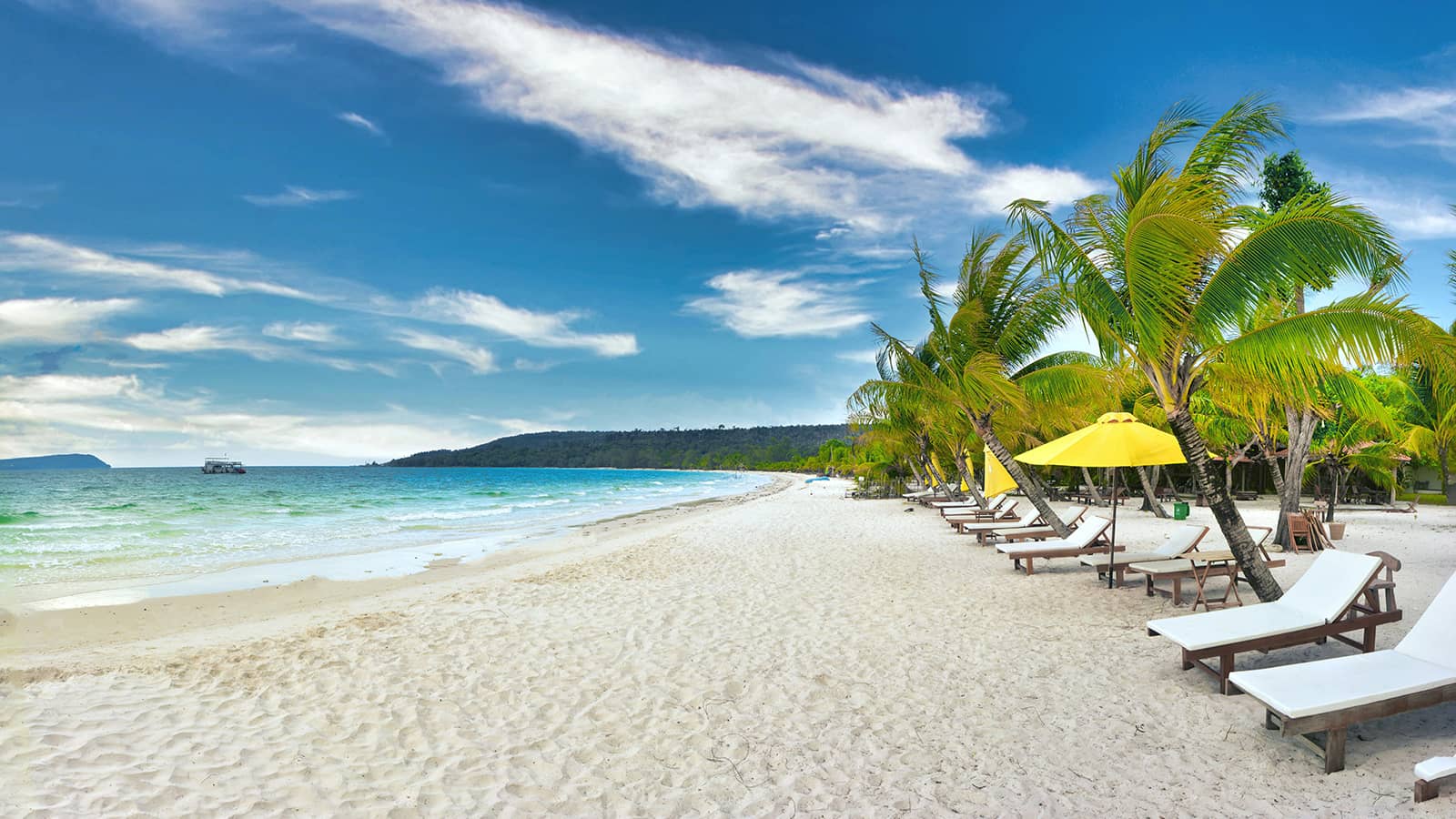
📷 Featured image by Kseniia Poroshkova on Unsplash.