On this page
In 2026, more travellers than ever are arriving in Georgia specifically to experience a supra — and more than a few are showing up completely unprepared. They sit down expecting a dinner party and find themselves three hours in, on their seventh toast, with a tamada pointing a horn of wine directly at them and waiting for a response. This guide tells you what actually happens at a Georgian feast, from the first raised glass to the moment someone finally brings out the chacha.
What a Supra Actually Is
The word supra means “tablecloth” in Georgian, but it refers to the entire ritual of a formal feast — the food, the wine, the toasts, the singing, and the deep current of hospitality that runs underneath all of it. A supra is not a casual dinner. It is a structured social ceremony that Georgians have practised for centuries, and it carries genuine cultural weight.
The origins of the supra are bound up with Georgian ideas about the sacred duty of hospitality. There is a saying that runs through Georgian culture like a thread: stumari ghvtisaa — the guest is from God. Welcoming someone to your table is a spiritual act, not just a social one. A host who feeds you well, toasts you sincerely, and keeps your glass full is fulfilling an obligation that goes far beyond politeness.
There are two main kinds of supra. A lxini is a joyful feast — a celebration for a wedding, a birthday, a homecoming, a successful harvest. A kelekhi is a mourning feast, held after a funeral or on the anniversary of a death. The structure and food differ, but the toasting ritual and the role of the tamada remain central to both. As a traveller, you will almost certainly encounter the lxini version, so that is what this guide focuses on.

The supra table itself is something to see before a single dish is eaten. Plates, bowls, and platters are arranged in overlapping layers until the tablecloth underneath is almost completely hidden. Cold dishes come first — pkhali, lobiani, badrijani nigvzit, jonjoli — and hot dishes arrive in waves throughout the evening. Nothing is cleared when it is finished. New food simply appears on top of what is already there. The table grows taller as the night goes on.
The Tamada: Who Leads the Feast
No element of the supra is more important than the tamada, the toastmaster. This is not a ceremonial role handed out by default to whoever is oldest or loudest. The tamada is chosen deliberately, and the choice matters. A good tamada reads the room, knows when to be solemn, knows when to let the laughter in, and understands that each toast is a small piece of philosophy — not just an excuse to drink.
The tamada opens the feast with the first toast, which almost always goes to peace — mshvidobisatvis. From there, he or she (women can and do serve as tamada, though it remains more common for men in traditional settings) moves through a sequence of toasts that has a recognisable structure even when the specific words vary. Toasts to Georgia, to parents, to the dead, to children, to friendship, to love — these come in a roughly expected order, each one an opportunity for a short speech that the table listens to in genuine silence.
Between major toasts, the tamada may appoint an andaza, a kind of deputy toastmaster who can propose smaller toasts on behalf of specific guests. This is how the table stays dynamic over a long evening without the tamada having to carry every single moment alone. If you are a guest of honour, expect the andaza to turn to you at some point and invite you to speak.
The drinking vessel matters too. A tamada often uses a kantsi — a drinking horn made from an actual animal horn, polished and sometimes decorated with silver. The kantsi cannot be set down on the table because it has no flat base. When you accept it, you must drink it empty before you can return it. This is not a trick played on tourists. It is the physical expression of a toast that means something: you commit to it completely, or you do not accept the horn.
The Food: What Lands on the Table
A supra table is not a menu. It is a landscape. Understanding what you are looking at — and what order things tend to appear — makes the experience far less overwhelming and far more enjoyable.
The cold dishes that greet you when you sit down are typically:
- Pkhali — dense, jewel-coloured little rounds made from finely chopped vegetables (spinach, beetroot, green bean, or leek) mixed with walnut paste, garlic, and spices. They are cold, intensely flavoured, and nothing like anything most visitors have eaten before. A good pkhali has a faint astringency from the walnuts and a warmth from the fenugreek.
- Badrijani nigvzit — thin slices of fried aubergine, rolled around a walnut-garlic paste and laid out in a pattern, often with a pomegranate seed pressed into the top of each one for colour and a small burst of sharpness.
- Jonjoli — pickled bladdernut flowers, tangy and faintly bitter, eaten as a condiment alongside richer dishes.
- Lobio — a thick, clay-pot bean stew spiced with coriander, fenugreek, and sometimes walnuts, served with sliced raw onion and fresh herbs piled beside it.
- Mchadi — dense, golden cornbread rounds, slightly grainy on the outside, that you tear and use to scoop up lobio or soak up sauce.

Then the hot dishes begin arriving. Khinkali come out piled on a plate, still steaming — thick-skinned soup dumplings twisted at the top into a knot of pleated dough. Inside each one is a pocket of seasoned broth around a meat or mushroom or cheese filling. The technique for eating them is specific: hold the dumpling by the knot, bite a small hole in the side, suck out the broth before it spills, then eat the dumpling. The knot — the kudi, or hat — is traditionally left on the plate. Some people count their hats at the end to see who ate the most.
Mtsvadi — Georgian shashlik, chunks of pork or lamb threaded onto skewers and grilled over a wood fire — often arrives mid-feast, charred at the edges and served on a wooden board with raw onion, fresh coriander, and tkemali sauce made from sour plums. The smell of wood smoke clings to the meat even at the table.
Khachapuri in its various regional forms may also appear, though at a formal supra it is more likely to be the Imeretian version — a flat, round bread filled with sulguni cheese — rather than the Adjarian boat shape, which is more of a street or café food. Bread at a supra is never decorative. It is eaten constantly, used to scoop, mop, and balance out the richness of everything else.
Georgian Wine, Chacha, and What You’re Expected to Drink
Georgia is widely acknowledged as the birthplace of wine, with an unbroken winemaking tradition stretching back at least 8,000 years. At a supra, wine is not simply a beverage. It is the medium through which the toasts flow, the substance that makes the ritual possible. Understanding what you are drinking matters.
The most distinctive Georgian wines come from the qvevri tradition — large clay amphoras buried in the earth, in which grapes are fermented whole, with the skins, seeds, and stems left in contact with the juice for weeks or months. This is called skin-contact or amber wine in export markets, but Georgians simply call it their wine. The result, particularly with the white Rkatsiteli grape from Kakheti, is a deeply golden, tannic, textured wine that tastes nothing like anything labelled “white wine” in most other countries. It has a dry, almost savoury finish, and it ages beautifully.
Saperavi is the red grape you need to know. Dark-skinned and deeply pigmented — even the flesh is coloured, which is rare in wine grapes — it produces wines that range from dense and inky to fresh and fruit-forward depending on how the winemaker handles it. At a rural supra in Kakheti, the Saperavi you drink may have been made by the family whose table you are sitting at, from grapes picked during the previous autumn’s Rtveli harvest.
Wine at a supra is poured continuously. Your glass will be refilled before you notice it is empty. The expectation is not that you drink every drop of every toast — a respectful sip acknowledges the toast — but that you participate. Draining your glass completely on each toast is appropriate when the tamada is making an especially important point and signals full agreement.

Chacha is Georgian grape pomace brandy — clear, strong (typically 50–60% alcohol), and homemade in most traditional households. It arrives late in the evening, often poured into small glasses without ceremony, and it tends to appear at the moment when you thought the feast was winding down. It is not winding down. Chacha signals a new phase.
2026 Budget Reality: What a Supra Costs
The cost of a supra experience varies enormously depending on context — whether you are a guest at a family’s home, joining an organised agritourism supra, or sitting at a formal restaurant supra experience. Here are honest 2026 figures.
As a Guest in a Private Home
If a Georgian family invites you to their supra, the cost to you is technically nothing — and bringing up money would cause genuine offence. However, arriving with a gift is expected and deeply appreciated: a bottle of good wine (at least 25–40 GEL), a box of chocolates or churchkhela, or something from your home country. The family will have spent 150–400 GEL or more on the feast without blinking.
Organised Agritourism Supra (Kakheti / Racha / Guria)
- Budget tier: 60–80 GEL per person — simple village supra, local wine, basic but abundant food
- Mid-range: 90–140 GEL per person — family guesthouse, qvevri wine, full spread of cold and hot dishes, chacha included
- Comfortable: 160–250 GEL per person — curated agritourism experience with a knowledgeable host, premium natural wines, sometimes including a winemaking demonstration
Supra Dining Experiences in Tbilisi
- Budget tier: 50–70 GEL per person — smaller spread, house wine, no formal tamada
- Mid-range: 80–130 GEL per person — full table, regional dishes, wine package included
- Comfortable: 150–300+ GEL per person — private dining room, professional tamada, premium wine selection, live polyphonic singers
In 2026, several agritourism operators in Kakheti now offer supra experiences bookable through Georgian tourism platforms, with prices standardised and reviews available — a significant improvement from 2024, when pricing was almost entirely word-of-mouth and wildly inconsistent.
How to Behave as a Foreign Guest
The single most important thing a foreign guest can do at a supra is be present. Put the phone down during toasts. Look at the person speaking. When the table goes quiet for an important toast, that silence is not uncomfortable — it is respectful attention, and joining it costs you nothing.
A few specific things that matter:
- Do not pour your own wine. Filling your own glass at a supra is seen as a sign that your host is failing in their duty. Let your neighbour or the host pour for you, and pour for them in return.
- Do not start eating before the first toast. Wait for the tamada to open the feast. Picking at the cold dishes before the opening toast is like starting a film in the middle — technically possible, but you miss the point.
- If invited to give a toast, accept. You do not need to be eloquent. A simple, sincere statement — gratitude for the hospitality, a wish for the health of the family, a word about what Georgia has meant to you as a visitor — is received with genuine warmth. Georgian hosts appreciate the effort far more than the polish.
- Do not leave immediately after eating. Excusing yourself the moment the main food is done is interpreted as indifference to the company. The conversation, the songs, and the chacha that come after the eating are part of the feast. An hour after the food ends is a reasonable time to begin considering departure.
- Polyphonic singing may break out spontaneously. Georgian men in particular may begin singing at any point in the evening — three-part harmonies that rise out of nowhere and fill the room. The correct response is to stop talking, listen, and let the hair on the back of your neck do what it wants to do.
Regional Differences: Kakhetian vs. Urban Supra
A supra in a Kakhetian village and a supra in a Tbilisi apartment in 2026 are recognisably the same tradition, but the texture of each is genuinely different.
In Kakheti, Georgia’s wine-producing heartland in the east of the country, the supra tends to be longer, louder, and more wine-heavy. Families in Kakheti often have their own qvevri buried in the marani — the wine cellar beneath the house — and the wine you drink has been made by the family, from their vines, harvested by their hands. There is a directness to Kakhetian hospitality that can feel overwhelming at first: more food will appear than you can physically eat, and the tamada will not let an empty glass sit for more than a minute. The toasts in a Kakhetian village supra often run longer and more poetically than in the city, and the evening can stretch to four or five hours without anyone noticing.
The warmth of a Kakhetian cellar in autumn — the candlelight catching the curved clay walls, the smell of fermented grape must still faint in the air after Rtveli — is the kind of sensory experience that stays with people for years after they return home.
In Tbilisi, particularly in the younger, more cosmopolitan circles of the city, the supra has evolved without losing its core. Urban supras are often shorter (two to three hours rather than four to five), the food selection may include more contemporary Georgian cooking alongside the classics, and it is entirely possible for a tamada to be a woman in her thirties leading a table of mixed-age guests in a Vera district apartment. The toasts still follow their essential sequence, the wine still flows, and the hospitality is just as genuine — but the formality is worn more lightly.
In Adjara, on the Black Sea coast, supras tend to include more fish dishes and Adjarian specialities, and the table may have a slightly more Turkish-influenced spread of accompaniments. In Racha, the mountainous northwest, the local wine — particularly Khvanchkara, a semi-sweet red made from Alexandrouli and Mujuretuli grapes — dominates the table, and the food leans toward richer, fattier preparations suited to the colder altitude.
Frequently Asked Questions
Can I attend a supra as a vegetarian or non-drinker?
Yes, without difficulty. Georgian supra tables are naturally abundant with vegetarian dishes — pkhali, badrijani nigvzit, lobio, bread, and cheese appear at almost every feast. Non-drinkers are well accommodated: a sincere explanation to your host is always respected, and toasting with grape juice or mineral water causes no offence.
How long does a typical supra last?
A formal family supra in a rural setting often runs four to six hours. Urban supras in Tbilisi tend to be shorter — two to three hours for a social occasion. A wedding supra can continue well past midnight. Arriving expecting a quick meal and planning an early exit is the main mistake most first-time visitors make.
Is it rude to refuse food at a supra?
Refusing a dish politely — especially if you have a dietary restriction — is acceptable. What reads as rude is refusing everything repeatedly, or not eating at all. Georgian hosts interpret a guest’s appetite as a reflection of their own hospitality. Eat generously from what you can, and acknowledge the food with visible appreciation.
What does the tamada actually say during toasts?
Toasts follow a traditional sequence: peace, Georgia, parents, ancestors and the dead, children, friendship, love, and the guest of honour. Each toast is a short speech — sometimes thirty seconds, sometimes several minutes — expressing a genuine sentiment. The tamada is not reading from a script. The quality of a tamada is measured by the sincerity and originality of what they say.
What is the difference between a supra and just eating Georgian food at a restaurant?
The food overlaps, but a supra is a ritual, not a meal. The toasting structure, the tamada, the shared wine, the sequence of dishes, and the expectation that everyone stays and participates together — these are what make a supra distinct. Eating khinkali and khachapuri at a café is enjoyable. Sitting at a supra is a different kind of experience entirely.
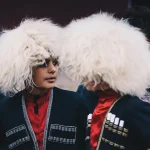
📷 Featured image by Tiko Giorgadze on Unsplash.