On this page
- The Soul of Borjomi: Personality, Vibe, and What to Expect
- Best Neighborhoods: Where to Base Yourself
- Top Attractions and Highlights
- Food and Drink: Where to Eat in Borjomi
- Getting Around Borjomi
- Day Trips from Borjomi
- Evening and Nightlife: What Borjomi Offers After Dark
- Shopping: What to Buy and Where
- Where to Stay: Accommodation Areas by Budget
- Best Time to Visit Borjomi
- 2026 Budget Breakdown: Daily Costs in GEL
- Practical Tips Before You Go
- Frequently Asked Questions
💰 Click here to see Georgia Budget Breakdown
💰 Prices updated: October, 2026. Budget figures are estimates — always verify before travel.
Exchange Rate: $1 USD = ₾2.60
Daily Budget (per person)
Shoestring: ₾70.00 – ₾130.00 ($26.92 – $50.00)
Mid-range: ₾180.00 – ₾350.00 ($69.23 – $134.62)
Comfortable: ₾500.00 – ₾1,000.00 ($192.31 – $384.62)
Accommodation (per night)
Hostel/guesthouse: ₾30.00 – ₾60.00 ($11.54 – $23.08)
Mid-range hotel: ₾110.00 – ₾200.00 ($42.31 – $76.92)
Food (per meal)
Budget meal: ₾15.00 ($5.77)
Mid-range meal: ₾35.00 ($13.46)
Upscale meal: ₾100.00 ($38.46)
Transport
Single metro/bus trip: ₾1.00 ($0.38)
Monthly transport pass: ₾40.00 ($15.38)
Borjomi has a reputation problem — in the best possible way. Most visitors arrive expecting a quiet Soviet-era spa town and leave wondering why they didn’t book an extra night. In 2026, the town sits at an interesting crossroads: Georgian domestic tourism has surged since the collapse of the Russian tourist pipeline post-2022, meaning Borjomi on a summer weekend can feel genuinely busy, while a Tuesday in October still feels like you have the whole valley to yourself. If you’re planning a trip, the single most important thing to know upfront is that Borjomi is not just a bottle of mineral water — it’s a full destination that rewards slow travel.
The Soul of Borjomi: Personality, Vibe, and What to Expect
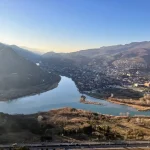
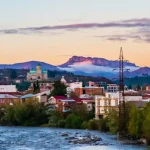
Borjomi sits in a deep, green gorge cut by the Mtkvari River in the Samtskhe-Javakheti region, about 150 kilometres southwest of Tbilisi. The Caucasus foothills press in from both sides, keeping the town narrow, cool, and shaded even in July. That topography shapes everything — the pace, the light, the way life organizes itself along a single main street that follows the river.
The town feels genuinely Georgian rather than tourist-fabricated. Pensioners play backgammon in the park beside families taking the mineral water cure. Local kids on bicycles weave past hikers loading daypacks. The famous green bottles of Borjomi water — banned in Russia from 2006 until the mid-2010s, now exported widely again — are produced here, and you can taste the water straight from the spring for free. That detail tells you something about the place: the main attraction costs nothing.
Borjomi is not Tbilisi. There’s no rooftop bar scene, no late-night shawarma strips. What it offers instead is a rare combination of thermal park, serious mountain hiking, easy access to some of Georgia’s most dramatic historical sites, and a pace of life that feels genuinely restorative. It draws Georgian families, European hikers, and an increasing number of travellers who are using it as a base for the southwest rather than stopping just one night.

Best Neighborhoods: Where to Base Yourself
The Central Park Zone
The area immediately surrounding Borjomi Central Park and the mineral spring balneological zone is the obvious hub. Hotels, guesthouses, restaurants, and the cable car station are all within walking distance. The trade-off is noise — on summer weekends, the park fills with Georgian families and the main promenade gets lively until around midnight. For first-time visitors who want everything walkable, this is the right choice.
Likani
About 2 kilometres up the valley from the centre, Likani is a quieter, greener neighbourhood that feels distinctly different. It’s home to the Romanov summer palace (now a state residence, not publicly accessible), larger private villas converted to guesthouses, and significantly more tranquility. Marshrutkas run regularly between Likani and the centre. Families and couples who want space and quiet gravitate here.
The Upper Residential Streets
The steep streets climbing away from the river on both sides of town are where local life actually happens. Budget guesthouses are scattered through here, some with genuinely spectacular gorge views. The walk down to the park takes 10–15 minutes. Useful for budget travellers who don’t mind hills and want a more authentic residential feel.
Top Attractions and Highlights
Borjomi Central Park and the Mineral Springs
The park is free to enter and runs for several kilometres along the Borjomula River. The hot mineral spring tap in the lower park section — where you fill a cup and drink directly — is the anchor experience. The water is warm, slightly sulphurous, and deeply mineral in taste. Locals fill plastic bottles to take home. The walk through the park past pine trees, small bridges, and the smell of damp forest earth is genuinely pleasant, not just something to tick off.

The Cable Car
A gondola cable car runs from the upper park to a hilltop viewpoint with a small amusement area and a restaurant. The ride itself takes about 10 minutes and the views down into the gorge — with the red-roofed town compressed between green walls — are worth the 10 GEL fare. Go in the late afternoon when the light sits low in the valley.
Borjomi-Kharagauli National Park
This is one of the largest national parks in the Caucasus and the trailhead at the park’s eastern entrance is a 20-minute walk from Borjomi centre. Day hikes of 3–6 hours are well-marked and manageable without a guide. Multi-day routes with ranger huts exist for serious trekkers. In 2026, the park visitor centre near the entrance has expanded its English-language trail information following EU-funded conservation investment. The forest is dense, the trails are quiet, and on a weekday morning you may not see another person for hours.
The Balneological Resort Zone
Several sanatoriums and spa facilities in and around the central area offer mineral water baths, some dating to the 19th century when Borjomi was a resort for the Russian imperial family. Prices range significantly — from 30 GEL for a basic mineral bath at a local facility to 150+ GEL at the more upscale Crowne Plaza spa. You don’t need to book accommodation to access most of them.

Food and Drink: Where to Eat in Borjomi
Borjomi’s food scene is compact but honest. The main concentration of restaurants runs along Meskheti Street (the central promenade) and the roads immediately flanking the park entrance. There is no pretension here — what you find is good Georgian home cooking, some Adjarian-influenced dishes given the regional crossover, and a handful of places targeting hikers with hearty portions.
The daily market on the street behind the bus station — a short walk from the park gate — is the best place to source supplies for a hike or a picnic. Local vendors sell churchkhela, tklapi (dried fruit leather), local honey from the mountain villages, walnuts, and seasonal vegetables. The market is most active in the morning, winding down by early afternoon.
Along Meskheti Street itself, look for the cluster of small restaurants between the park entrance and the cable car station. Several serve mtsvadi (grilled meat skewers) on open charcoal grills on the pavement — the smell of woodsmoke drifting down the street in the evening is part of the Borjomi experience. A full meal with khinkali, salad, and local wine runs 40–70 GEL per person at these mid-level spots.
For something more substantial, the restaurant at the Intourist Palace Hotel has reliably good food in a Soviet-grand dining room that is itself worth seeing. The Crowne Plaza restaurant is the most polished option in town, though prices reflect that. For budget eating, several family-run guesthouses serve home-cooked dinners for 20–30 GEL on request — ask when you book.
Borjomi wine bars are not a thing, but several restaurants carry bottles from Kakheti and Kartli at reasonable prices. Chacha — Georgian grape spirit — flows freely and often without being ordered.
Getting Around Borjomi
Borjomi is a walking town by default. The central park zone, the main street, the bus station, and most guesthouses are within a 15–20 minute walk of each other on flat ground. The hills are the variable — if your accommodation is up a steep residential street, add another 10 minutes and some elevation.

Marshrutkas (minibuses) connect Borjomi with Likani and with Borjomi-1 railway station, running roughly every 20–30 minutes during the day for 1–2 GEL. Taxis are cheap by Georgian standards — a ride anywhere within the town costs 5–8 GEL, and a taxi to Borjomi-1 station for the Bakuriani train costs around 8 GEL.
The Borjomi–Bakuriani narrow-gauge railway is a highlight in itself: a Soviet-era mountain railway that climbs 30 kilometres through forested gorges to the ski resort of Bakuriani. It runs twice daily from Borjomi-1 station. In 2026, Georgian Railway has maintained the line but schedules can shift seasonally — confirm departure times at the station the day before. The journey takes about 2.5 hours and costs around 3 GEL. It is not fast. It is scenic in a way that makes that irrelevant.
From Tbilisi, the most direct route is by marshrutka from Tbilisi’s Didube bus station — roughly a 2.5-hour journey for around 10–12 GEL. Train connections exist but are slower and less frequent. As of 2026, no direct train from Tbilisi to Borjomi runs on a predictable daily schedule; check Georgian Railway’s updated app for current times.
Day Trips from Borjomi
Akhaltsikhe and Rabati Castle
45 kilometres south, Akhaltsikhe is a mixed-culture town whose centrepiece is Rabati — a restored fortress complex containing a mosque, church, synagogue, and castle museum within the same walls. The restoration is controversial among Georgian historians (it’s very clean) but visually dramatic. A taxi from Borjomi runs 40–60 GEL one way; marshrutkas depart from Borjomi bus station several times daily. Allow 4–5 hours total.
Vardzia Cave Monastery
80 kilometres from Borjomi, Vardzia is a 12th-century cave city carved into a volcanic cliff face — hundreds of rooms, a church with original frescoes, and the kind of scale that requires a moment to process when you first see it. Getting there without a car requires a taxi (120–160 GEL return from Borjomi, negotiate a waiting fee) or joining a tour. A full day is needed. Most operators in Borjomi offer shared tours for 60–80 GEL per person including transport.

Bakuriani
The ski resort town at the top of the narrow-gauge railway is a worthwhile half-day in any season. In winter it’s Georgia’s second major ski destination (after Gudauri). In summer it’s a cool, forested plateau with hiking, horse riding, and a quieter pace than Borjomi. Take the morning train, spend the day, return in the afternoon.
Atskuri Fortress
Only 12 kilometres from Borjomi, Atskuri is a ruined medieval fortress on a rocky crag above the Mtkvari River. Almost no tourists visit relative to Rabati. A taxi costs 15–20 GEL. The site is partially accessible, the views over the valley are excellent, and the village below has a small church worth seeing. Good option for a half-afternoon if you don’t want a full-day excursion.
Evening and Nightlife: What Borjomi Offers After Dark
Borjomi is not a late-night town, and that is the honest truth. By 23:00, most restaurants are closing or empty. The park promenade stays lively until around 22:00 in summer — families walking, kids with ice cream, the cable car running its last rides. This is the nightlife.
Several bars along Meskheti Street serve beer and wine until midnight on weekends, with occasional live musicians playing Georgian folk or pop. The atmosphere at these spots in high summer, when the street fills with domestic tourists and the air smells of grilled meat and pine resin, is genuinely enjoyable — just don’t arrive expecting a scene.

A few of the larger hotels (Crowne Plaza, Intourist) have bars that stay open later. The Crowne Plaza bar in particular serves good cocktails in a setting that has seen some investment. For a nightcap in a nice environment, that’s the right address.
Shopping: What to Buy and Where
The obvious purchase is Borjomi mineral water, and you can buy it everywhere. More interesting are the local food products available at the morning market behind the bus station: mountain honey (lighter and more floral than lowland varieties), churchkhela in walnut and hazelnut versions, dried herbs, and tklapi in multiple fruit flavours. Prices at the market are lower than anywhere else in town — a jar of good mountain honey runs 15–25 GEL.
Several souvenir shops along the park entrance strip sell the standard Georgian craft items — wooden items, woollen goods, ceramics — alongside Borjomi-branded merchandise. Quality varies, but the local wool socks and small woven items from the stalls nearest the park entrance tend to come from regional producers rather than Tbilisi import shops.
Where to Stay: Accommodation Areas by Budget
Budget (under 80 GEL per night)
Family-run guesthouses in the upper residential streets and in Likani offer the best value. Most include breakfast and some offer dinner on request. Rooms are simple but clean. Booking via direct contact (phone or WhatsApp) rather than platforms often gets a better rate. Hostels exist in the central zone — basic dorms run 30–45 GEL per person.
Mid-Range (80–200 GEL per night)
Several solid guesthouses and small hotels sit along or just off Meskheti Street. The Intourist Palace Hotel is a Soviet-era property with character and a good central location — rates for a standard room run 120–180 GEL depending on season. Various newer boutique guesthouses in the Likani area offer good value at this tier.

Comfortable/Luxury (200 GEL and above)
The Crowne Plaza Borjomi is the town’s flagship property, with mineral water spa access, a pool, and well-appointed rooms. Rates in 2026 run from approximately 280–450 GEL per night depending on season. It books heavily in July and August — reserve at least a month ahead for summer dates.
Best Time to Visit Borjomi
Summer (June–August) is peak season and the park is genuinely busy on weekends. Average temperatures hover around 22–25°C in July — comfortable by Georgian standards, cool by Caucasus standards. The gorge location means evenings are always fresh, rarely above 18°C. This is the best time for hiking in Borjomi-Kharagauli National Park.
Shoulder season (May and September–October) is the local favourite. Fewer crowds, stable weather, and the autumn colours in October — particularly in the forested slopes above the park — are spectacular. The crunch of fallen chestnut leaves on the park paths, the mist sitting in the gorge at 07:00, the near-silence of a Tuesday morning by the mineral spring: October Borjomi is hard to beat.
Winter (November–February) is cold (temperatures regularly drop below 0°C) and the town quiets considerably. The Bakuriani ski connection makes it viable for winter sports travellers, but Borjomi itself offers little in the coldest months. Snow in the gorge is atmospheric for a night or two.
Spring (March–April) is unpredictable — warm days can follow cold rains, and some guesthouses don’t open until May. Not recommended unless you’re flexible with plans.
2026 Budget Breakdown: Daily Costs in GEL
Budget traveller (30–80 GEL/day): Dorm or basic guesthouse (30–45 GEL), market breakfast and self-catered lunch (10–15 GEL), one restaurant dinner (25–35 GEL), free park entry, marshrutka transport. Day trips to Atskuri by taxi add 20 GEL. Vardzia by shared tour adds 60–80 GEL on that specific day.

Mid-range traveller (150–250 GEL/day): Guesthouse or mid-range hotel (100–180 GEL), two restaurant meals plus coffee (60–80 GEL), cable car (10 GEL), occasional taxi (10–15 GEL). A mineral bath session adds 30–50 GEL. Day trips by private taxi to Vardzia or Rabati fall in this tier.
Comfortable traveller (350 GEL+/day): Crowne Plaza accommodation (280–450 GEL), full spa access, restaurant meals at hotel and better in-town options (80–120 GEL food/drink), private driver for day trips (150–200 GEL). A full Vardzia + Rabati private day trip with driver runs around 180–220 GEL.
Note: Borjomi is significantly cheaper than Tbilisi for equivalent accommodation quality. In 2026, it represents one of Georgia’s better value destinations relative to what it delivers.
Practical Tips Before You Go
Safety: Borjomi is very safe. The only genuine risk is on poorly marked mountain trails in bad weather — take a trail map from the national park visitor centre before any hike.
Language: Georgian is the working language. Russian is widely understood by older residents. English is spoken at the Crowne Plaza and some mid-range hotels, but do not assume it at guesthouses or the market. A translation app (Google Translate with Georgian downloaded offline) solves most situations.
Tipping: 10% is standard at sit-down restaurants. Not expected at market stalls or marshrutkas. Guesthouse hosts who cook dinner often wave tips away but appreciate them.
SIM cards: Buy a Georgian SIM (Magti or Silknet) in Tbilisi before arriving — coverage in the gorge is acceptable but not everywhere. Magti has slightly better coverage in the national park trailhead area.
Water: Tap water in Borjomi is fine to drink. The mineral spring water, drunk in large quantities, acts as a mild laxative — locals know this and pace themselves. Don’t drink four cups immediately.
Cash: ATMs exist at the central bank branches near the park entrance. Card acceptance is improving but many guesthouses and market vendors remain cash-only in 2026. Arrive with lari.

E-visa and entry: Georgia’s e-visa system was updated in early 2025. Most nationalities can still enter visa-free for 365 days. Check the current list at the Georgian e-visa portal before travel, as the 2026 EU-Georgia travel framework has introduced some changes for specific passport holders.
Frequently Asked Questions
How do I get from Tbilisi to Borjomi?
The fastest and most practical option is a marshrutka from Tbilisi Didube station, taking approximately 2.5 hours and costing 10–12 GEL. Trains run but are less frequent and slower. In 2026, no reliable direct daily train connection exists — check Georgian Railway’s app for current schedules. A private taxi from Tbilisi costs approximately 100–130 GEL.
Is Borjomi mineral water actually good for you?
Borjomi water is naturally carbonated and high in minerals including bicarbonate and sodium. It’s traditionally used as a digestive aid and is medically prescribed at the balneological facilities in town. Drinking moderate amounts daily during a stay is fine. Large quantities quickly can irritate the stomach. The free spring in the park is the same water sold in the bottle.
Can you hike in Borjomi-Kharagauli National Park without a guide?
Yes, for the marked day hike routes. The national park visitor centre near the park’s eastern Borjomi entrance provides free trail maps with waypoints. Day routes of 3–6 hours are clearly signed and don’t require a guide. Multi-day routes into the park interior are safer with a guide — the park office can arrange one for approximately 80–120 GEL per day.
What is Borjomi like in winter?
Cold, quiet, and atmospheric in small doses. Temperatures drop below 0°C frequently from December through February. The park is passable but many trails become muddy or icy. Most visitors in winter use Borjomi as a base for Bakuriani skiing — the narrow-gauge railway runs year-round. Several guesthouses close for the low season; book ahead to confirm availability.
How many days should I spend in Borjomi?
Two nights is the minimum to see the park, take the mineral waters, and do one day trip. Three nights is ideal if you want to hike seriously in Borjomi-Kharagauli and visit both Vardzia and Rabati without rushing. Four or more nights suits travellers using Borjomi as a southwest Georgia base — the day trip radius from here covers some of Georgia’s most historically significant sites.
Explore more
Explore Borjomi’s Best Markets: A Shopper’s Delight for Local Goods
The Ultimate Borjomi Shopping Guide: Where to Find Local Treasures
Borjomi Travel Guide: Your Ultimate Planning Companion for Georgia
📷 Featured image by Tonia Kraakman on Unsplash.